
In This Article
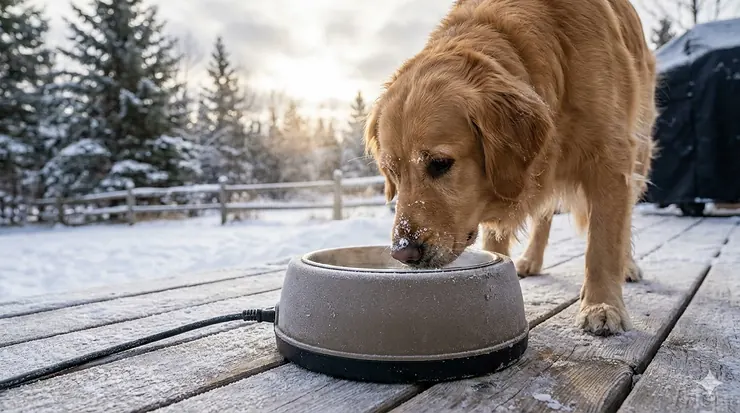
An outdoor heated dog bowl is a thermostatically controlled water dish designed to prevent freezing during winter months. These specialized bowls feature built-in heating elements that automatically activate when temperatures drop below freezing, maintaining water at a drinkable temperature—typically between 25-43°C (77-109°F). Perfect for Canadian pet owners facing harsh winters, heated bowls ensure outdoor dogs, cats, and farm animals have constant access to liquid water, even in sub-zero conditions.
Quick Comparison Table
| Product | Capacity | Wattage | Price (CAD) | Best For |
|---|---|---|---|---|
| K&H Thermal-Bowl (96 oz) | 2.8 L | 25W | $45-55 | Single dogs, energy efficiency |
| Farm Innovators P-60 | 5.7 L | 60W | $55-70 | Large dogs, multiple pets |
| Fuliuna Heated Bowl | 3.2 L | 30W | $40-50 | Budget-conscious owners |
| NAMSAN Heated Bowl | 2.2 L | 30W | $35-45 | Small to medium dogs |
| Ormalla Large Capacity | 3.7 L | 35W | $42-52 | Active outdoor dogs |
| K&H Stainless Steel | 3.0 L | 25W | $65-80 | Durability seekers |
| Allied Precision 1-Quart | 0.9 L | 25W | $35-45 | Barn cats, small pets |
💬 Just one click – help others make better buying decisions too! 😊
Top 7 Outdoor Heated Dog Bowls: Expert Analysis
Canadian winters aren’t for the faint of heart—or the unprepared pet owner. When temperatures plummet to -30°C in places like Winnipeg or Fort McMurray, your dog’s water bowl becomes a frozen disc faster than you can say “polar vortex.” That’s where heated bowls come in, transforming winter pet care from a constant battle against ice to a simple plug-and-forget solution.
1. K&H Pet Products Thermal-Bowl (96 oz, Blue)
This industry standard has been keeping Canadian pets hydrated for over two decades. The K&H Thermal-Bowl features internal thermostats that automatically respond to temperature changes, cycling on and off to prevent freezing without wasting electricity.
Key Specifications:
- Capacity: 2.8 litres (96 ounces)
- Power consumption: 25 watts
- Cord length: 1.7 metres with steel wrapping
- MET Labs certified for Canadian electrical standards
Price: $45-55 CAD on Amazon.ca
The BPA-free plastic construction withstands Canadian winters admirably, though you’ll want to position it away from prevailing winds for optimal performance. Canadian buyers consistently praise its reliability in Alberta chinooks and Maritime ice storms alike.
✅ Pros: Ultra energy-efficient | MET safety certified | 1-year warranty
❌ Cons: Plastic can crack after multiple seasons | No on/off switch
2. Farm Innovators Model P-60 Premium Heated Bowl
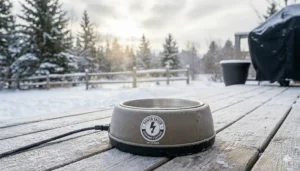
For households with multiple outdoor pets or larger breeds, the Farm Innovators P-60 delivers serious capacity. This 5.7-litre workhorse handles everything from Golden Retrievers to backyard chicken coops, keeping water ice-free even during Saskatchewan’s infamous cold snaps.
Key Specifications:
- Capacity: 5.7 litres (1.5 gallons)
- Power consumption: 60 watts
- Anti-chew cord protector
- Thermostatically controlled
Price: $55-70 CAD (available through Canadian farm supply retailers and Amazon.ca)
The twin-wall construction provides excellent insulation, while the heavy-duty design prevents tipping—crucial when you’ve got enthusiastic Labs charging through snow drifts. Canadian farm owners particularly appreciate its durability in barn environments.
✅ Pros: Large capacity for multiple pets | Sturdy anti-tip design | Farm-tested durability
❌ Cons: Higher wattage increases electricity costs | Bulkier footprint
3. Fuliuna Heated Water Bowl (0.85 Gallon)
Don’t let the modest price fool you—the Fuliuna Heated Water Bowl punches well above its weight class. With 3.2 litres of capacity and smart temperature regulation, this bowl has become a favourite among budget-conscious Canadians who refuse to compromise on quality.
Key Specifications:
- Capacity: 3.2 litres (0.85 gallons)
- Power consumption: 30 watts
- Chew-resistant power cord (1.7m)
- BPA-free construction
Price: $40-50 CAD on Amazon.ca
Canadian reviewers from British Columbia to Nova Scotia report excellent performance in temperatures down to -25°C. The grey colour options blend nicely with winter landscapes, and the anti-slip base stays put on icy surfaces.
✅ Pros: Excellent value proposition | Moderate power consumption | Available in multiple colours
❌ Cons: Newer brand with limited track record | Shorter warranty period
4. NAMSAN Heated Water Bowl (2.2L)
The NAMSAN Heated Water Bowl targets a sweet spot: compact enough for patios but substantial enough for medium-sized dogs. Its automatic temperature control maintains water around 25°C (77°F)—the optimal drinking temperature for most animals according to veterinary research.
Key Specifications:
- Capacity: 2.2 litres (0.58 gallons)
- Power consumption: 30 watts
- Steel-wrapped, chew-resistant cord (1.65m)
- Foam pads for stability
Price: $35-45 CAD on Amazon.ca
This bowl performs admirably across Canada’s varied climate zones. Ontario pet owners appreciate how the discrete design doesn’t advertise “expensive outdoor electronics” to would-be thieves, while Alberta users praise its wind-resistant profile.
✅ Pros: Optimal drinking temperature | Stable non-slip base | Versatile for various outdoor animals
❌ Cons: Smaller capacity requires more frequent refills | No indicator light
5. Ormalla Heated Dog Bowl (125 oz, Large Capacity)
Active outdoor dogs need serious hydration, and the Ormalla Heated Dog Bowl delivers with 3.7 litres of freeze-proof capacity. The built-in ON/OFF switch and red indicator light address common complaints about previous-generation heated bowls.
Key Specifications:
- Capacity: 3.7 litres (125 ounces)
- Power consumption: 35 watts
- Waterproof ON/OFF switch with LED indicator
- Steel-wrapped anti-chew cord
Price: $42-52 CAD on Amazon.ca
Canadian sled dog owners and rural residents with working dogs particularly value the ability to actually turn the bowl off without unplugging—useful when spring arrives unevenly across our vast country. The thermostatically controlled heating prevents overheating even in fluctuating temperatures.
✅ Pros: Convenient ON/OFF switch | Large capacity | Visual operation confirmation
❌ Cons: Higher power draw | LED light may attract curious wildlife
6. K&H Pet Products Thermal-Bowl (Stainless Steel, 102 oz)
If longevity matters more than initial cost, the K&H Stainless Steel Thermal-Bowl represents the premium choice. This 3-litre bowl trades plastic for marine-grade stainless steel that’ll outlast multiple Canadian winters without cracking or degrading.
Key Specifications:
- Capacity: 3.0 litres (102 ounces)
- Power consumption: 25 watts
- Stainless steel construction
- 3-prong grounded plug
Price: $65-80 CAD on Amazon.ca and specialty retailers
Canadian buyers consistently rate this bowl highest for long-term value. The metal construction handles thermal cycling better than plastic alternatives, while the scratch-resistant surface maintains hygiene standards even in muddy spring thaw conditions. Veterinarians in the Yukon and Northwest Territories often recommend this model for extreme cold reliability.
✅ Pros: Superior durability | Easy cleaning | Rust-resistant | Premium appearance
❌ Cons: Higher upfront cost | Heavier weight
7. Allied Precision Heated Pet Bowl (1-Quart)
Small pets and barn cats deserve winter hydration too. The Allied Precision 1-Quart bowl provides freeze-proof water for cats, rabbits, and smaller dog breeds without the overkill of larger models.
Key Specifications:
- Capacity: 0.9 litres (1 quart)
- Power consumption: 25 watts
- Built-in thermostat
- Cord chew protector
Price: $35-45 CAD (available through Canadian farm supply stores)
This compact bowl excels in sheltered locations like heated garages, barn alcoves, or covered porches. Canadian cat rescue organizations frequently use these bowls for feral cat feeding stations, reporting excellent reliability in Maritime humidity and Prairie dryness alike.
✅ Pros: Perfect sizing for small animals | Energy-efficient | Affordable entry point
❌ Cons: Too small for medium/large dogs | Less weather-resistant than larger models
✨ Don’t Miss These Exclusive Deals!
🔍 Take your outdoor dog care to the next level with these carefully selected heated bowls available in Canada. Click on any highlighted product name to check current pricing and availability on Amazon.ca. These bowls will help you keep your pet hydrated and healthy throughout harsh Canadian winters!
How to Choose an Outdoor Heated Dog Bowl in Canada
Step 1: Determine the Right Capacity
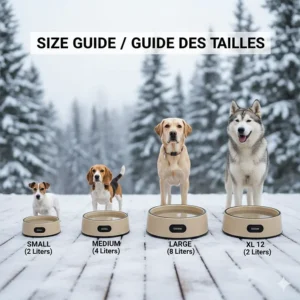
Calculate based on your dog’s size and water consumption. Small dogs (under 10 kg) need 1-2 litres, medium dogs (10-25 kg) require 2-3 litres, and large dogs (25+ kg) need 3-5+ litres. Add extra capacity if you have multiple pets.
Step 2: Select Appropriate Wattage for Your Climate
Match heating power to your regional temperatures. Moderate coastal areas (Vancouver, Victoria) work well with 25-30 watts. Prairie provinces and northern regions experiencing -30°C regularly need 35-60 watts for reliable performance.
Step 3: Choose Durable Materials
BPA-free plastic bowls cost $35-55 and last 2-3 Canadian winters. Stainless steel models cost $65-80 but provide 10+ years of service, making them more economical long-term despite higher initial investment.
Step 4: Verify Safety Certifications
Look for MET Labs or UL certification proving the bowl meets Canadian electrical safety standards. Ensure the cord has steel wrapping or anti-chew protection, and all electronics are sealed inside the bowl.
Step 5: Consider Thermostat Features
Automatic thermostatically controlled bowls cycle heating on/off as needed, saving electricity. Some models include ON/OFF switches and indicator lights for added convenience, though these features increase cost by $10-15.
Step 6: Evaluate Cord Length and Placement
Standard cords measure 1.7 metres (5.5 feet). Measure the distance from your preferred bowl location to the nearest outdoor outlet before purchasing. Avoid extension cords when possible for safety reasons.
Step 7: Compare Warranty Coverage
Quality manufacturers offer 1-year minimum warranties. Premium brands like K&H provide comprehensive coverage and responsive Canadian customer service, worth the extra investment for peace of mind.
Why Canadian Dogs Need Heated Water Bowls
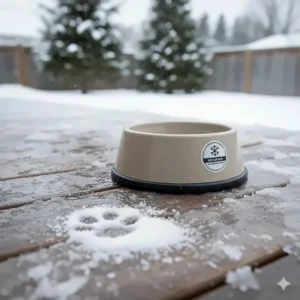
Canada’s notorious cold climate poses serious threats to pet health and well-being during winter months. When temperatures plunge below freezing, outdoor water sources freeze solid within hours, leaving pets vulnerable to dehydration—a condition that develops faster than most owners realize.
The Dehydration Danger
Dogs lose water through panting, urination, and even breathing in cold air. Despite having fur coats, dogs still get cold and suffer from exposure, with ears, tails, and paws particularly vulnerable to frostbite. Dehydrated dogs show decreased energy, dry gums, and reduced skin elasticity. In severe cases, dehydration affects kidney function and can become life-threatening within 24 hours.
According to the Canadian Veterinary Medical Association, while dog coats provide some protection against cold weather, this is often insufficient to protect from the elements. The same principle applies to hydration—just having a water bowl outside isn’t enough if it freezes into useless ice.
Beyond Basic Survival
Heated bowls aren’t luxury items for pampered pets; they’re practical solutions for Canadian realities. According to the Ontario SPCA, when temperatures drop below freezing, animals should not be left outside for extended periods, and cats, short-coated dogs, and puppies are particularly vulnerable. Farm dogs working in rural Alberta, sled dogs training in Yukon, and even suburban retrievers spending hours in backyard play all face the same challenge: accessing liquid water when nature wants everything frozen solid.
How Heated Dog Bowls Actually Work
Understanding the technology helps you choose wisely and use these bowls safely.
Thermostat Technology
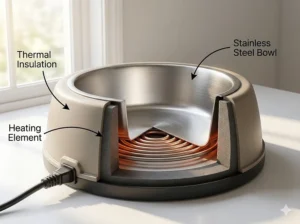
Most quality heated bowls use snap disc thermostats—bimetallic strips that bend at specific temperatures. When ambient temperature drops toward freezing, the metal strips make contact, completing an electrical circuit that activates the heating element. As water warms and ambient temperature rises, the strips separate, breaking the circuit and conserving energy.
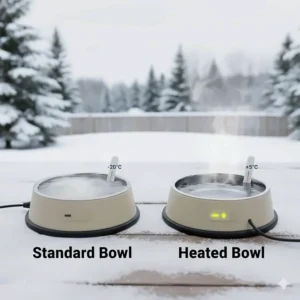
This automatic operation means you’re not heating water unnecessarily. On mild winter days around 5°C, the bowl might cycle on briefly at dawn and dusk. During deep freezes at -30°C, it runs more consistently but still cycles to prevent overheating.
Power Consumption Reality
A 25-watt heated bowl uses less electricity than two standard LED light bulbs. Running continuously for 24 hours consumes just 0.6 kWh—in Ontario, that’s roughly 8 cents per day at current rates. Even 60-watt models cost under 20 cents daily, a small price for preventing pet dehydration.
Safety Engineering
Quality heated bowls incorporate multiple safety features:
- Sealed electronics prevent water damage and electrical hazards
- Steel-wrapped cords resist chewing and abrasion
- Grounded plugs (on premium models) provide additional shock protection
- Temperature limiters prevent water from overheating beyond safe drinking temperatures
- MET or UL certification ensures Canadian electrical safety standards compliance
Choosing the Right Heated Bowl for Your Canadian Winter
Consider Your Climate Zone
Coastal Moderate Zones (Vancouver, Victoria): Focus on corrosion resistance due to high humidity. Stainless steel models excel here.
Prairie Extremes (Winnipeg, Regina): Prioritize reliable thermostats and higher wattage (35-60W) for temperatures regularly hitting -30°C.
Maritime Regions (Halifax, St. John’s): Wind resistance matters more than raw heating power. Position bowls in sheltered locations.
Northern Territories (Yellowknife, Iqaluit): Only industrial-grade heated bowls prove reliable; consult local veterinarians for recommendations.
Size Your Bowl Properly
Small dogs (under 10 kg): 1-2 litre capacity sufficient
Medium dogs (10-25 kg): 2-3 litre capacity recommended
Large dogs (25-45 kg): 3-5 litre capacity ideal
Multiple pets or giant breeds: 5+ litre capacity necessary
Remember that Canadian winters mean longer periods between refills due to outdoor trips being less frequent. Size up if uncertain.
Material Matters
Plastic bowls cost less initially but may crack after 2-3 Canadian winter cycles. BPA-free plastic handles temperatures to about -40°C before becoming brittle.
Stainless steel bowls cost 40-60% more but last indefinitely. They’re easier to clean, resist bacterial growth better, and handle thermal stress without degrading.
✨ Ready to Beat the Canadian Winter?
🐕 Don’t let freezing temperatures compromise your pet’s hydration! Browse our top-rated heated bowls on Amazon.ca and enjoy peace of mind knowing your furry friend has access to drinkable water 24/7, even in sub-zero conditions. Click any product name above to view current deals!
Installation and Placement Best Practices
Location Selection
Position your heated bowl where it receives maximum shelter from wind while remaining accessible. The BC SPCA recommends keeping animals indoors during cold weather, but when outdoor shelter is necessary, ensure protection from wind, cold and dampness.
Ideal locations:
- Covered porches or decks
- Garage entrances with overhead protection
- Barn alcoves or equipment sheds
- Fence corners creating natural windbreaks
Avoid:
- Open yards with full wind exposure
- Areas prone to snow drifting
- Locations where water splashing could create ice hazards
- Direct contact with metal surfaces that conduct cold
Electrical Considerations
Most heated bowls plug into standard 120V outlets. Use only outdoor-rated extension cords if necessary, though manufacturers generally discourage extensions for safety reasons. Consider installing a weatherproof outdoor outlet near your preferred bowl location—a worthwhile investment costing $200-400 installed.
GFCI (Ground Fault Circuit Interrupter) outlets provide additional safety in wet conditions and are required by Canadian electrical code for outdoor receptacles.
Winter Maintenance
Daily: Check water level and remove any debris
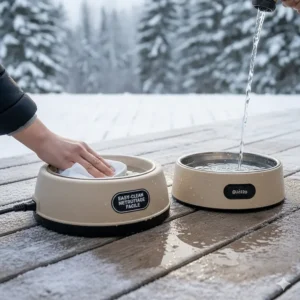
Weekly: Wipe bowl interior with damp cloth
Monthly: Inspect cord for damage or fraying
Seasonally: Unplug and store indoors during summer to extend lifespan
Never immerse the entire bowl in water for cleaning. The sealed electronics resist moisture but aren’t designed for complete submersion.
Common Problems and Solutions
Bowl Not Heating
Check: Is the outlet functioning? Test with another device.
Verify: Has the thermostat reached activation temperature? Most bowls don’t heat until below 0°C.
Inspect: Examine the cord for damage from chewing or weather exposure.
Ice Still Forming
Wind exposure: Relocate to more sheltered position
Insufficient wattage: Upgrade to higher-wattage model for your climate
Overfilling: Maintain water below maximum fill line for optimal heating
High Electricity Bills
Reality check: A 25W bowl running 24/7 costs about $2.50 monthly in most Canadian provinces—less than a single latte.
Efficiency: Choose thermostatically controlled models that cycle on/off automatically
Alternatives: Consider solar-heated options for off-grid locations (though effectiveness varies in Canadian winters)
Heated Bowls vs. Traditional Alternatives
| Method | Effectiveness | Convenience | Cost | Canadian Winter Rating |
|---|---|---|---|---|
| Heated bowls | Excellent | High | $35-80 + electricity | ⭐⭐⭐⭐⭐ |
| Frequent water changes | Poor | Very low | Free (time cost) | ⭐ |
| Insulated bowls (non-heated) | Moderate | Medium | $20-40 | ⭐⭐ |
| Hot water addition | Fair | Low | Free (time cost) | ⭐⭐ |
| Indoor-only access | Excellent | Medium | Free | ⭐⭐⭐⭐ |
Farm and Multi-Pet Considerations
Canadian farm owners face unique challenges. Heated bowls serve not just dogs but also barn cats, chickens, goats, and horses (with appropriately sized models). The Farm Innovators line specifically targets agricultural applications with higher capacities and ruggedized construction.
Tips for farm use:
- Position bowls in high-traffic areas where you’ll notice malfunctions quickly
- Use separate bowls for different animal groups to prevent disease transmission
- Choose stainless steel for livestock to withstand hooves and horns
- Install dedicated circuits for multiple heated bowls to prevent overloading
Price vs. Value Analysis
| Price Range (CAD) | What You Get | Expected Lifespan | Best For |
|---|---|---|---|
| $35-45 | Basic plastic, 25-30W, 1-2L | 2-3 winters | Budget-conscious, small pets |
| $45-60 | Quality plastic, 25-35W, 2-4L | 3-5 winters | Most homeowners, single dogs |
| $60-80+ | Stainless steel, premium features | 10+ years | Serious winter climates, multiple pets |
When calculating value, factor in the time saved from not refilling frozen bowls 3-4 times daily. At 5 minutes per trip over a 5-month winter season, a heated bowl saves roughly 25 hours annually—worth far more than its purchase price.
❓ FAQ
❓ Are heated dog bowls safe to leave plugged in 24/7 in Canadian winters?
❓ What temperature do heated dog bowls maintain water at during harsh Canadian winters?
❓ How much does it cost to run a heated dog bowl in Canada per month?
❓ Can I use a heated dog bowl for chickens or other farm animals in Canada?
❓ Will a heated dog bowl work during Ontario ice storms or power outages?
Conclusion
Canadian winters demand practical solutions, and outdoor heated dog bowls deliver remarkably well. Whether you’re battling Vancouver’s damp cold, Toronto’s ice storms, or Winnipeg’s brutal deep freezes, keeping your outdoor pets properly hydrated no longer requires hourly ice-breaking missions.
The seven bowls reviewed here represent the best options available to Canadian pet owners in 2026. For most households, the K&H Thermal-Bowl offers the ideal balance of reliability, efficiency, and value. Farm owners should seriously consider the Farm Innovators P-60 for its superior capacity. Those seeking maximum longevity will find the K&H Stainless Steel model worth every extra dollar.
Remember that heated bowls complement—not replace—proper winter pet care. As CBC Life reports, veterinarians stress the need to take cold seriously and modify pet activity during wind warnings and extreme weather. Combine your heated bowl with adequate shelter, appropriate exercise adjustments, and vigilant monitoring for signs of distress.
Your dog’s health depends on consistent hydration year-round. In a country where winter lasts six months in many regions, a heated bowl isn’t an indulgence—it’s an essential piece of pet care equipment that pays for itself through convenience, safety, and peace of mind.
Recommended for You
- 7 Best Slow Feeders for Large Dogs Canada 2026 | Stop Bloat
- 7 Best Puzzle Dog Feeders Canada 2026
- 7 Best Stainless Steel Dog Bowls Canada 2026
Disclaimer: This article contains affiliate links to Amazon.ca. If you purchase products through these links, we may earn a small commission at no additional cost to you.
✨ Found this helpful? Share it with your friends! 💬🤗
