
In This Article
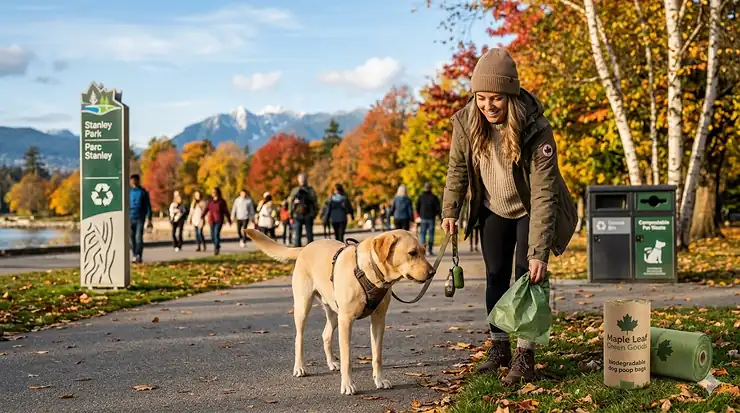
Every day, Canadian dog owners collectively use millions of plastic bags to clean up after their furry companions. But here’s the sobering truth: traditional plastic poop bags can linger in landfills for 500 years or more, slowly fragmenting into microplastics that contaminate our soil and waterways. According to Environment and Climate Change Canada, Canadians threw away 4.4 million tonnes of plastic waste in 2018, with only 8 percent being recycled.

The good news? Biodegradable dog poop bags offer a practical solution that doesn’t compromise on performance. Whether you’re walking through Toronto’s High Park, exploring Vancouver’s seawall, or hiking Banff’s mountain trails, choosing the right eco-friendly poop bag can significantly reduce your environmental pawprint. But not all “biodegradable” bags are created equal, and understanding the difference between genuinely compostable products and greenwashing marketing claims is crucial for Canadian consumers.
This guide examines seven real biodegradable dog poop bags available on Amazon.ca, complete with Canadian pricing, customer feedback from fellow pet parents across the country, and honest assessments of their environmental credentials. We’ve researched which products actually break down as promised, which offer the best value in CAD, and which ones can withstand a Canadian winter walk without tearing.
Quick Comparison Table
| Product | Count | Material Type | Canadian Price (CAD) | Certification | Best For |
|---|---|---|---|---|---|
| Earth Rated Compostable | 225 bags | PBAT + vegetable starch | $19-24 | ASTM D6400 | Premium eco-conscious buyers |
| Earthmate Home Compostable | 360 bags | 100% plant-based bioresins | $25-30 | Dincertco NT T51-800 | Home composting |
| PET N PET Plant-Based | 1080 bags | 41% USDA plant-based | $35-42 | USDA BioPreferred | Budget bulk buyers |
| Earth Rated Recycled | 270 bags | 65% post-consumer recycled | $13-17 | Contains recycled material | Everyday affordability |
| Pogi’s Compostable | 270 bags | Plant-based | $22-28 | ASTM D6400, EN13432 | All dog sizes |
| PleezPet Certified | 240 bags | Plant-based | $20-26 | EN13432, ASTM D6400 | Watermelon scent lovers |
| REX Home Compostable | 360 bags | Vegetable starch + PBAT | $24-29 | Home compostable certified | Large breeds |
💬 Just one click – help others make better buying decisions too! 😊
Top 7 Biodegradable Dog Poop Bags: Expert Analysis
1. Earth Rated Compostable Dog Poop Bags
When a Montreal-based company dedicates itself to eco-friendly pet products, you know they understand Canadian values. Earth Rated Compostable bags represent the company’s commitment to genuinely sustainable pet waste management, moving beyond their popular recycled plastic line into truly compostable territory.
Key Specifications:
- 225 ultra-thick bags made from PBAT and vegetable starches
- Dimensions: 9″ x 13″ (suitable for all dog sizes)
- Unscented formulation
- Industrial composting certification
Canadian Pricing: $19-24 CAD on Amazon.ca
These bags from Earth Rated feel noticeably thicker than standard options, which Canadian customers appreciate during cold weather walks when dexterity matters. The material composition allows them to break down completely in industrial composting facilities, though they’re not suitable for home composting systems. Several Toronto and Vancouver-area customers report that their municipal green bin programs accept these bags, though you should verify with your local waste management authority first.
✅ Pros:
- Canadian company with understanding of local climate challenges
- Ultra-thick construction prevents tears even with frozen waste
- Widely available across Canadian retailers
❌ Cons:
- Require industrial composting facilities (not backyard-friendly)
- Higher per-bag cost than recycled plastic alternatives
Customer Feedback: Canadian buyers consistently praise the reliability during winter months. One Calgary reviewer mentioned these bags held up perfectly during -30°C walks, while another from Halifax appreciated the leak-proof construction during rainy Maritime conditions.
2. Earthmate Home Compostable Dog Poop Bags (Made in Canada)
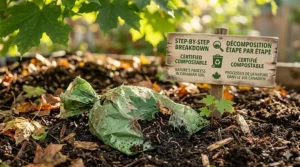
Here’s something special: Earthmate Home Compostable bags are actually manufactured right here in Canada, making them one of the few truly local options in this category. The company holds Dincertco NT T51-800:2015 Home Compostable certification, meaning these bags are designed to break down in backyard compost systems without requiring industrial facility temperatures.
Key Specifications:
- 360 bags made from 100% certified compostable bioresins
- Unscented and unprinted to avoid harmful chemicals
- Dimensions: 9″ x 13″
- Leak-proof construction
Canadian Pricing: $25-30 CAD on Amazon.ca
What makes Earthmate particularly interesting for environmentally conscious Canadians is the home composting capability. However, it’s important to note that composting dog waste at home requires careful management. Most Canadian municipalities prefer that dog owners use commercial composting facilities, where the process is managed at higher temperatures to safely break down both the bag and the waste. Always check local bylaws before attempting home composting of pet waste.
✅ Pros:
- Made in Canada, supporting local manufacturing
- Genuine home compostable certification
- Unscented and chemical-free
❌ Cons:
- Home composting of dog waste may violate local regulations
- Slightly higher price point
Customer Feedback: Ontario customers particularly appreciate supporting Canadian manufacturing. Several British Columbia reviewers mentioned these bags work well in their municipal composting programs, though some noted the bags feel slightly thinner than Earth Rated’s compostable line.
3. PET N PET Plant-Based Dog Poop Bags (1080 Count)
For Canadian families seeking maximum value without sacrificing environmental responsibility, PET N PET Plant-Based bags offer an impressive bulk option. With USDA certification confirming 41% plant-based content, these bags represent a middle ground between traditional plastic and fully compostable alternatives.
Key Specifications:
- Massive 1080-count bulk package (60 rolls)
- 41% USDA certified plant-based materials
- Unscented green bags
- Dimensions: 9″ x 13″
Canadian Pricing: $35-42 CAD on Amazon.ca (works out to roughly 3-4 cents per bag)
The PET N PET approach is honest: these aren’t fully compostable, but they incorporate significant renewable content while maintaining the durability and leak-proof performance that Canadian dog owners need. The bulk packaging also reduces shipping emissions and packaging waste, which appeals to environmentally minded consumers who prefer pragmatic solutions over perfect-but-impractical alternatives.
✅ Pros:
- Exceptional value in CAD per bag
- USDA BioPreferred certification for plant content
- Bulk packaging reduces overall waste
❌ Cons:
- Not fully compostable (requires landfill disposal)
- Large upfront investment (though savings are substantial)
Customer Feedback: Multi-dog households across Canada love the value proposition. Winnipeg customers report these bags perform reliably in prairie winter conditions, while Quebec reviewers appreciate that the text includes “Sac Caca Chien” labelling.
4. Earth Rated Recycled Plastic Dog Poop Bags
Not every environmentally conscious Canadian wants compostable bags, and that’s where Earth Rated’s flagship recycled plastic line shines. By using 65% certified post-consumer recycled plastic, these bags give new life to materials that would otherwise end up in landfills, diverting over 2.2 million kilograms of plastic waste annually.
Key Specifications:
- 270 bags made from 65% post-consumer recycled plastic
- Available in lavender scented or unscented
- Guaranteed 100% leak-proof
- Dimensions: 13″ L x 9″ W
Canadian Pricing: $13-17 CAD on Amazon.ca
These Earth Rated bags represent the practical middle ground for Canadian pet owners. While they’re not biodegradable in the traditional sense, recycled content significantly reduces environmental impact compared to virgin plastic. Earth Rated’s headquarters is located in Montréal, Canada, and the company uses 65% certified post-consumer recycled plastic to give a second life to more than 5 million pounds of landfill-bound plastic each year.
✅ Pros:
- Most affordable option from a trusted Canadian brand
- Proven leak-proof performance in all weather
- Widely available across Canada
❌ Cons:
- Not biodegradable or compostable
- Still contributes to plastic waste (albeit recycled)
Customer Feedback: These are Canada’s most popular dog poop bags for good reason. Customers from St. John’s to Victoria consistently rate them 4.8/5 stars, praising reliability, Canadian availability, and the practical balance between environmental consideration and performance.
5. Pogi’s Compostable Poop Bags
Named after a French Bulldog (how can you resist?), Pogi’s Compostable bags have earned a devoted following among Canadian dog owners who want international certification standards combined with thoughtful design. The company holds both ASTM D6400 and EN13432 certifications, meeting North American and European compostability standards.
Key Specifications:
- 270 bags per package (18 rolls)
- Made from plant-based materials including cornstarch
- Extra-large size: 9″ x 13.5″
- ASTM D6400 & EN13432 certified
Canadian Pricing: $22-28 CAD on Amazon.ca
Pogi’s bags stand out for their slightly larger dimensions, which Canadian owners of big breeds particularly appreciate. The bags are designed for industrial composting facilities, and several municipalities across Canada (including parts of Vancouver and Toronto) accept certified compostable bags in green bin programs. The cardboard core roll is another thoughtful touch that reduces plastic waste in packaging.
✅ Pros:
- International dual certification (North American & European standards)
- Extra-large sizing for big dogs
- Cardboard roll cores instead of plastic
❌ Cons:
- Require industrial composting (not home compostable)
- Some customers find the scented version’s fragrance too strong
Customer Feedback: Canadian reviewers frequently mention these bags work well for large breeds. Several Edmonton customers noted the bags remain flexible even in cold temperatures, while Montreal dog owners appreciate that the bags tear easily at perforations without accidentally ripping adjacent bags.

6. PleezPet Certified Compostable Dog Poop Bags
If you’re tired of unscented bags and want something that makes the cleanup experience slightly more pleasant, PleezPet Certified Compostable offers watermelon-scented bags with serious environmental credentials. These bags carry EN13432, ASTM D6400, and AS5810 certifications, representing compliance with international compostability standards.
Key Specifications:
- 240 watermelon-scented bags
- Triple-certified compostable (EN13432, ASTM D6400, AS5810)
- Extra thick and leak-proof construction
- Easy-peel sticker design
Canadian Pricing: $20-26 CAD on Amazon.ca
The watermelon scent is subtle rather than overwhelming, which Canadian customers appreciate. PleezPet bags are manufactured to meet stringent international standards, ensuring they’ll break down properly in certified industrial composting facilities. The easy-peel sticker is a clever design feature that makes opening the bags simpler, especially during winter walks when you’re wearing gloves.
✅ Pros:
- Pleasant watermelon scent without being overpowering
- Multiple international certifications
- Easy-peel opening system
❌ Cons:
- Smaller count (240) compared to some competitors
- Scent may not appeal to everyone
Customer Feedback: Canadian buyers are split on the watermelon scent—some love it, others prefer unscented. However, nearly everyone agrees on the quality and durability. Several Nova Scotia customers mentioned these bags hold up well to coastal humidity, while Saskatchewan reviewers noted excellent cold-weather performance.
7. REX Certified Home Compostable Dog Poop Bags
Rounding out our list, REX Home Compostable bags offer another Canadian-focused option for pet owners interested in home composting (where regulations permit). These bags are made from a blend of vegetable starches and PBAT, providing strength while maintaining compostability credentials.
Key Specifications:
- 360 bags made from plant-based materials
- Home compostable certification
- Unscented formulation
- Dimensions: 9″ x 13″
Canadian Pricing: $24-29 CAD on Amazon.ca
REX bags are designed for those Canadian homeowners who have established composting systems and want to minimize waste. However, it’s crucial to understand that home composting of pet waste carries health considerations. The Canadian government is working to regulate the use of terms such as “compostable” and “biodegradable” on plastic products, requiring third-party certification to ensure products meet specified standards. Always follow local guidelines regarding pet waste composting.
✅ Pros:
- Home compostable certification
- Large count (360 bags)
- Plant-based composition
❌ Cons:
- Home composting of dog waste may not be permitted locally
- Bags may feel thinner in very cold weather
Customer Feedback: Alberta customers report good performance, though some mention these bags work better in warmer months. British Columbia reviewers appreciate the environmental credentials but note that municipal composting programs vary widely across the province in terms of accepting pet waste.
Understanding Biodegradable vs Compostable: What Canadian Pet Owners Need to Know
The terms “biodegradable” and “compostable” sound interchangeable, but they represent significantly different environmental outcomes. For Canadian consumers navigating eco-friendly products, understanding this distinction is essential.
Biodegradable means a material will eventually break down through natural processes. However, “eventually” could mean decades or centuries, and the breakdown often produces microplastics that contaminate ecosystems. Many products marketed as biodegradable only decompose under specific conditions rarely found in Canadian landfills.
Compostable is a more rigorous standard. Compostable plastics are a sub-group of biodegradable plastic designed to biodegrade in a managed composting process through the action of naturally occurring microorganisms, typically within a specified time frame. True compostable products break down completely into organic matter, water, and CO2, leaving no toxic residue or microplastics behind.
Canada’s federal government is actively working to clarify these terms. Environment and Climate Change Canada has proposed regulations to prohibit the use of terms such as “biodegradable” or “degradable” on plastic packaging and single-use items, while limiting the use of “compostable” to plastics that meet certain standards and labelling requirements. This regulatory approach will help Canadian consumers make more informed choices.
Home Compostable vs Industrial Compostable
Another critical distinction affects Canadian households: home compostable versus industrial compostable certifications.
Industrial compostable bags require the high temperatures (55-60°C) and controlled conditions found in commercial composting facilities. These facilities manage oxygen levels, moisture, and microbial activity to efficiently break down materials. Most Canadian municipalities with green bin programs operate industrial composting facilities.
Home compostable bags can theoretically break down in backyard compost systems at lower temperatures (ambient to 30°C). However, composting dog waste at home is controversial. While the bags themselves will decompose, pet waste contains pathogens that require high-temperature composting to neutralize safely. Many Canadian municipalities specifically prohibit pet waste in home composting systems for public health reasons.
Before choosing home compostable bags, verify your local regulations. Cities like Vancouver, Toronto, and Montreal have specific guidelines about pet waste disposal that may prohibit home composting while accepting certified compostable bags in municipal green bin programs.
Why Traditional Plastic Dog Poop Bags Are a Canadian Environmental Problem
Every year, Canadian pet owners collectively purchase hundreds of millions of plastic dog poop bags. When you consider that Canada has approximately 7.9 million pet dogs, with each dog producing roughly 274 pounds of waste annually, the scale of plastic consumption becomes staggering.
Traditional petroleum-based plastic bags pose several environmental challenges specific to Canada:
Longevity in Landfills: Standard plastic bags can persist for 500-1,000 years in landfills. Given Canada’s colder climate, decomposition rates are even slower than in warmer regions. Our landfills essentially become long-term plastic storage facilities.
Microplastic Generation: As plastic bags slowly fragment, they create microplastics that contaminate Canadian soil and waterways. These particles have been detected in the Great Lakes, Arctic ice, and even in remote mountain lakes across British Columbia and Alberta.
Wildlife Impact: Canada’s diverse wildlife—from raccoons and coyotes in urban areas to bears in wilderness regions—often encounters improperly disposed pet waste bags. Plastic ingestion and entanglement pose serious threats to native species.
Greenhouse Gas Emissions: Manufacturing virgin plastic generates significant CO2 emissions. While recycled content helps, the petroleum extraction and refining process still contributes to Canada’s carbon footprint.
The alternative isn’t abstaining from using bags entirely—responsible pet waste pickup is essential for public health and environmental hygiene. Instead, the solution lies in choosing products that minimize long-term environmental impact while maintaining the sanitary benefits of proper waste containment.

How to Choose the Right Biodegradable Dog Poop Bags for Your Canadian Household
Selecting the best biodegradable dog poop bags involves balancing environmental considerations with practical performance, especially in Canada’s diverse climate conditions. Here’s your comprehensive decision framework:
Step 1: Determine Your Disposal Method
Your local waste management system dictates which bags make sense. Call your municipality or check their website to learn:
- Does your green bin program accept pet waste?
- If yes, does it require certified compostable bags?
- What certifications does your facility accept (ASTM D6400, EN13432, etc.)?
- Are there specific brands or products approved?
If your municipality doesn’t accept pet waste in organics collection, you’ll dispose of bags in regular garbage. In this case, certified compostable bags won’t actually compost, though they may still break down faster than traditional plastic in landfills.
Step 2: Assess Your Climate Conditions
Canada’s temperature extremes affect bag performance. Consider:
Cold Climate Priorities (Prairie provinces, Northern Ontario, territories):
- Extra-thick bags that won’t become brittle in -30°C weather
- Reliable tear resistance when handling frozen waste
- Easy-open designs that work with gloved hands
Moderate Climate Considerations (Coastal BC, Southern Ontario):
- Leak-proof construction for rainy walks
- Durability in humid conditions
- Odour control features for milder temperatures
Variable Climate Needs (Most of Canada):
- Year-round reliable performance
- Bags that handle both winter cold and summer heat
- Consistent thickness and strength across seasons
Step 3: Calculate Your Budget
Environmental responsibility doesn’t require breaking the bank. Compare cost-per-bag rather than package price:
Budget Range ($0.02-0.04 per bag): PET N PET bulk options, Earth Rated recycled plastic
Mid-Range ($0.06-0.10 per bag): Most compostable options including Pogi’s, PleezPet
Premium ($0.10-0.15 per bag): Earth Rated compostable, Earthmate home compostable
Canadian households with multiple dogs should strongly consider bulk purchasing to maximize value. A $40 investment in 1,080 bags from PET N PET provides a year’s supply for many families at budget-friendly pricing.
Step 4: Match Bag Size to Dog Size
Bag dimensions matter more than many Canadian pet owners realize:
Small Dogs (<25 lbs): Standard 9″ x 13″ bags work perfectly
Medium Dogs (25-60 lbs): 9″ x 13″ bags are adequate, 9″ x 13.5″ provides comfort margin
Large Dogs (60-100 lbs): Look for 9″ x 13.5″ or larger dimensions
Giant Breeds (100+ lbs): Consider extra-large bags or double-bagging with standard sizes
Remember that Canadian winters can mean bulkier, frozen waste that requires more bag space. Factor in seasonal variations when selecting sizes.
Step 5: Consider Scent Preferences
Scented bags mask odours but introduce additional considerations:
Scented Options:
- Helpful for warmer Canadian summer months
- Can make disposal containers less unpleasant
- May trigger sensitivities in some dogs or people
Unscented Options:
- Better for sensitive noses (human and canine)
- Truly chemical-free composition
- Ideal for those with allergies or scent sensitivities
Step 6: Evaluate Certification Credentials
Look for legitimate third-party certifications rather than marketing claims:
Recognized Certifications:
- ASTM D6400 (North American compostability standard)
- EN13432 (European compostability standard)
- BPI Certification (Biodegradable Products Institute)
- Dincertco NT T51-800 (Home compostable standard)
- USDA BioPreferred (Plant-based content verification)
Avoid products making vague claims like “eco-friendly” or “earth-friendly” without certification. The Canadian government has proposed prohibiting the use of terms such as “degradable” or “biodegradable” on plastic packaging unless products meet applicable standards and obtain third-party certification.
Step 7: Read Canadian Customer Reviews
Focus on reviews from fellow Canadian dog owners who understand our unique challenges:
- Winter performance testimonials
- Feedback on municipal composting acceptance
- Real-world durability reports
- Value assessments in CAD
Reviews from warmer climates may not reflect performance in Canadian conditions, so prioritize local feedback when available.

The Environmental Impact of Dog Waste: Beyond the Bag
Choosing biodegradable dog poop bags is commendable, but understanding the broader environmental context helps Canadian pet owners make fully informed decisions about pet waste management.
The Dog Waste Problem Nobody Talks About
Dog waste itself is an environmental concern independent of bag choice. Unlike wildlife droppings that serve ecological functions in natural systems, domestic dog waste contains bacteria, parasites, and excess nutrients that can contaminate Canadian waterways. The EPA classifies dog waste as a pollutant in the same category as oil and toxic chemicals.
Canadian municipalities invest heavily in stormwater management, but pet waste washed into storm drains bypasses treatment systems and flows directly into rivers, lakes, and oceans. This is particularly problematic in regions like the Great Lakes watershed, where water quality affects millions of Canadians.
Proper Disposal Matters More Than Bag Type
The most environmentally responsible compostable bag thrown on the ground or left in nature is worse than a standard plastic bag disposed of properly. Canadian parks, trails, and beaches suffer from irresponsible pet waste abandonment, creating both environmental and public health hazards.
Always pack out what your dog produces, regardless of location. National parks, provincial parks, and conservation areas across Canada have specific regulations about pet waste disposal—familiarize yourself with rules before visiting.
Municipal Infrastructure Varies Across Canada
Toronto’s green bin program accepts certified compostable bags with pet waste. Vancouver’s system does not accept any pet waste in organics collection. Montreal permits pet waste in brown bins in certain districts. Calgary encourages garbage disposal of pet waste regardless of bag type.
This patchwork of municipal policies reflects the reality that composting pet waste requires sophisticated infrastructure. Industrial composting facilities across Canada were often not designed to accept compostable plastics, creating a “where facilities exist” problem that drives restrictions imposed on compostable plastic products in various jurisdictions.
Before assuming your compostable bags will be processed appropriately, verify your specific municipality’s current policies.
Canadian Regulations and the Future of Compostable Bags
Canada’s regulatory landscape for biodegradable and compostable products is evolving rapidly, with implications for dog owners across the country.
Federal Initiatives
The federal government has taken significant steps toward regulating environmental claims on plastic products. In July 2022, Environment and Climate Change Canada announced consultations to develop rules for recyclability and compostability labelling that would require plastic products labelled as compostable to be certified by third-party organizations.
These proposed regulations aim to:
- Eliminate misleading “biodegradable” claims on products that don’t genuinely break down
- Establish clear standards for compostability labelling
- Require third-party certification before products can claim compostability
- Create consistency across Canadian markets
For dog poop bag consumers, this means future products will have more reliable, standardized environmental claims backed by verified testing rather than marketing departments.
Provincial Variations
British Columbia has implemented particularly stringent regulations. The province’s Single-Use and Plastic Waste Prevention Regulation addresses oxo-degradable plastics—products often marketed as biodegradable but that merely fragment into microplastics. As of July 2024, BC prohibits the sale or distribution of any packaging containing oxo-degradable plastic.
Quebec has taken different approaches through municipal-level regulations. Montreal’s single-use plastics bylaw restricts certain compostable plastic products, recognizing that the city’s composting infrastructure wasn’t designed to process them effectively.
Ontario and Alberta have generally left these regulations to municipal waste management authorities, resulting in varying rules across cities within each province.
What This Means for Canadian Dog Owners
The regulatory direction is clear: genuine environmental performance backed by credible certification will increasingly become the baseline. Products making unsubstantiated claims will face prohibition.
For consumers, this is positive news. The confusing marketplace of vague “eco-friendly” claims will give way to clearer standards that help Canadians identify truly sustainable options.
In practical terms, stick with products carrying recognized certifications (ASTM D6400, EN13432, BPI, etc.) rather than marketing language. As regulations tighten, these certified products are less likely to face future restrictions.
Tips for Maximizing the Environmental Benefit of Your Choice
Choosing biodegradable dog poop bags is a positive step, but Canadian dog owners can amplify their environmental impact through complementary practices:
Proper Storage Extends Bag Life
Compostable bags have shelf lives, typically 12-24 months from manufacture. Proper storage preserves their integrity:
Storage Best Practices:
- Keep bags in cool, dry locations away from direct sunlight
- Avoid garages or sheds in summer (excessive heat accelerates degradation)
- Don’t store in outdoor containers in winter (frozen bags can become brittle)
- Original packaging provides better protection than loose rolls
Canadian climate extremes make storage particularly important. A bag that begins degrading prematurely won’t perform when you need it.
Reduce Bag Consumption When Possible
Every bag not used is better for the environment than even the best biodegradable option:
Waste Reduction Strategies:
- For backyard cleanup, consider composting dog waste in dedicated systems (where permitted)
- Use reusable scoopers for backyard maintenance, reserving bags for walks
- Encourage dogs to eliminate in designated yard areas for efficient collection
- Multiple dogs can sometimes share one bag during walks (if waste is produced simultaneously)
Support Canadian Brands Committed to Sustainability
Companies like Earth Rated and Earthmate, both Canadian, invest in environmental research and sustainable practices. Supporting them reinforces that Canadian consumers value genuine eco-responsibility over greenwashing.
Participate in Municipal Feedback
Contact your city councillor or waste management department about accepting certified compostable bags in organic waste collection. Municipal policies evolve based on resident input. If enough Canadians request better infrastructure for pet waste composting, municipalities may invest in upgraded facilities.
Educate Fellow Dog Owners
Many Canadian pet parents don’t understand the environmental impact of traditional plastic bags or know compostable alternatives exist. Share information with fellow dog walkers, post in local pet groups, and model responsible practices at dog parks.
Community education multiplies individual impact. When entire neighbourhoods shift toward sustainable pet waste management, the cumulative environmental benefit becomes substantial.
Comparison Table: Benefits vs Traditional Alternatives
| Feature | Biodegradable Dog Poop Bags | Traditional Plastic Bags | Newspaper/Paper |
|---|---|---|---|
| Decomposition Time | 3-24 months (certified compostable) | 500-1,000 years | 2-6 weeks |
| Microplastic Generation | None (properly certified) | Significant | None |
| Leak-Proof Performance | Excellent (when quality brands) | Excellent | Poor |
| Canadian Winter Durability | Good to Excellent | Excellent | Poor (absorbs moisture) |
| Cost per Bag (CAD) | $0.04-$0.15 | $0.01-$0.03 | Free |
| Municipal Acceptance | Varies by certification | Generally accepted | Rarely accepted |
| Environmental Impact | Low to Moderate | High | Low (but impractical) |
| Odour Control | Available scented options | Available scented options | None |
| Convenience | High | High | Low |
Common Mistakes Canadian Dog Owners Make with Biodegradable Bags
Mistake 1: Assuming “Biodegradable” Means Compostable
Many products labelled “biodegradable” don’t meet composting standards. They may eventually break down, but over decades rather than months, and often leave behind microplastics. Always look for specific certification (ASTM D6400, EN13432) rather than vague claims.
Mistake 2: Throwing Compostable Bags in Regular Garbage
If your municipality doesn’t accept pet waste in organics collection, compostable bags provide little environmental benefit over traditional plastic when sent to landfills. Landfills lack the oxygen and moisture conditions needed for proper decomposition. In this case, bags made from recycled plastic may actually be more environmentally responsible.
Mistake 3: Using Expired Compostable Bags
Compostable bags degrade over time, even while stored. Check manufacture dates and don’t stockpile years’ worth. Canadian customers who bought large quantities in 2024 might find their 2026 bags have weakened considerably.
Mistake 4: Buying Based on Price Alone
The cheapest compostable bags sometimes lack certification or use inferior materials. Canadian winters and large dog breeds test bag limits. A bag that tears mid-walk is environmentally useless and hygienically disastrous. Invest in quality certified products.
Mistake 5: Ignoring Local Regulations
Vancouver and Montreal have specific rules about compostable plastic products. British Columbia restricts oxo-degradable bags. Assuming all compostable bags are acceptable everywhere in Canada can lead to using prohibited products.
Mistake 6: Forgetting About Winter Storage
Leaving bags in a car trunk all winter or in an unheated garage can compromise their integrity. Extreme cold makes some compostable materials brittle. Frozen bags that were stored improperly may split when you try to open them.
The Science Behind Biodegradable Materials: What Makes Them Break Down?
Understanding the chemistry behind biodegradable dog poop bags helps Canadian consumers evaluate marketing claims more critically.
PBAT (Polybutylene Adipate Terephthalate)
Many compostable bags use PBAT as a base material. This biodegradable polyester is derived from petroleum but is specifically designed to break down through microbial action. In industrial composting conditions (55-60°C with proper moisture and oxygen), microorganisms produce enzymes that cleave PBAT’s polymer chains, converting it into CO2, water, and biomass.
Canadian composting facilities that accept certified compostable bags rely on maintaining these specific conditions. The bags won’t decompose effectively in cold, dry landfills or at lower temperatures typical of home composting systems (unless specifically certified for that purpose).
PLA (Polylactic Acid)
PLA is derived from fermented plant starches, typically corn. It’s fully bio-based and compostable under industrial conditions. However, PLA requires sustained temperatures above 55°C to break down efficiently. In cooler environments (including Canadian home compost piles during most of the year), PLA can persist for extended periods.
Some bag manufacturers avoid PLA specifically because Canadian home composting conditions rarely achieve the necessary temperatures for reliable decomposition.
Vegetable Starches
Bags made primarily from vegetable starches (corn, potato, cassava) can achieve home compostable status more readily than PBAT or PLA. These materials break down at lower temperatures through enzymatic action. However, they’re typically less durable, which presents challenges for Canadian pet owners dealing with large dogs or winter conditions.
The Certification Process
When you see ASTM D6400 certification, that indicates the product has undergone rigorous testing:
- Biodegradation: Must show at least 90% conversion to CO2 within 180 days under composting conditions
- Disintegration: Must break into fragments smaller than 2mm
- Toxicity: Final compost must be non-toxic to plants
- Heavy metals: Must meet strict limits
This testing explains why certified compostable bags cost more than products with vague “biodegradable” claims—certification requires significant investment in material science, testing, and quality control.
Price Range & Value Analysis in Canada
Understanding the true cost of biodegradable dog poop bags requires looking beyond sticker prices to calculate cost-per-use in Canadian dollars.
Budget Tier ($0.02-0.04 per bag)
Representative Products: PET N PET 1080-count ($35-42 CAD)
Best for Canadian households with multiple dogs or tight budgets. These options typically use partial plant-based content (30-41%) rather than full compostability. Environmental benefit is moderate but real, especially compared to virgin plastic.
Annual Cost: Single dog using one bag daily = $7-15 CAD per year
Mid-Range Tier ($0.06-0.10 per bag)
Representative Products: Pogi’s Compostable 270-count ($22-28 CAD), PleezPet 240-count ($20-26 CAD)
The sweet spot for most Canadian dog owners. Fully certified compostable options that deliver on environmental promises while maintaining quality. Suitable for everyday use without feeling like an extravagance.
Annual Cost: Single dog using one bag daily = $22-37 CAD per year
Premium Tier ($0.10-0.15 per bag)
Representative Products: Earth Rated Compostable 225-count ($19-24 CAD), Earthmate Home Compostable 360-count ($25-30 CAD)
These options prioritize maximum environmental responsibility with made-in-Canada production (Earthmate) or ultra-thick compostable construction (Earth Rated Compostable). The environmental premium is justified for households committed to minimizing ecological impact.
Annual Cost: Single dog using one bag daily = $37-55 CAD per year
Value Calculation Framework
To determine true value, Canadian buyers should consider:
Cost per Year = (Annual Usage ÷ Bags per Package) × Package Price
Example: One medium dog on two walks daily = 730 bags per year
- Budget option: 730 bags = $21-29 CAD annually
- Mid-range: 730 bags = $54-73 CAD annually
- Premium: 730 bags = $73-110 CAD annually
For most Canadian households, the annual difference between budget and premium is $50-90 CAD—roughly the cost of one month’s premium dog food or two vet visits. When framed this way, choosing certified compostable bags becomes an accessible environmental investment.
FAQ: Your Biodegradable Dog Poop Bag Questions Answered
❓ Are biodegradable dog poop bags accepted in Canadian municipal composting programs?
❓ How much do biodegradable dog poop bags cost in Canada compared to regular plastic bags?
❓ Do biodegradable dog poop bags work in Canadian winters at -30°C?
❓ What's the difference between home compostable and industrial compostable dog poop bags?
❓ Are USDA certified plant-based dog poop bags better than fully compostable bags for the environment?
Conclusion: Making the Right Choice for Your Dog and Canada’s Environment
The journey toward eco-responsible pet ownership doesn’t require perfection, just progress. Every Canadian who switches from traditional plastic to biodegradable dog poop bags contributes to reducing the millions of tonnes of plastic waste burdening our landfills and contaminating our waterways.
After examining seven top options available on Amazon.ca, clear patterns emerge. For Canadian households seeking maximum environmental responsibility with proven performance, Earth Rated Compostable and Earthmate Home Compostable represent premium choices backed by genuine certifications and Canadian manufacturing. Those prioritizing value without compromising too much on environmental principles will find PET N PET Plant-Based bulk packages deliver remarkable cost-efficiency with significant renewable content.
The middle ground—where most Canadian dog owners land—is occupied by reliable options like Pogi’s Compostable and Earth Rated’s recycled plastic line. These products balance environmental consideration with the practical demands of Canadian climate, diverse dog sizes, and household budgets.
Remember that the “best” bag isn’t universal—it depends on your municipal waste infrastructure, climate zone, dog size, and budget. A Toronto resident with green bin access should prioritize differently than a rural Manitoba dog owner without composting options. Both can make environmentally conscious choices suited to their specific circumstances.
Beyond bag selection, the most impactful practice remains proper disposal. The most eco-friendly bag abandoned in a park serves no environmental purpose. Always pack out waste, dispose of it according to local regulations, and encourage fellow dog owners to do the same. Canada’s parks, beaches, and trails depend on collective responsibility from our community of pet lovers.
As federal and provincial regulations continue evolving toward stringent compostability standards and clearer labelling requirements, Canadian consumers can expect better products with more reliable environmental claims. Until then, prioritize certified options over marketing buzzwords, verify your municipal disposal rules, and support brands committed to genuine sustainability rather than greenwashing.
Your dog doesn’t care which bag you choose. But Canada’s environment—the pristine wilderness, vibrant cities, and waterways that make our country remarkable—certainly benefits from your thoughtful decision. One biodegradable bag at a time, Canadian pet owners are making a difference.
Recommended for You
- 7 Best Indoor Dog Toilet for Condos Canada 2026
- 7 Best Indoor Dog Potty With Grass for Canadian Apartments 2026
- Washable Puppy Pads vs Disposable: 7 Best Canada Options 2026
Disclaimer: This article contains affiliate links to Amazon.ca. If you purchase products through these links, we may earn a small commission at no additional cost to you.
✨ Found this helpful? Share it with your friends! 💬🤗
