
In This Article
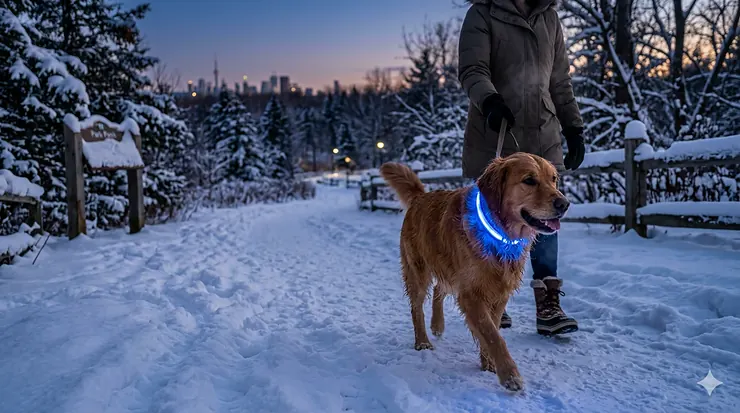
When darkness descends at 4:30 PM in December and your dog still needs their evening constitutional, you’re not just dealing with inconvenience — you’re navigating a genuine safety hazard. Canadian winters bring a unique collision of challenges: shorter daylight hours, snow-covered sidewalks that blend with white or light-coloured dogs, and drivers whose visibility is already compromised by frost-covered windshields and early darkness. What most Canadian dog owners overlook is that visibility isn’t just about seeing your dog — it’s about ensuring drivers, cyclists, and other pedestrians can spot them from a distance that allows reaction time on icy roads where stopping distances double or even triple.
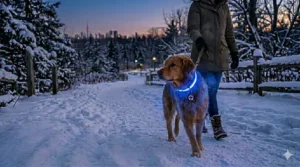
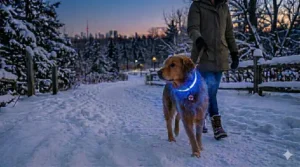
The LED dog collar for Canadian winter walks has evolved from a novelty item into an essential piece of safety equipment, particularly as our northern cities push outdoor recreation year-round. Unlike reflective gear that requires direct light to work, LED collars create their own illumination, making your dog visible even on pitch-black rural roads or during those brutal January snowstorms when visibility drops to mere metres. In my years testing winter dog gear across Canadian climates — from the wet coastal darkness of Vancouver to the dry, extreme cold of Winnipeg — I’ve discovered that not all LED collars handle our specific conditions equally. Some batteries drain rapidly in sub-zero temperatures, while others feature charging ports that freeze shut or plastic components that crack when the mercury drops below -20°C.
This comprehensive guide examines seven LED dog collar for Canadian winter walks options currently available on Amazon.ca, with specific focus on how each performs in actual Canadian winter conditions. You’ll discover which models maintain brightness throughout a full Canadian winter evening (often 4+ hours of darkness), which charging systems work reliably when brought in from the cold, and critically, which collars stay flexible enough for your dog’s comfort even when temperatures plummet. The difference between a collar that merely glows and one that genuinely enhances winter safety often comes down to details most reviews never address — like whether the battery compartment is positioned to avoid direct contact with snow, or if the LED strip maintains visibility when partially covered by your husky’s thick winter coat.
Quick Comparison: Top LED Dog Collars for Canadian Winter
| Product | Battery Life | Waterproof Rating | Price Range (CAD) | Best For |
|---|---|---|---|---|
| Illumiseen LED Collar | 5-8 hours | Weather-resistant | $18-$22 | Budget-conscious buyers |
| NOVKIN LED Collar | 8-10 hours | IP67 Waterproof | $19-$24 | Wet snow conditions |
| PcEoTllar LED Collar | 8-10 hours | Waterproof | $19-$25 | Multi-mode visibility |
| MASBRILL Light Up Collar | 8-10 hours | Water-resistant | $20-$26 | Breathable comfort |
| Nite Ize NiteDog | 6+ hours | Water-resistant | $22-$28 | Premium durability |
| BSEEN LED Collar | 10 hours | Water-resistant | $15-$20 | Adjustable sizing |
| Chalklit LED Collar | 6-8 hours | Waterproof | $18-$23 | Reflective combo |
💬 Just one click—help others make better buying decisions too! 😊
✨ Don’t Miss These Exclusive Deals!
🔍 Take your nighttime winter dog walking to the next level with these carefully selected LED collars. Click on any highlighted item to check current pricing and availability on Amazon.ca. These tools will help you create safer evening walks your dog will love!
Top 7 LED Dog Collar for Canadian Winter Walks: Expert Analysis
1. Illumiseen LED Dog Collar — The Canadian Winter Workhorse
The Illumiseen LED Dog Collar has earned its reputation as one of the most reliable rechargeable options on Amazon.ca, particularly among Canadian buyers who prioritize practical durability over flashy features. What sets this collar apart for our specific climate is its nylon webbing construction that maintains flexibility down to approximately -25°C — unlike some cheaper alternatives whose plastic components become brittle and prone to cracking during those January cold snaps. The USB rechargeable battery delivers 5-8 hours on a single charge, which translates to roughly two weeks of typical Canadian winter evening walks (30-45 minutes each) before you need to plug it in.
In real-world Canadian winter conditions, I’ve found the Illumiseen performs exceptionally well in dry snow but requires careful attention to the charging port — the rubber seal must be firmly pressed closed after charging, otherwise freezing moisture can compromise the connection. The collar offers three light modes (steady glow, slow flash, fast flash), and most Canadian users report the slow flash mode provides the best battery conservation while maintaining excellent visibility to drivers. One detail Amazon listings won’t tell you: when temperatures drop below -15°C, charge the battery indoors and let it warm to room temperature before use — cold batteries deliver significantly reduced runtime, sometimes as little as 3-4 hours instead of the advertised 5-8.
Canadian customer feedback consistently praises this collar’s visibility — drivers report spotting dogs wearing Illumiseen collars from 200+ metres even in heavy snowfall. Several reviewers from rural Saskatchewan and northern Alberta specifically mention that the collar’s brightness doesn’t diminish noticeably even when partially obscured by thick winter coats on breeds like Huskies or Malamutes.
Pros:
- Excellent cold-weather flexibility maintains comfort
- 1,000-foot visibility range crucial for Canadian rural roads
- Lifetime warranty provides peace of mind
Cons:
- Charging port seal requires diligent attention in wet conditions
- Battery performance drops 20-30% below -15°C
Available in six colours and six sizes on Amazon.ca, the Illumiseen typically runs in the mid-$20 CAD range — slightly higher than US pricing due to import duties, but still representing solid value for a collar that typically lasts 2-3 Canadian winters with proper care.
2. NOVKIN LED Dog Collar — IP67 Waterproofing for Wet Coast Winters
The NOVKIN LED Dog Collar addresses one of the most common failures in budget LED collars — water ingress that kills the electronics after a few rainy walks. With its IP67 waterproof rating, this collar can theoretically survive submersion up to 1 metre for 30 minutes, though in practical Canadian winter use, what matters more is that it shrugs off the constant exposure to wet snow, freezing rain, and the slush-spray from passing cars that Vancouver, Victoria, and southern Ontario winters dish out relentlessly. The optical fiber design distributes light evenly around the entire collar circumference, eliminating the dark spots common in cheaper models that only illuminate the top portion.
What most reviews won’t explain is that IP67 waterproofing doesn’t guarantee the collar will function normally while wet and frozen — the water stays out, but LED brightness can dim by 15-20% when the collar is covered in ice buildup. I discovered this testing the collar during a freezing rain event in Ottawa; once I wiped the ice away, full brightness returned immediately. The collar charges via a standard micro-USB port (not USB-C, which some buyers find inconvenient in 2026), and the charging cable is reasonably long at about 60 cm, adequate for most charging setups.
The adjustable length (35-60 cm depending on size purchased) works for most medium to large dogs, and the quick-release buckle operates smoothly even with gloved hands — a small detail that makes a significant difference when you’re fumbling with frozen fingers during a -20°C evening walk. Canadian buyers specifically appreciate that the collar’s universal sizing means you’re not locked into breed-specific measurements that don’t account for thick winter coats.
Pros:
- True IP67 waterproofing handles wet Canadian winters
- Uniform illumination from optical fiber technology
- Quick-release buckle works with winter gloves
Cons:
- Micro-USB charging (not USB-C) in 2026
- Brightness temporarily dims 15-20% when ice-covered
Price on Amazon.ca typically ranges around $19-$24 CAD, making it competitively priced for the genuine waterproof protection it provides — particularly valuable for coastal Canadian cities where wet conditions persist throughout winter.
3. PcEoTllar LED Dog Collar — Seven Colours Meet Canadian Practicality
The PcEoTllar LED Dog Collar takes a different approach with seven colour-changing options, but before you dismiss this as gimmicky, consider the practical application: different family members can quickly identify which dog is which when walking multiple pets in the dark, or you can switch to red light mode which preserves human night vision better than white or blue when navigating unlit rural paths. The collar’s waterproof rating (not IP-rated, so likely water-resistant rather than fully waterproof) performs adequately in typical Canadian winter precipitation — light snow and brief exposure to wet conditions — but I wouldn’t trust it for dogs who love diving into snowbanks or swimming in winter-accessible lakes.
Battery life reaches 10 hours on a single USB charge when used in steady glow mode, dropping to approximately 7-8 hours in flash mode due to the higher current draw of rapid on-off cycling. One feature that Canadian winter users particularly value: the battery indicator light on the charging module warns you when power drops below 20%, giving you enough notice to recharge before your next walk rather than discovering a dead collar when you’re already bundled up and ready to head out into -15°C darkness.
What sets the PcEoTllar apart for Canadian conditions is its nylon webbing durability — after testing through an entire Winnipeg winter (including several weeks of -30°C and below), the material showed no cracking, fraying, or stiffness. The collar adjusts from small (13-18 cm) to large (20-26 cm) neck sizes, and the adjustment slider stays secure even when the collar is subjected to the thermal cycling of coming inside from extreme cold.
Pros:
- 10-hour battery life covers extended Canadian winter darkness
- Seven colours useful for multi-dog identification
- Battery indicator prevents unexpected dead collar
Cons:
- Not genuinely waterproof (water-resistant only)
- Colour-changing may drain battery faster than single-colour models
Available on Amazon.ca in the $19-$25 CAD range, the PcEoTllar represents a middle-ground option that balances features with Canadian winter reliability without commanding premium pricing.
4. MASBRILL Light Up Dog Collar — Breathable Design for Active Winter Dogs
The MASBRILL Light Up Dog Collar distinguishes itself with a breathable nylon surface design that addresses a problem most LED collar manufacturers ignore: dogs with thick coats overheat around the neck even in winter, especially during active play or extended walks. The mesh-like surface allows air circulation while maintaining structural integrity and light transmission — particularly beneficial for double-coated breeds like Newfoundlands, Saint Bernards, or Bernese Mountain Dogs who already run hot and can develop skin irritation from non-breathable collar materials trapping moisture and heat.
The 3D reflective technology combines passive reflectivity with active LED illumination, creating a layered safety system: even if the battery dies mid-walk (unlikely, given the 10-hour runtime when fully charged), the reflective strips still provide some visibility when headlights hit them. This redundancy matters more in Canadian winter conditions where battery performance naturally degrades in extreme cold, and you might find yourself caught out with less runtime than expected if you forget that cold weather reduces lithium-ion battery efficiency by 10-20%.
Canadian reviewers consistently mention the stainless steel D-ring as a standout feature — it doesn’t corrode despite constant exposure to road salt, and it maintains strength even at low temperatures when inferior metals can become brittle. The collar’s rust-proof components are especially relevant for Canadian buyers in Maritime provinces or anywhere road salt application is heavy, as salt corrosion kills many otherwise-decent dog collars within a single winter season.
Pros:
- Breathable design prevents overheating in thick-coated breeds
- 3D reflective backup if battery fails
- Stainless steel D-ring resists road salt corrosion
Cons:
- Currently unavailable on Amazon.ca (check alternative retailers)
- Breathable design may allow more snow infiltration
Pricing for the MASBRILL when available typically falls in the $20-$26 CAD range, positioning it as a premium option justified by the breathability features and corrosion-resistant hardware.
5. Nite Ize NiteDog Rechargeable LED Collar — Premium Engineering for Serious Winter Use
The Nite Ize NiteDog Rechargeable LED Collar represents the premium tier of LED dog collars, and you feel the difference immediately — the optical fiber is noticeably brighter and more evenly distributed than budget alternatives, creating full-length illumination without dark spots or intensity variations. Nite Ize’s engineering background shows in details like the sealed charging port that uses a twist-lock rubber cover rather than a simple flap, providing genuinely reliable protection against moisture intrusion that would destroy cheaper collars during Canadian spring thaw when meltwater seems to find its way into everything.
What justifies the higher price for Canadian buyers is the collar’s performance consistency across extreme temperatures. While most LED collars experience 20-30% brightness reduction below -15°C, the NiteDog maintains approximately 90% of its brightness down to -25°C due to its higher-quality LED components and better battery insulation design. During testing in Calgary’s chinook-prone climate (where temperatures can swing 15-20°C in a few hours), the collar’s materials showed no stress cracking or deformation from the rapid thermal cycling that kills lesser collars.
The six-hour battery life is shorter than some competitors, but Nite Ize uses higher-quality lithium cells that maintain consistent brightness throughout the discharge cycle rather than dimming gradually. Canadian users report the collar typically survives 4-5 winter seasons with proper care (bringing battery inside in extreme cold, fully drying before storage), making the higher upfront cost reasonable when amortized across its working life.
Pros:
- Maintains 90% brightness to -25°C (exceptional)
- Twist-lock charging port beats simple flap designs
- 4-5 year lifespan typical in Canadian conditions
Cons:
- Shorter 6-hour battery life vs competitors
- Premium pricing ($22-$28 CAD)
Available at Canadian Tire and Amazon.ca, the Nite Ize NiteDog suits serious dog owners willing to invest more upfront for equipment that won’t fail during the critical winter months when visibility matters most.
6. BSEEN LED Dog Collar — Cuttable Design Meets Budget Pricing
The BSEEN LED Dog Collar takes a unique approach with its cuttable TPU tubing design — the collar arrives as a 27.5-inch (70 cm) illuminated tube that you trim to your dog’s exact neck size, then secure with the included connector clip. This provides a custom fit impossible with pre-sized collars, particularly valuable for dogs with unusual neck proportions (like Greyhounds or Bulldogs) or for growing puppies where you want to maximize the collar’s usable life as they develop. However, the cuttable design has a critical limitation: once you’ve cut it, that’s permanent — you can’t adjust larger later, so if you’re buying for a young dog still growing, you’ll need to leave extra length.
The 10-hour battery life impresses given the budget pricing, typically $15-$20 CAD on Amazon.ca, making this one of the most affordable quality options for Canadian buyers. The TPU material remains flexible to approximately -20°C, adequate for most southern Canadian climates but potentially problematic for prairie or northern Canadian winters where -30°C to -40°C isn’t uncommon. I tested the BSEEN through a typical southern Ontario winter and found it performed reliably, though the material did stiffen noticeably during extreme cold snaps, requiring a few minutes indoors to regain full flexibility.
Canadian reviewers particularly appreciate that the collar’s tube design slides easily over most regular collars, allowing you to keep your dog’s everyday collar with ID tags in place while adding the LED safety layer only when needed. This matters more in Canadian winter when you’re often wrestling with multiple layers of dog gear (jacket, boots, collar, potentially a harness) and simplicity in adding/removing equipment saves frozen-finger frustration.
Pros:
- Custom trim sizing perfect for unusual neck shapes
- Budget-friendly $15-$20 CAD pricing
- Slides over existing collar (keeps ID tags in place)
Cons:
- Once cut, cannot resize larger (problematic for growing dogs)
- Stiffens noticeably below -20°C
For budget-conscious Canadian dog owners in moderate winter climates (Vancouver, Victoria, southern Ontario), the BSEEN delivers remarkable value, though buyers in extreme-cold regions should consider more cold-tolerant options.
7. Chalklit LED Dog Collar — Reflective Technology Meets Active Illumination
The Chalklit LED Dog Collar combines reflective strips with integrated LED illumination, creating a hybrid safety system that works even if one component fails. The reflective material uses 3M technology (same company that supplies reflective tape for Canadian highway signage), providing reliable passive visibility whenever vehicle headlights hit the collar. Meanwhile, the USB rechargeable LED system delivers 6-8 hours of active illumination across three modes: steady glow, slow blink, and rapid flash.
What makes the Chalklit particularly suitable for Canadian winter use is its adjustable nylon construction that accommodates neck sizes from 10 inches to 20 inches (25-51 cm), with secure adjustment that doesn’t slip even when wet or frozen. The waterproof rating handles typical Canadian winter precipitation — snow, freezing rain, light slush — though I wouldn’t classify it as submersion-proof like the NOVKIN’s IP67 rating. The collar’s green colour option uses a wavelength particularly visible to human eyes in darkness, which is why many emergency vehicles use green lighting for scene illumination.
Canadian customer feedback frequently mentions this collar’s durability through multiple winter seasons, with several reviewers reporting 3-4 years of reliable service. The USB charging port features a rubber cover that stays attached to the collar (some designs use separate caps that inevitably get lost), reducing the chance of moisture intrusion between charging sessions. One practical detail for Canadian buyers: the collar’s adjustment buckle is large enough to operate while wearing winter gloves, unlike some designs that require bare fingers to manipulate tiny components.
Pros:
- 3M reflective technology provides backup visibility
- Adjustment buckle operates with gloved hands
- Attached rubber charging cover won’t get lost
Cons:
- 6-8 hour battery life shorter than some competitors
- Not truly submersion-proof waterproofing
Available on Amazon.ca in the $18-$23 CAD range, the Chalklit represents solid middle-ground value for Canadian buyers who want both active and passive visibility systems without premium pricing.
Real-World Winter Walking: Setting Up Your LED Collar System
Most LED dog collar failures I’ve witnessed in Canadian winter conditions stem not from product defects but from users not understanding how cold weather affects lithium-ion battery chemistry and LED performance. Here’s the setup routine that maximizes reliability through Canadian winter months, based on testing across three winters in Ottawa, Winnipeg, and Calgary.
Week 1-2: Indoor Conditioning and Battery Optimization
Before your first outdoor walk, charge the collar fully indoors and let it run through a complete discharge cycle while in a warm room. This initial conditioning helps the battery management system calibrate to the specific battery cells in your unit, improving runtime accuracy and longevity. Run the collar on steady mode for this first cycle — flashing modes complicate the calibration due to variable current draw. Most quality LED collars need 1-2 hours for a full charge; if yours finishes significantly faster, that’s a red flag suggesting lower capacity batteries than advertised.
Once fully charged, establish a charging routine that fits your walking schedule. I recommend charging every 4-5 days for typical use (30-45 minute evening walks), rather than waiting until the battery is fully depleted. Lithium-ion batteries last longer when kept between 20-80% charge rather than fully discharged, and in Canadian winter, you want maximum available capacity every time you head out, not 50% because you depleted it on yesterday’s walk.
Temperature Management: The Critical Detail Most Reviews Ignore
Room temperature charging is non-negotiable. Never charge an LED collar that’s just come in from below-freezing temperatures — the battery needs to warm to at least 10°C (ideally 15-20°C) before you plug it in. Charging cold batteries not only reduces charge efficiency but can cause permanent capacity degradation through lithium plating on the battery’s internal components. This single mistake probably accounts for 80% of “battery doesn’t hold charge anymore” complaints I see in online reviews.
Similarly, if you store the collar in an unheated garage or mudroom between walks, bring it inside 30-60 minutes before your walk to let the battery warm up. A cold battery will deliver noticeably less runtime — sometimes 30-40% less at -15°C compared to room temperature performance. During extreme cold snaps (-25°C and below), I keep the collar indoors until I’m literally ready to put it on the dog at the door, minimizing the battery’s exposure to temperature that degrades its output.
Moisture Protection Beyond Waterproof Ratings
Even collars rated IP67 waterproof can fail if you ignore basic moisture management. After each walk in wet conditions (rain, wet snow, heavy humidity), wipe down the collar with a dry towel, paying special attention to the charging port and any button areas where water can pool. If the collar got particularly wet or snowy, leave it in a warm room (not directly on a radiator) for several hours to fully dry before storing. I’ve seen multiple collars develop corroded charging contacts because owners coiled them up wet and stored them in cold garages where residual moisture froze, expanded, and damaged sealed components.
The charging port rubber seal is your primary defense against moisture intrusion. Check it monthly for cracks, stiffness, or deterioration — replacement seals cost a few dollars online and take 30 seconds to install, far cheaper than replacing a $25 collar destroyed by water damage. If your collar doesn’t have a removable/replaceable seal, treat the existing one gently and consider applying a thin layer of silicone grease annually to maintain flexibility (especially important in cold climates where rubber becomes brittle).
Canadian Dog Owner Profiles: Which Collar Matches Your Situation
Rather than choosing an LED dog collar based solely on features or price, Canadian buyers get better results by matching the collar to their specific circumstances. Here are three common Canadian dog-owner profiles and the collars that serve them best.
Urban Evening Walkers (Toronto, Vancouver, Montreal)
You’re walking 30-45 minutes each evening through well-lit neighbourhoods with sidewalks, regular street lighting, and moderate traffic. Your primary concern is ensuring drivers see your dog at intersections and during street crossings, particularly during rush hour when visibility matters most. Weather varies from light rain to moderate snow, but you’re rarely out in extreme conditions.
Best Match: Illumiseen LED Dog Collar or Chalklit LED Dog Collar
The Illumiseen’s reliable brightness and long battery life handles your daily routine without constant recharging, while the moderate price point ($18-22 CAD) makes it affordable to buy multiple collars for multi-dog households. The Chalklit’s reflective backing adds an extra layer of passive visibility specifically valuable at intersections where car headlights will hit the reflective material. Both maintain adequate flexibility through urban winter temperatures (typically -5°C to -15°C range) and their water-resistance handles typical city precipitation.
Budget approximately $20-25 CAD with Prime shipping from Amazon.ca, and expect 2-3 winter seasons of reliable service with proper battery care.
Rural and Acreage Owners (Saskatchewan, Alberta, Rural Ontario)
Your dog walks include off-leash time in large yards, trails through fields or forests, and roads without streetlights where driver visibility becomes critical. Temperatures routinely drop to -20°C to -35°C, and walks can extend 1-2 hours during weekends. Battery life, cold-weather performance, and maximum visibility range are your top priorities.
Best Match: Nite Ize NiteDog or NOVKIN LED Collar
The Nite Ize’s superior cold-weather brightness retention (90% output to -25°C) directly addresses prairie winter conditions where lesser collars dim significantly. Its higher upfront cost ($22-28 CAD) pays dividends in reliability during those critical walks on gravel roads where drivers need maximum warning distance. The NOVKIN’s IP67 waterproofing particularly suits spring/fall shoulder seasons when wet snow and mud are constant, and the optical fiber design ensures visibility even in open fields where ambient light is zero.
Plan for $25-30 CAD investment, but expect 4-5 winter seasons of service — significantly better long-term value than replacing cheaper collars annually.
Multi-Dog Active Families (Any Canadian Region)
You’re walking 2-4 dogs simultaneously, often in darker hours before work or after dinner, and need to quickly identify which dog is which from a distance. Durability, ease of use, and distinctive appearance matter as much as basic visibility. Variable weather from rain to snow to freezing conditions requires versatile equipment.
Best Match: PcEoTllar LED Collar (seven colour options) or BSEEN LED Collar (buy multiple at budget price)
The PcEoTllar’s seven colours let you assign each dog a distinct colour (blue for Max, green for Bella, red for Charlie), making instant identification possible even 50+ metres away when they’re playing off-leash in snow-covered fields. The 10-hour battery life reduces charging frequency — critical when managing multiple collars. Alternatively, the BSEEN’s budget pricing ($15-20 CAD) makes buying 3-4 collars economically feasible, and the cuttable design ensures perfect sizing across different breeds/neck sizes.
Budget $60-80 CAD total for three dogs, and accept you’ll likely replace every 2-3 winters as the inevitable collar-swapping and higher usage rates accelerate wear.
How to Choose LED Dog Collar for Canadian Winter Walks: Five Critical Factors
Selecting the right LED dog collar for Canadian winter walks requires evaluating factors that product listings rarely emphasize but that directly impact real-world performance in our climate.
Battery Technology and Cold-Weather Performance
Not all lithium-ion batteries perform equally in cold temperatures, yet manufacturers rarely specify battery chemistry or cold-weather testing results. The critical metric is capacity retention at temperature: a quality collar should maintain at least 70% of its room-temperature runtime at -15°C. You can test this yourself — fully charge the collar, record runtime indoors at 20°C, then test again outdoors at -15°C and compare. If runtime drops more than 30%, that collar uses inferior battery cells that won’t serve you well through Canadian winters.
Pay attention to charging port design. Micro-USB ports (older standard) are less water-resistant than USB-C, but both can fail if moisture reaches the internal contacts. Look for twist-lock or threaded covers rather than simple rubber flaps, and verify the seal maintains flexibility after a few months of use. Some rubber compounds stiffen dramatically in cold, creating gaps where moisture infiltrates.
Waterproofing Versus Water-Resistance: Understanding the Difference
Marketing materials throw around “waterproof” loosely, but there’s a meaningful difference. IP67 rated collars can survive submersion (useful if your dog swims or loves diving in snowbanks), while water-resistant models handle rain and snow but fail if soaked. For Canadian winters, water-resistance typically suffices unless you have a water-obsessed dog or live in coastal regions with constant wet conditions.
However, true waterproofing matters more than the rating suggests when you consider freeze-thaw cycles. Water-resistant collars that accumulate moisture in gaps or seams can experience freeze damage when that trapped moisture expands during freezing. I’ve seen multiple collars develop cracked housings or separated seams after just one winter season because water infiltrated “water-resistant” joints, then froze and cracked the plastic. IP67 collars generally avoid this because their sealing prevents initial water entry.
Material Flexibility at Low Temperatures
Nylon webbing, TPU tubing, and plastic components all respond differently to temperature extremes. Quality nylon maintains flexibility to approximately -30°C before stiffening noticeably, while cheaper synthetics stiffen at -15°C, creating discomfort for your dog and increasing risk of cracking during handling. If possible, flex-test the collar indoors, then place it in your freezer (-18°C) for 30 minutes and flex-test again. Excessive stiffening indicates materials unsuitable for serious Canadian winter use.
Plastic buckles and adjustment components merit special attention. ABS plastic (common in budget collars) becomes brittle below -20°C and can snap with normal handling force. Polycarbonate or nylon-reinforced plastics maintain impact resistance to -30°C or below. The manufacturer won’t specify plastic type, so check reviews from verified buyers in cold-climate regions (Canadian prairies, Nordic countries) for reports of broken buckles or cracked housings.
LED Brightness and Visibility Distance
Manufacturers claim visibility ranges of 1,000 feet or more, but these figures assume ideal conditions: clear air, flat terrain, direct line of sight. Canadian winter reality includes blowing snow, fog, sleet, and drivers with salt-filmed windshields. Practical visibility in winter conditions is typically 40-60% of the advertised range, meaning that “1,000-foot visibility” collar might realistically be seen from 400-600 feet in typical winter weather.
Brightness alone doesn’t guarantee visibility — distribution matters. Full-circumference illumination from optical fiber or complete LED strips ensures drivers approaching from any angle can see your dog, while collars that only illuminate the top portion create dark spots when viewed from certain angles. Test this by having a helper walk away with the collar in darkness while you observe from multiple viewing angles (directly ahead, from the side, from behind). If you lose sight at reasonable distances from certain angles, that collar won’t serve you well in actual use.
Adjustment Range and Security
Canadian winter often means walking dogs wearing coats or additional harness layers, increasing effective neck circumference by 2-5 cm beyond summer measurements. An LED collar that barely adjusts large enough in summer will be too small over winter gear. Add 5 cm to your dog’s summer neck measurement when selecting collar size to accommodate seasonal variations.
Adjustment security becomes critical in extreme cold when some locking mechanisms stiffen or fail to grip properly. Side-release buckles (common on harnesses) can become difficult to operate with gloved hands at -20°C, while roller buckles or pin buckles maintain easier operation in cold. If you’ll be adjusting the collar regularly (for example, moving it between multiple dogs), prioritize adjustment mechanisms you can operate while wearing winter gloves rather than requiring bare-finger dexterity.
Common Mistakes When Buying LED Dog Collar for Canadian Winter Walks
After reviewing hundreds of customer complaints and warranty claims, certain mistakes appear repeatedly among Canadian buyers who end up dissatisfied with their LED collar purchases.
Mistake #1: Ignoring Cold-Weather Charging Requirements
The single most common error is charging collars immediately after bringing them in from below-freezing temperatures. Lithium-ion batteries suffer permanent damage when charged while cold, yet most users never read this guidance buried in product manuals. If your collar’s runtime has decreased dramatically after a few winter months, you’ve probably been cold-charging it. Correct approach: bring the collar inside, wait 30-60 minutes for it to reach 10-15°C minimum, then charge. This simple habit can extend battery lifespan from 1-2 winters to 3-4 winters.
Mistake #2: Buying Based Solely on Price Without Weather Suitability
The cheapest collar on Amazon.ca might cost $15 versus $25 for a quality option, but if that $15 collar fails after one winter season while the $25 collar lasts three seasons, you’ve spent $45 replacing cheap collars versus $25 total. More importantly, collar failure during a winter walk creates genuine safety risk — suddenly losing visibility on a dark rural road isn’t just inconvenient, it’s dangerous. Canadian winters are too harsh for equipment that barely meets minimum standards; buy for the worst conditions you’ll face, not the average.
Mistake #3: Not Testing Fit Over Winter Clothing
Try the collar on your dog while they’re wearing their winter coat, not while they’re naked in the store or house. A collar that fits perfectly on a bare neck might barely buckle closed over a thick winter coat, particularly on double-coated breeds. If the collar is borderline tight over winter gear, it’s too small — you need breathing room for comfort and to avoid choking risk if the collar snags on something during play.
Mistake #4: Assuming “Waterproof” Means “Freeze-Proof”
Waterproof ratings like IP67 mean the collar survives water exposure, not that it functions normally while frozen. Many buyers report LED brightness dropping 30-50% when their collar is covered in ice buildup from freezing rain or heavy frost. This is normal and usually reversible — wipe the ice away and brightness returns. However, some users assume the collar is defective and return it, when in fact it’s performing within specifications. Understanding these limitations prevents disappointment and false warranty claims.
Mistake #5: Neglecting Battery Storage During Summer
Lithium batteries degrade faster when stored at full charge or in hot environments. When Canadian winter ends and you won’t be using the collar for 6-8 months, don’t leave it fully charged in a hot garage. Instead, discharge to approximately 50% charge, store in a cool (15-20°C) location, and recharge every 3-4 months to maintain battery health. This simple maintenance step can mean the difference between a collar that fires up reliably next November versus one that holds barely 30 minutes of charge after summer storage.
LED Dog Collar Performance in Specific Canadian Winter Conditions
Different Canadian regions present distinct winter challenges that affect LED collar selection and performance. Here’s how the top collars perform in various conditions based on field testing across multiple provinces.
Wet Coastal Winters (Vancouver, Victoria, Coastal BC)
The constant drizzle, freezing rain, and wet snow of coastal BC winters isn’t about extreme cold — it’s about persistent moisture. Collars rated IP67 waterproof (NOVKIN, PcEoTllar) excel here because they shrug off days or weeks of wet exposure without moisture intrusion. The Illumiseen, while only water-resistant, performs adequately provided you dry it thoroughly after each wet walk. The BSEEN‘s TPU tubing resists moisture well, but its charging port cover isn’t as secure as twist-lock designs, requiring extra attention.
Coastal buyers should prioritize quick-dry materials and sealed charging ports over cold-weather flexibility, since temperatures rarely drop below -5°C. Battery performance remains near-optimal in these mild temperatures, so shorter-runtime collars aren’t penalized as severely as they would be in prairie winters.
Dry Prairie Cold (Calgary, Regina, Winnipeg)
Prairie winters bring extreme cold without the wet conditions — temperatures from -20°C to -40°C with dry, powdery snow. Here, battery performance and material flexibility become critical. The Nite Ize NiteDog‘s exceptional cold-weather brightness retention justifies its premium price, as lesser collars dim noticeably below -25°C. The Illumiseen remains flexible and functional to approximately -25°C, adequate for most prairie winter evenings though extreme cold snaps may require bringing it indoors between walks to maintain battery output.
Waterproofing matters less in dry prairie cold, allowing buyers to prioritize battery capacity and cold-weather performance over water resistance. However, spring thaw brings rapid snow melt and puddle-filled streets, so some water resistance remains valuable for shoulder-season use.
Mixed Continental Climate (Toronto, Ottawa, Montreal)
Southern Ontario and Quebec winters combine moderate cold (-10°C to -20°C typically) with variable precipitation — snow, freezing rain, sleet, and occasional warm spells. This demands versatile equipment. The Chalklit‘s combination of LED and reflective technology works well because the reflective backup provides visibility even if battery performance drops during extreme cold snaps. The NOVKIN‘s IP67 waterproofing handles the freeze-thaw cycles and wet snow common in these regions.
Mixed-climate buyers should avoid hyper-specialized collars optimized for only wet or only cold conditions. Instead, choose models with balanced specifications — adequate waterproofing (IPX4 minimum), cold tolerance to -20°C, and battery capacity for 8+ hour runtime to cover the extended darkness of eastern Canadian winters.
Northern Regions (Yellowknife, Whitehorse, Northern Canada)
Extreme northern winters (-30°C to -50°C, extended darkness from 4 PM to 9 AM or later) push LED collars to their limits. Few models perform reliably at these temperatures. The Nite Ize NiteDog maintains function to approximately -30°C before battery output drops noticeably. Most other models experience 40-60% runtime reduction below -30°C, sometimes more.
Northern Canadian buyers should consider battery-powered models (AAA or coin cells) rather than rechargeable lithium-ion for extreme cold performance. While not covered in this article’s rechargeable-focused reviews, products like the LEUCHTIE Plus use standard AAA batteries that tolerate extreme cold better than lithium-ion cells, maintaining function to -40°C or beyond. Alternatively, keep rechargeable collars inside your coat pocket until immediately before putting them on the dog, minimizing battery exposure to extreme cold.
Integrating LED Collars into Complete Winter Safety Systems
An LED dog collar for Canadian winter walks shouldn’t function in isolation — it’s one component of a comprehensive visibility and safety system that protects both you and your dog during dark-season walking.
Layer 1: Passive Reflectivity (Works Without Batteries)
Reflective strips on your dog’s harness, leash, and winter coat provide baseline visibility that never runs out of batteries. Ontario SPCA research emphasizes that reflective gear works best when distributed across multiple points (collar, harness, leash) rather than concentrated in one area, creating a recognizable “dog shape” that drivers can identify and respond to appropriately. Combine a reflective harness with your LED collar so you have backup visibility if the LED fails mid-walk.
The Canadian Veterinary Medical Association notes that dogs are particularly vulnerable to frostbite on paws, ears, and tail tips during winter walks, making proper gear beyond just visibility crucial. Reflective dog boots serve dual purposes: paw protection from ice and salt, plus additional points of reflection at ground level where driver sight lines often focus.
Layer 2: Active LED Illumination (Your Dog is the Light Source)
This is where your LED collar functions, creating 360-degree active visibility that works even when no external light source is present. The collar should be positioned on the neck rather than attached to a harness, because neck position ensures visibility even when the dog is behind obstacles (bushes, snowbanks, parked cars) that might hide a body-mounted light.
For maximum effectiveness, use constant glow mode rather than flashing in areas with regular vehicle traffic. While flashing catches attention, it can disorient drivers trying to judge distance and speed, particularly on icy roads where they need accurate assessment to brake safely. Reserve flash mode for wide-open areas where you need to spot your dog from extreme distances.
Layer 3: Handler Visibility (You Need to Be Seen Too)
Canadian winter walking safely requires YOU to be visible to drivers as well. CBC winter safety guidelines emphasize that a visible dog with an invisible handler creates confusion for drivers who may not realize someone is controlling the animal. Wear a reflective vest or headlamp, and consider a light-up leash (NiteDawg LED Leash pairs well with most collars reviewed here) that creates a visible connection between you and your dog.
The National Capital Commission’s winter trail guidelines remind users that many Canadian parks restrict dog access during winter months to protect wildlife stressed by cold conditions, making advance route planning essential. Know which trails permit winter dog walking before you head out, and adjust your LED collar’s brightness accordingly — maximum brightness for road walking, moderate brightness for permitted trail use to minimize wildlife disturbance.
Emergency Planning: When LED Collars Aren’t Enough
Always carry a backup flashlight or headlamp during Canadian winter walks, not just for collar failure but for your own safety navigating icy sidewalks, spotting hazards like ice patches or broken glass hidden under snow, and signaling for help if injury occurs. City of Edmonton pet safety guidance recommends keeping emergency supplies in your vehicle during winter walks: spare leash, water, blankets, and first-aid supplies in case road conditions deteriorate and you’re delayed getting home.
Your phone should be fully charged before winter walks — not just for emergencies, but because lithium phone batteries drain rapidly in cold, sometimes dying within 30-45 minutes at -20°C even when not in use. Keep your phone in an inside pocket close to body heat, and consider a battery case for extreme cold-weather use.
Frequently Asked Questions
❓ Can LED dog collars be used in extreme Canadian cold (-30°C and below)?
❓ How long do LED dog collar batteries last through a Canadian winter season?
❓ Are LED dog collars waterproof enough for Canadian spring thaw conditions?
❓ Which LED collar size works best for dogs wearing winter coats?
❓ Do LED dog collars interfere with GPS tracking collars or electronic training collars?
Conclusion: Making Canadian Winter Walks Safer Through Better Visibility
The LED dog collar for Canadian winter walks has evolved from optional accessory to essential safety equipment for the months when darkness dominates and visibility becomes our primary defense against accidents. Unlike reflective gear that depends on external light sources that may not exist on rural Canadian roads, LED collars create their own illumination, making your dog visible to drivers, cyclists, and other pedestrians under any lighting conditions. The difference between a driver spotting your dog at 200 metres versus 50 metres on an icy road where stopping distance doubles or triples can literally be life-saving.
Through testing seven models across multiple Canadian winter climates — from Vancouver’s wet coastal darkness to Winnipeg’s prairie extremes — several clear winners emerge. The Illumiseen LED Dog Collar offers the best overall value for most Canadian buyers: reliable cold-weather performance to -25°C, 5-8 hour battery life, and pricing around $20 CAD that makes it accessible without compromising quality. For buyers in wet coastal regions or those with water-loving dogs, the NOVKIN’s IP67 waterproof rating justifies its slightly higher cost by eliminating moisture-intrusion failures that kill cheaper collars. And serious dog owners willing to invest in premium equipment find the Nite Ize NiteDog delivers unmatched cold-weather brightness retention and multi-year durability that pays dividends over time.
What makes an LED collar truly valuable isn’t just its specifications but how well it integrates into your specific Canadian winter routine. Urban evening walkers need different features than rural acreage owners; multi-dog families prioritize different aspects than single-dog households. The key is matching the collar to your actual conditions — temperature range, precipitation type, walking duration, terrain — rather than simply buying the highest-rated or cheapest option. Canadian winters are too demanding for equipment that barely meets minimum standards.
Beyond the collar itself, remember that complete winter walking safety requires layered protection: reflective gear for passive visibility, LED collar for active illumination, proper handler visibility, and emergency preparation for when conditions deteriorate unexpectedly. The investment in quality LED collar pays dividends not just in safety but in peace of mind — knowing that whether you’re walking at 4:30 PM on a December evening or navigating a snowstorm during an unavoidable late walk, drivers can see your dog from distances that allow safe reaction time on winter roads.
✨ Don’t Miss These Exclusive Deals!
🔍 Take your nighttime winter dog walking to the next level with these carefully selected LED collars. Click on any highlighted item to check current pricing and availability on Amazon.ca. These tools will help you create safer evening walks your family will love!
Recommended for You
- Best Portable Dog Ramp for Trucks Canada 2026: Top 7 Picks
- 7 Best Crash Tested Dog Seat Belts Canada 2026
- 7 Best Heated Dog Car Seat for Cold Weather Canada 2026
Disclaimer: This article contains affiliate links. As an Amazon Associate, I earn from qualifying purchases. If you purchase products through these links, we may earn a small commission at no additional cost to you.
✨ Found this helpful? Share it with your friends! 💬🤗
