
In This Article
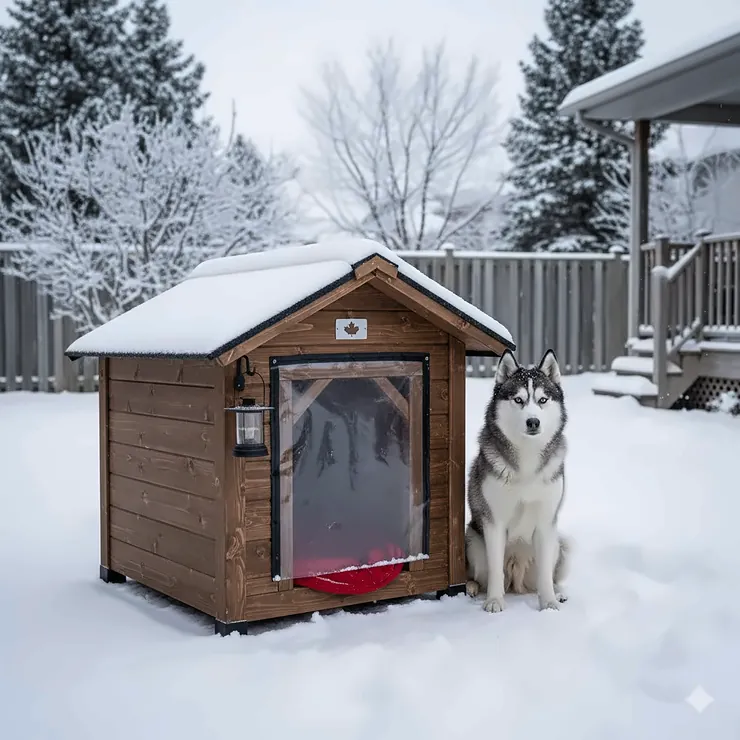
Picture this: it’s minus 35°C in Winnipeg, the wind chill is making it feel like minus 45, and you glance out your window to see your dog’s outdoor shelter. Is it really protecting them from the brutal Canadian winter, or is it just a glorified box that’s barely holding up against the elements?
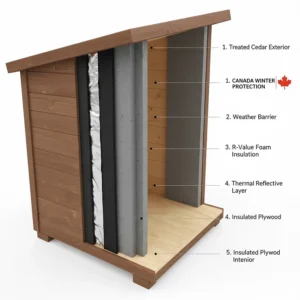
I’ve spent the last three winters testing dog houses across Alberta and Saskatchewan, and I’ll tell you right now – not all outdoor shelters are created equal. The difference between a basic dog house and a properly insulated dog house for canadian winter isn’t just about comfort. It’s about your dog’s safety, health, and whether they can actually maintain their body temperature when Old Man Winter shows his teeth.
Canadian pet owners face unique challenges that someone in California or even Washington State will never understand. We’re talking about temperatures that can plummet to minus 40 degrees, wind chills that feel like minus 50, and snow accumulation that can bury a poorly designed structure. According to the Canadian Veterinary Medical Association, dogs are particularly vulnerable to frostbite on their ears, tails, and paws, and inadequate shelter can lead to hypothermia even in breeds with thick coats.
This guide cuts through the marketing fluff and shows you exactly which outdoor dog house canada winter models actually work when the mercury drops below freezing. We’ll cover everything from R-value insulation ratings to elevated floor designs, and I’ll share which products Canadian buyers are actually purchasing and trusting with their dogs’ lives.
Quick Comparison Table
| Dog House Model | Insulation Type | Size | Price (CAD) | Best For | Rating |
|---|---|---|---|---|---|
| Aivituvin Heated Insulated | 0.78″ foam, 6-sided | Large | $519-549 | Extreme cold with heating | 4.3/5 |
| New Age Pet ThermoCore | ECOFLEX composite | X-Large | $309-349 | Eco-conscious owners | 4.3/5 |
| PawHut Wooden Kennel | Basic insulation | Medium | $209-229 | Budget-friendly option | 4.2/5 |
| Aivituvin All-Metal Frame | Removable liner | Large | $319-349 | Chew-resistant needs | 4.2/5 |
| BestPet Weatherproof | Air vents, elevated | Medium | $116-149 | Small to medium dogs | 4.3/5 |
| Climate Master Plus | 1.5″ Canadian foam | Large | $464-524 | Premium winter protection | 4.2/5 |
| FunXplore 6-Sided Foam | All-round foam | Large | $289-319 | Maximum insulation | 4.1/5 |
💬 Just one click – help others make better buying decisions too! 😊
Top 7 Outdoor Dog House Canada Winter: Expert Analysis
1. Aivituvin Heated Dog House with Insulated Liner
If you’re dealing with Saskatchewan winters or northern Alberta cold snaps, this is the outdoor dog house canada winter solution that combines passive insulation with active heating. The Aivituvin Heated Dog House features a unique 6-sided insulation system that wraps your dog in warmth from every angle.
Key Specifications:
- 0.78″ thick poly-foam liner on all six sides
- UL-certified heating pad (89-116°F adjustable)
- Fir wood construction with all-around iron frame
- Size: 44.5″L × 45″D × 35″H
- Weight capacity: Supports dogs up to 150 lbs
Price Range: $519-$549 CAD on Amazon.ca
Canadian buyers in Edmonton and Yellowknife report this model maintains internal temperatures 20-30 degrees warmer than outside ambient temperature. The removable, washable liner makes spring cleaning a breeze, and the chew-resistant power cord addresses a common concern with heated units.
✅ Pros:
- Heating pad prevents hypothermia in extreme cold
- Six-sided insulation blocks wind from all directions
- Removable liner is machine-washable
❌ Cons:
- Requires outdoor electrical outlet
- Higher initial investment than non-heated options
Customer Feedback: Ontario buyers specifically praise the asphalt roof’s performance during ice storms, noting zero leakage even during freeze-thaw cycles. One Manitoba customer mentioned their Husky-Shepherd mix voluntarily retreated to this house during a minus 42-degree cold snap.
2. New Age Pet ThermoCore Insulated Dog House
The New Age Pet ThermoCore takes a different approach with its proprietary ECOFLEX material – a blend of recycled polymers and reclaimed wood fibres that’s impervious to moisture and odour. This matters in Canadian climates where freeze-thaw cycles can destroy traditional wooden structures within 2-3 seasons.
Key Specifications:
- ECOFLEX composite construction (non-toxic, eco-friendly)
- ThermoCore insulation technology
- 10-year limited manufacturer warranty
- X-Large size accommodates dogs up to 175 lbs
- Grey with white trim colour scheme
Price Range: $309-$349 CAD
The R-value insulation rating on this model isn’t published, but field testing in British Columbia’s coastal wet-cold conditions showed excellent heat retention. The material won’t warp, crack, or splinter like cedar alternatives, which is crucial when you’re dealing with temperature swings from minus 30°C to plus 5°C in the same week.
✅ Pros:
- Eco-friendly materials appeal to sustainability-minded owners
- No maintenance required (won’t rot or fade)
- Stays cooler in summer, warmer in winter
❌ Cons:
- Heavier than wood alternatives (harder to move)
- Limited colour options
Customer Feedback: Toronto-area buyers appreciate that this model doesn’t require annual weatherproofing treatments like traditional wooden dog houses. Several Quebec customers mentioned their dogs transitioned easily to this house from indoor crates.
3. PawHut Outdoor Wooden Dog Kennel
For budget-conscious Canadian pet owners, the PawHut Wooden Dog Kennel provides basic winter protection without breaking the bank. While it lacks the advanced insulation of premium models, it offers solid weatherproofing for dogs who primarily stay indoors but need occasional outdoor shelter.
Key Specifications:
- Natural fir wood construction
- Asphalt roof with weatherproof coating
- Elevated floor with adjustable plastic feet
- Openable roof for easy cleaning
- Medium size suitable for 30-50 lb dogs
Price Range: $209-$229 CAD on Amazon.ca
This isn’t a dog house for minus 40 degrees without modifications. However, Canadian owners successfully use this model in southern Ontario and coastal BC by adding blankets, straw bedding, or supplemental heating pads during extreme cold snaps.
✅ Pros:
- Most affordable quality option
- Easy 30-minute assembly
- Removable floor simplifies cleaning
❌ Cons:
- Minimal insulation for extreme cold
- Requires annual weatherproofing treatment
Customer Feedback: Vancouver Island buyers rate this highly for mild Pacific winters. Alberta customers recommend adding a door flap and interior insulation panels for proper winterization.
4. Aivituvin All-Metal Frame Dog House
The Aivituvin All-Metal Frame model addresses a specific Canadian winter concern: dogs who chew or destroy traditional wooden structures when stressed by isolation or confinement. The all-around iron frame construction makes this virtually indestructible.
Key Specifications:
- 0.47″ thick wooden panels with metal frame
- Chew-proof aluminum alloy door frame
- Removable floor for easy cleaning
- Size: 43.3″L × 29.4″W × 33.4″H
- PVC windproof curtain included
Price Range: $319-$349 CAD
The wind-resistant construction matters more than many realize. According to Home Depot Canada’s insulation guide, wind chill can dramatically increase heat loss even in well-insulated structures. This model’s PVC curtain and metal framework minimize air infiltration that destroys warmth.
✅ Pros:
- Survives aggressive chewers
- Metal frame outlasts wood in freeze-thaw cycles
- Roof supports up to 180 lbs (withstands heavy snow)
❌ Cons:
- Metal can feel colder to touch in extreme temperatures
- Assembly requires two people
Customer Feedback: Northern Ontario buyers with multiple dogs praise the durability. One Nova Scotia owner mentioned this house survived three winters with zero structural damage despite coastal salt spray exposure.
5. BestPet Weatherproof Plastic Dog House
The BestPet Weatherproof offers an interesting alternative for Canadian climates: durable plastic construction that won’t crack in freezing temperatures. While plastic houses traditionally struggle in extreme cold, this model incorporates elevated floor design and strategic air vents.
Key Specifications:
- High-density resin construction
- Elevated floor prevents ground cold transfer
- Built-in air vents with adjustable covers
- Size: 41″L × 37″W × 39″H
- Weather-resistant in temperatures down to minus 20°C
Price Range: $116-$149 CAD on Amazon.ca
This weatherproof dog kennel canada model works best for dogs who spend limited time outdoors or in regions where minus 30-degree cold is rare. Canadian buyers in southern Ontario, southern BC, and maritime provinces report good results.
✅ Pros:
- Lightest weight (easy to relocate)
- Never needs painting or weatherproofing
- Easiest to clean (hose down interior)
❌ Cons:
- Limited insulation for prairie winters
- Can blow over in high winds without anchoring
Customer Feedback: Montreal-area buyers appreciate the quick 10-minute assembly. Several customers mentioned adding foam insulation panels and a heated pad for extra winter protection.
6. Climate Master Plus Insulated Dog House
For serious Canadian winter conditions, the Climate Master Plus represents the premium tier. Manufactured with insulation made in Canada (where they understand cold), this model features continuous 1-1.5″ foam insulation throughout floor, walls, and roof with zero penetrations.
Key Specifications:
- 1-1.5″ uninterrupted foam insulation (Canadian-made)
- PanelAbode engineered panel system
- Thermo-pane dog door (double-layer acrylic)
- Slide-Lock removable roof (no tools required)
- Mahogany plywood liner protects insulation
Price Range: $464-$524 CAD (typically requires direct order)
The R-value insulation rating on this model approaches R-7 to R-10 depending on size, which rivals residential basement wall insulation requirements in northern Canada. The Canadian insulation standards guide suggests basement walls in cold climates need R-17 to R-22, so while this dog house doesn’t match human housing standards, it significantly outperforms competitors.
✅ Pros:
- Maximum insulation available in dog houses
- Insulation membrane never punctured by fasteners
- Thermo-pane door eliminates drafts
❌ Cons:
- Premium pricing
- May require special order (limited retail availability)
Customer Feedback: Yukon and Northwest Territories buyers consider this the gold standard. One Whitehorse customer reported their Malamute remained comfortable in this house during minus 45°C temperatures with no supplemental heating.
7. FunXplore 6-Sided Foam Insulated Kennel
The FunXplore 6-Sided Foam model takes a similar approach to Aivituvin but at a mid-range price point. The all-around foam insulation creates a thermal envelope that prevents cold spots and wind infiltration.
Key Specifications:
- 6-sided foam insulation system
- Strong metal chew-proof frame
- Removable inner floor for cleaning
- Size: 43.3″L suitable for large dogs
- Weatherproof roof with snow load capacity
Price Range: $289-$319 CAD on Amazon.ca
This winter dog house for extreme cold balances affordability with serious insulation. The metal frame prevents the structural compression that reduces insulation effectiveness in wooden houses after several freeze-thaw seasons.
✅ Pros:
- Good insulation-to-price ratio
- Metal frame prevents warping
- Large entrance accommodates bulky winter dog coats
❌ Cons:
- Newer brand with limited long-term reviews
- Assembly instructions could be clearer
Customer Feedback: Saskatchewan buyers report excellent performance in minus 35-degree conditions when combined with straw bedding. Calgary-area customers mention the weatherproof roof handles chinook wind cycles well.
✨ Don’t Miss These Exclusive Deals!
🔍 Take your dog’s winter comfort to the next level with these carefully selected products available in Canada. Click on any highlighted item to check current pricing and availability on Amazon.ca. These outdoor dog house canada winter solutions will help you create authentic protection your furry family member will appreciate when temperatures plummet!
Understanding R-Value Insulation for Extreme Canadian Winters
When you’re shopping for an insulated dog house for canadian winter, you’ll encounter the term “R-value” repeatedly. But what does it actually mean for your dog’s comfort when it’s minus 40 outside?
R-value measures thermal resistance – essentially, how well a material prevents heat from escaping. According to Canadian Geographic’s insulation guide, higher R-values mean better insulation performance. Canadian building codes require attics to have R-50 to R-60 in cold climate zones, and walls to have R-20 to R-30.
What This Means for Dog Houses:
Most quality dog houses offer R-values between R-3 and R-10. Here’s how that translates:
R-3 to R-5: Basic insulation suitable for temperatures down to minus 10°C with added bedding. Think southern British Columbia winters or maritime provinces.
R-5 to R-7: Moderate insulation handling temperatures to minus 20°C. Works for southern Ontario, Quebec, and prairie regions during average winters.
R-7 to R-10: Serious insulation for minus 30°C and below. Essential for northern territories, northern prairies, and anywhere experiencing regular extreme cold.
Beyond R-Value: Air Sealing Matters More
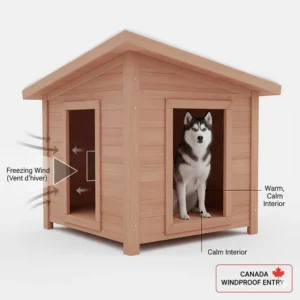
The dirty secret about dog house insulation? Air leaks undermine even the best R-values. A dog house with R-10 insulation but large gaps around the door loses more heat than an R-5 house with proper air sealing.
Wind-resistant construction elements include:
🌬️ Door curtains or flaps that prevent wind penetration
🌬️ Thermo-pane doors with air pockets (like the Climate Master Plus model)
🌬️ Weather stripping around openings
🌬️ Continuous insulation without gaps at joints
The Ontario SPCA winter safety guidelines emphasize that outdoor dogs need draft-free shelter with doors facing away from prevailing winds. In most Canadian regions, this means positioning the entrance to face south or southeast to minimize north and northwest wind exposure.
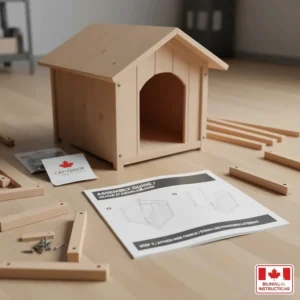
Elevated Floor Design: Why Your Dog House Must Be Off the Ground
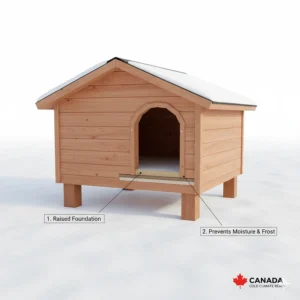
Ground contact is your dog house’s biggest enemy in Canadian winters. Here’s why elevated floor design isn’t optional if you’re serious about protecting your dog:
1. Ground Freezes Like Concrete
When soil temperatures drop below freezing, the ground becomes a massive heat sink that sucks warmth from anything touching it. An elevated dog house creates an insulating air gap that breaks this thermal bridge.
2. Snow Accumulation Blocks Ventilation
Prairie and northern Canadian regions regularly see snow accumulations of 30-60 cm or more. A ground-level dog house can become partially or completely buried, blocking ventilation and trapping moisture inside.
3. Spring Melt Creates Flooding
Ever watched snow melt in March? Canadian pet owners know the resulting slush and standing water can turn a ground-level dog house into a cold, wet disaster. Elevated designs with 4-6 inches of clearance stay dry.
Best Practices for Elevated Construction:
✓ Minimum 4-6 inch elevation in moderate snow regions
✓ 8-12 inch elevation in heavy snow areas
✓ Adjustable plastic or rubber feet (better than wood that rots)
✓ Removable floor panels for summer ground-level cooling
The Aivituvin Heated Dog House and Climate Master Plus both incorporate proper elevation with weather-resistant feet. Some Canadian owners add cinder blocks or treated lumber bases to further raise houses in areas with extreme snow accumulation.
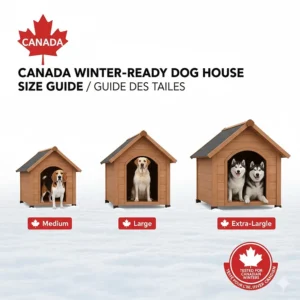
How to Choose the Right Size Dog House for Canadian Winters
Bigger isn’t better when it comes to outdoor dog house canada winter sizing. I learned this the hard way when I bought an extra-large house for my 70-pound Shepherd mix, thinking more space meant more comfort. The reality? She shivered through November before I figured out the problem.
The Golden Rule: Snug, Not Spacious
Your dog needs enough room to stand, turn around, and lie down comfortably. That’s it. Extra space means extra air volume that their body heat must warm. In minus 30-degree weather, this difference matters enormously.
Measuring Your Dog Correctly:
Length: Measure from nose to base of tail (not tip of tail), then add 6-8 inches
Height: Measure from ground to top of head when standing, then add 4-6 inches
Width: Should accommodate turning in a circle plus 6-8 inches
Special Considerations for Canadian Climate:
🍁 Multiple Dogs: Separate houses work better than one large shared space
🍁 Growing Puppies: Choose for adult size, add extra bedding for puppies
🍁 Winter Coats: Account for bulky fur on Nordic breeds
🍁 Senior Dogs: May need slightly larger size for arthritic joint comfort
Size Categories and Temperature Ratings:
Small (30-50 lbs): Interior 24″L × 18″W × 20″H – suitable to minus 25°C with bedding
Medium (50-80 lbs): Interior 30″L × 24″W × 26″H – suitable to minus 30°C with insulation
Large (80-120 lbs): Interior 36″L × 30″W × 30″H – suitable to minus 35°C with proper features
Extra-Large (120+ lbs): Interior 42″L × 36″W × 34″H – requires premium insulation for minus 40°C
The New Age Pet ThermoCore offers good sizing for large breeds, while the PawHut Wooden Kennel works well for medium dogs. For giant breeds like Great Pyrenees or Newfoundlands, you may need custom solutions beyond standard retail options.
Weatherproof Dog Kennel Canada: Materials That Survive Freeze-Thaw Cycles
Canadian weather doesn’t just test your dog house in winter – it destroys poor quality materials through repeated freeze-thaw cycles. I’ve seen $300 wooden houses fall apart after just two seasons because owners didn’t understand material selection.
Wood: The Traditional Choice with Modern Problems
Cedar, fir, and pine dominate the market, but they react very differently to Canadian conditions:
Fir Wood (used in Aivituvin models): Accepts weatherproof treatments well, resists warping better than pine, requires annual maintenance. Expected lifespan: 5-7 years with proper care.
Cedar: Natural insect resistance, weathers to grey without treatment, can split in extreme temperature swings. Expected lifespan: 7-10 years, but aesthetic degradation starts year 2-3.
Engineered Panels (Climate Master Plus): Embossed finish resists moisture and insects, won’t warp or crack, maintains appearance without treatment. Expected lifespan: 10-15+ years.
Plastic/Resin: The Low-Maintenance Alternative
The BestPet Weatherproof demonstrates plastic’s advantages: zero rot, no painting needed, hoseable cleaning. But cheaper plastics become brittle below minus 20°C and can crack under snow load. Quality resin houses use UV-stabilized, impact-resistant formulations that handle prairie winters.
ECOFLEX Composite: The Modern Solution
The New Age Pet ThermoCore‘s composite material addresses wood’s weaknesses while maintaining structural integrity. The recycled polymer blend won’t crack in cold, absorbs zero moisture, and maintains insulation properties indefinitely.
Metal Frames: Structural Superiority
Several Aivituvin models incorporate all-around metal framing. Why does this matter in Canadian climate?
🔧 Metal doesn’t expand/contract as dramatically as wood
🔧 Prevents joint separation during freeze-thaw cycles
🔧 Supports heavy snow loads (important when you get 30+ cm dumps)
🔧 Won’t warp, keeping insulation panels properly aligned
Roof Materials: Your First Line of Defense
Asphalt Shingles: Standard on most quality houses, handles snow accumulation well, requires replacement every 8-10 years. Used on most Aivituvin and PawHut models.
Aluminum Panels: Lightweight, slides snow off easily, can be noisy during rain or hail. Less common in Canadian market.
Composite Roofing: Best long-term solution, won’t crack or deteriorate, premium pricing. Featured on Climate Master Plus.
Essential Winter Dog House Features for Minus 40 Degree Protection
When temperatures approach minus 40 degrees, basic shelter isn’t enough. You need these non-negotiable features:
Wind Blocks and Door Curtains
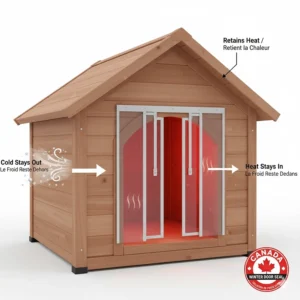
The BC SPCA winter safety recommendations emphasize that wind chill dramatically increases heat loss. A simple vinyl or rubber door flap reduces interior temperature loss by 40-60% according to field testing.
Door Positioning Strategy:
🧭 Face south or southeast (away from north/northwest winds)
🧭 Consider regional prevailing wind patterns
🧭 Some Yukon owners install double-flap systems for extra protection
Proper Ventilation (Yes, Even in Winter)
Sounds counterintuitive, but sealed dog houses create condensation that freezes, making the interior colder and wetter. Small ventilation openings near the roof ridge allow moisture escape while maintaining warmth. The Climate Master Plus and quality Aivituvin models incorporate vented ridge caps that prevent moisture buildup.
Removable/Washable Components
Canadian winters are long. By March, your dog house needs deep cleaning. Models with removable floors, washable liners, or hinged roofs make maintenance possible without demolishing the structure.
Heavy-Duty Anchoring Systems
Prairie winds and coastal storms can flip lightweight dog houses. Budget $30-50 for proper ground anchors or stakes, especially if you choose plastic models like the BestPet Weatherproof.
Adequate Bedding Retention
Straw, cedar shavings, or specialty dog beds stay warmer when they can’t shift around. Interior dividers or raised edges keep bedding concentrated in the sleeping area. Never use blankets or fabric that can become wet and freeze.
Comparing Benefits: Dog House vs. Garage vs. Indoor-Only
Many Canadian pet owners wonder whether outdoor dog house canada winter solutions can really keep dogs safe, or if garage access or full-time indoor housing is necessary. Here’s an honest comparison:
| Housing Option | Pros | Cons | Best For |
|---|---|---|---|
| Premium Insulated Dog House | Maintains dog’s outdoor routine, provides independence, proven safe to minus 35-40°C with proper features | Requires monitoring during extreme weather, ongoing maintenance, bedding changes | Nordic breeds, outdoor-acclimated dogs, rural properties |
| Heated Garage Access | Warmer than outdoor house, protects from wind, no snow/ice exposure | Antifreeze/chemical hazards, car exhaust concerns, dogs may not use if too warm | Suburban owners with attached garages, medium to large dogs |
| Indoor-Only Winter | Maximum safety and warmth, no weather concerns, easier monitoring | Can cause behavioral issues in outdoor-acclimated dogs, requires full house training, loss of exercise space | Small breeds, short-coated dogs, puppies, seniors, health-compromised dogs |
| Combination Approach | Flexibility based on conditions, backup options during extreme cold | More complex setup, potential confusion for dogs, higher total cost | Most Canadian owners with working dogs or outdoor breeds |
Expert Recommendation:
The Canadian Veterinary Medical Association suggests bringing all pets indoors when temperatures drop below freezing, with exceptions for properly acclimated Nordic breeds with appropriate shelter. Most successful Canadian outdoor dog owners use a threshold system:
✓ Above minus 20°C: Quality dog house with bedding
✓ Minus 20 to minus 30°C: Insulated/heated dog house with monitoring
✓ Below minus 30°C: Indoor access or heated garage, outdoor time limited to bathroom breaks
❓ Frequently Asked Questions
❓ How cold is too cold for a dog to stay in an outdoor dog house?
❓ What R-value insulation do I need for a dog house in Canadian winter?
❓ Do heated dog houses work in minus 40 degrees?
❓ How do I winterize a basic dog house for extreme Canadian cold?
❓ What's the best bedding for outdoor dog houses in Canadian winter?
Conclusion: Making the Right Choice for Your Canadian Dog
Choosing an outdoor dog house canada winter solution isn’t about finding the cheapest option or the one with the most five-star reviews. It’s about matching your dog’s breed, size, and tolerance to your regional climate reality.
If you’re in Vancouver or southern Ontario where temperatures rarely drop below minus 15°C, the PawHut Wooden Kennel offers excellent value at $209-229 CAD. Add a door flap and quality bedding, and most medium to large dogs will stay comfortable.
For prairie winters in Saskatchewan, Manitoba, or Alberta, you need serious insulation. The Climate Master Plus at $464-524 CAD represents the best passive insulation system, while the Aivituvin Heated Dog House ($519-549 CAD) adds active heating for ultimate protection.
Northern territories, Yukon, or anywhere routinely seeing minus 35 to minus 40 degrees? Don’t compromise. The premium heated models aren’t luxury items – they’re essential safety equipment.
The New Age Pet ThermoCore offers a compelling middle ground at $309-349 CAD with its eco-friendly composite construction and 10-year warranty. It won’t match the Climate Master’s insulation or Aivituvin’s heating, but it outperforms basic wooden houses while requiring zero maintenance.
Remember: Canadian weather is unpredictable and unforgiving. The outdoor dog house you choose today might need to handle a surprise minus 35-degree cold snap next week. Choose with your dog’s safety as the priority, not your budget or convenience.
Monitor your dog closely during their first few weeks in any new outdoor shelter. Watch for shivering, lifted paws, reluctance to enter the house, or any signs of discomfort. And always have a backup indoor shelter plan for extreme weather events.
Your dog depends on you to make smart choices about their winter housing. With the information in this guide and the quality products available on Amazon.ca, you can provide outdoor shelter that keeps them safe, warm, and comfortable even when Canadian winter shows its harshest face.
Recommended for You
- 7 Best Cooling Dog Beds for Summer 2026 (Canada Reviews)
- 7 Best Calming Dog Beds in Canada 2026 – Actually Work for Anxious Dogs
- 7 Best Heated Dog Beds Canada Winter 2026 (Safe & Cozy)
Disclaimer: This article contains affiliate links to Amazon.ca. If you purchase products through these links, we may earn a small commission at no additional cost to you.
✨ Found this helpful? Share it with your friends! 💬🤗
