
In This Article
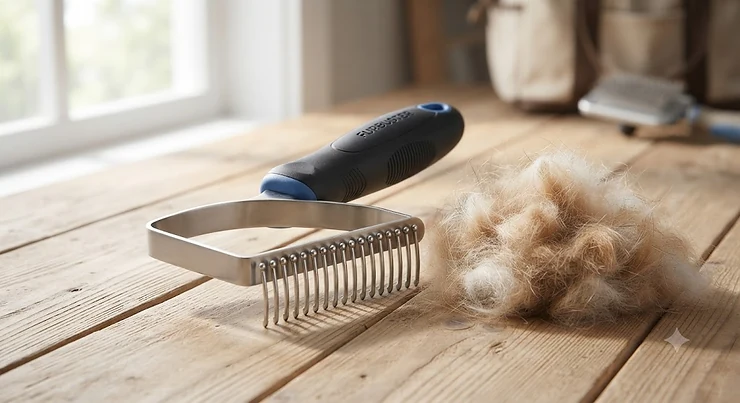
If you’ve ever vacuumed your living room on a Tuesday and found a tumbleweed of fur rolling across the floor by Wednesday, you already know why an undercoat rake for heavy shedding dogs isn’t a luxury purchase — it’s practically a household appliance. Double-coated breeds like Huskies, German Shepherds, and Golden Retrievers don’t just shed; twice a year they stage what groomers affectionately call a “coat blow,” where the dense woolly undercoat lets go in clumps. A slicker brush barely skims the surface. A regular comb gives up halfway through. What actually gets down into that insulating layer is a rake — a row (or two) of stainless-steel pins built specifically to grab loose undercoat without shredding the protective topcoat above it.
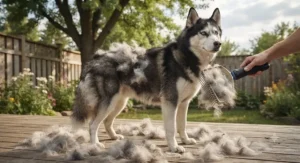
This guide skips the marketing fluff and gets into the specifics: seven real, currently available undercoat rakes, what their tooth spacing and handle design actually mean for a dog with thick fur, and how they stack up against each other in daily use. We’ll also dig into coat raking technique, mat prevention, and the sometimes-confusing question of undercoat rake versus deshedding brush — because picking the wrong tool for your dog’s coat type is the single fastest way to waste an evening and irritate a very patient Malamute. Whether you’re outfitting a first-time puppy grooming kit or replacing a rake that’s finally given up after three shedding seasons, here’s what actually matters.
Quick Comparison Table
| Product | Best For | Row Type | Price Range (CAD) |
|---|---|---|---|
| Coastal Pet Safari Double Row Undercoat Rake | All-round heavy shedders | Double row | around C$20-C$30 |
| Mars Coat King Original Dematting Rake (16-Blade) | Professional-grade mat splitting | Single row, angled blades | C$45-C$65 range |
| FURminator Dog/Cat Grooming Rake | Daily maintenance brushing | Single row, rotating teeth | around C$25-C$35 |
| Hertzko Grooming Dematting Comb | Budget-conscious owners | Single row, dual-tooth spacing | under C$25 |
| GoPets Double Row Dematting Rake | Large dogs, mat removal | Double row, dual-sided | C$20-C$30 range |
| Andis Premium Fine-Tooth Deshedding Rake | Finishing without topcoat damage | Fine single row | C$35-C$50 range |
| Wahl Double Row Rake & Shedding Blade | Combo raking + blade thinning | Double row + blade | C$25-C$35 range |
Looking at the spread above, there’s a clear pattern: budget picks like the Hertzko Grooming Dematting Comb trade a bit of durability for an accessible price, while tools like the Mars Coat King Original Dematting Rake justify their higher cost with German-engineered stainless steel that groomers use daily for years. If your dog has a single coat blow-out season and moderate fur, a mid-range double-row rake like the Coastal Pet Safari Double Row Undercoat Rake or GoPets Double Row Dematting Rake will likely cover you completely, while owners of extremely thick-coated breeds (think Great Pyrenees or Chow Chow) tend to get more mileage out of the heavier-duty options.
💬 Just one click — help others make better buying decisions too!😊
Top 7 Undercoat Rakes: Expert Analysis
1. Coastal Pet Safari Double Row Undercoat Rake — best all-rounder for hilly, heavy-shedding coats
The double row of rotating pins is what sets this one apart — instead of a single line of teeth that can miss patches of loose fur, the second row catches what the first one skims past. Coastal Pet built the pins with a gentle taper and rounded tips (roughly 6.25 in / 16 cm long, 4.25 in / 10.8 cm wide working head), which matters more than it sounds like it should: cheaper rakes with flat-cut pin ends tend to scratch the skin on dogs with less padding, like a German Shepherd’s flank or a Husky’s belly. Based on the spec comparison, this is the rake most groomers reach for first because it splits the difference between aggressive undercoat removal and everyday comfort.
This is a strong match for medium to large double-coated breeds that need a twice-weekly grooming routine rather than daily intervention — Golden Retrievers, Border Collies, and Bernese Mountain Dogs all fall into that sweet spot. Reviewers consistently report that the rotating pin design reduces the “stuck and yanked” feeling dogs sometimes react badly to, which in practice means less resistance during grooming sessions. A common theme in aggregated feedback is that it performs best on already-brushed coats rather than heavily matted ones, so it’s not the tool to reach for after your dog has been skipped for three weeks straight.
Pros:
- ✅ Double-row design catches more loose undercoat per pass
- ✅ Rounded pin tips are gentle on sensitive skin areas
- ✅ Comfortable for twice-weekly maintenance grooming
Cons:
- ❌ Less effective on coats that are already badly matted
- ❌ Rotating pins can loosen slightly with heavy long-term use
At around C$20-C$30, this sits comfortably in the mid-range, and for the average heavy-shedding household pet, it’s a reasonable value pick that should last multiple shedding seasons with proper care.
2. Mars Coat King Original Dematting Rake (16-Blade) — best for professional-grade mat splitting
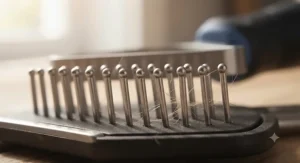
Made in Germany with a solid wooden handle and stainless-steel angled blades, the Coat King line has quietly become the tool professional groomers grab when a rake alone won’t cut it (sometimes literally). What most buyers overlook about this model is that it isn’t a traditional pin rake — it’s closer to a stripping comb, with blades set at a precise angle that split hair rather than pull it in a clump. That distinction matters enormously for dogs carrying dense, matted undercoat, because it reduces the tension on the skin underneath the mat.
The 16-blade version strikes a middle ground: enough blades to cover ground efficiently on a Labrador or Aussiedoodle-sized dog, without being so wide that it’s unwieldy in tight areas like behind the ears. Aggregated reviewer sentiment is notably consistent across multiple retailers — owners of German Shepherd mixes, Great Pyrenees, and Icelandic Sheepdogs repeatedly describe it as more effective than a standard rake or the popular blade-style deshedding tools, particularly for dogs whose undercoat has already begun matting into felted patches.
Pros:
- ✅ Splits mats instead of yanking, reducing skin tension
- ✅ Durable stainless steel built for years of repeated use
- ✅ Wooden handle reduces hand fatigue during long sessions
Cons:
- ❌ Premium price point compared to standard rakes
- ❌ Learning curve for owners unfamiliar with angled-blade tools
Priced in the C$45-C$65 range depending on blade count, it’s the most expensive tool on this list, but the value verdict holds up: for dogs with genuinely difficult, thick, matting-prone coats, it typically pays for itself by avoiding an emergency trip to the groomer for a shave-down.
3. FURminator Dog/Cat Grooming Rake — best for gentle, frequent undercoat maintenance
FURminator built its reputation on the deShedding tool with the blade edge, but the Grooming Rake variant is a different animal entirely — a single row of long, rotating metal teeth with varying spacing between prongs, designed to work through dense fur without the cutting action of the blade tools. The rotation is the key engineering detail here: as the teeth catch fur and turn slightly with the motion of your hand, they release tension that would otherwise pull directly on the hair follicle.
Here’s what to weigh: this rake genuinely excels at daily or every-other-day maintenance brushing on dogs with medium to long, dense coats — Great Pyrenees mixes, Shepherd crosses, and long-haired Pugs all show up frequently in aggregated review data. Where it consistently struggles, according to repeated reviewer feedback, is in tight areas around the face, ears, and legs, where the long teeth are simply too large to manoeuvre precisely. It’s also not marketed or well-suited as a dematting tool for established mats — it’s a maintenance rake, not a rescue tool.
Pros:
- ✅ Rotating teeth reduce pulling sensation during brushing
- ✅ Varying tooth spacing captures more undercoat per stroke
- ✅ Widely available with strong aggregate review volume
Cons:
- ❌ Struggles with tight spots like ears and legs
- ❌ Not designed to remove already-formed mats
In the C$25-C$35 range, it’s a solid mid-tier choice, best suited to owners who brush frequently rather than those managing an already-overgrown coat.
4. Hertzko Grooming Dematting Comb — best budget pick for dual-duty raking and dematting
Hertzko’s approach here is refreshingly simple: rust-resistant stainless-steel teeth on an ergonomic handle with an added thumb rest, priced to be an easy first purchase rather than a professional investment. The 2.5-inch (6.35 cm) wide head is narrower than some competitors, which actually works in its favour for smaller dense-coated breeds or for tackling localized problem areas like behind the legs, where a wider rake can feel clumsy.
Based on the spec comparison against pricier options, the trade-off is durability rather than function — the teeth do the job of loosening tangles and pulling undercoat, but the metal is noticeably lighter-gauge than what you’d find on the Mars Coat King or Andis options. Reviewers consistently note that it’s genuinely effective on medium to long-haired pets prone to matting, though a recurring complaint in aggregated feedback centres on the handle orientation feeling awkward for left-handed users, since the tooth angle is optimized for a right-hand grip.
Pros:
- ✅ Accessible entry-level price for first-time buyers
- ✅ Rounded edges keep it gentle on sensitive skin
- ✅ Thumb rest improves control during longer sessions
Cons:
- ❌ Lighter-gauge teeth wear faster than premium options
- ❌ Ergonomics favour right-handed grooming technique
At under C$25, this is the pick for anyone testing whether their dog will tolerate raking at all before committing to a pricier tool.
5. GoPets Double Row Dematting Rake — best value 2-in-1 for large, thick-coated dogs
GoPets built this one specifically around the “deep reach” problem that plagues single-row rakes on truly dense double coats — Huskies, Doodles, and long-haired cats with heavy undercoat need something that can penetrate past the topcoat without snagging on it constantly. The double-row, rounded stainless-steel teeth are mounted on a silicone gel-filled handle, which is a small detail that makes a real difference over a 15-minute grooming session; gel handles conform slightly to grip pressure and reduce the hand cramping that rigid plastic handles cause.
What the spec sheet won’t tell you, but reviewer patterns suggest, is that this rake performs particularly well as a “first pass” tool before switching to a finer comb — it’s excellent at bulk undercoat removal but less precise for finishing work. GoPets also donates a portion of profits to animal rescue organizations, which won’t change how well the rake performs, but it’s a detail some Canadian pet owners factor into a purchase decision regardless.
Pros:
- ✅ Deep-reach double row handles dense double coats well
- ✅ Gel-filled handle reduces hand fatigue on long sessions
- ✅ Strong value relative to price point
Cons:
- ❌ Less precise for detail work around face and paws
- ❌ Wide head can feel bulky on small dog breeds
Sitting in the C$20-C$30 range, it’s arguably the best value pick on this list for large, heavily double-coated dogs specifically.
6. Andis Premium Fine-Tooth Deshedding Rake — best for finishing without topcoat damage
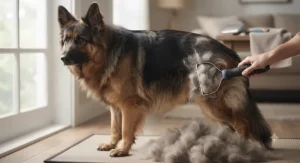
Andis has built salon-grade tools for professional groomers for decades, and the fine-tooth deshedding rake reflects that heritage — it’s designed as a finishing tool rather than a bulk-removal one, with closely spaced fine teeth engineered to catch the last of the loose undercoat that a wider-toothed rake leaves behind. The ergonomic handle is built for repeated, all-day salon use, which for a home groomer translates into noticeably less fatigue during a thorough session on a large, heavily coated dog.
Reviewers consistently note that the fine spacing is genuinely gentler on the topcoat compared to standard rakes, meaning less risk of accidentally thinning the protective outer layer — a real concern with breeds whose topcoat serves an insulating, weatherproofing function. Where it falls short, based on aggregated feedback, is speed: because the teeth are finer and more closely spaced, it simply takes more passes to clear the same amount of undercoat compared to a wide double-row rake, making it a poor choice as your only tool for a severely matted coat.
Pros:
- ✅ Fine spacing protects topcoat from accidental thinning
- ✅ Salon-grade build quality designed for repeated use
- ✅ Comfortable ergonomic handle reduces session fatigue
Cons:
- ❌ Slower bulk removal compared to wide double-row rakes
- ❌ Premium pricing relative to entry-level competitors
Priced around C$35-C$50, this earns its spot as a secondary finishing tool rather than a sole all-purpose rake, best paired with a wider tool for heavy shedding events.
7. Wahl Double Row Rake & Shedding Blade — best 2-in-1 combo for raking and blade thinning
Wahl’s take on the category combines a double-row rotating pin rake on one side with a shedding blade on the other, mounted on a comfort-grip gel handle — essentially giving you two grooming tools in a single purchase. This matters practically for owners managing multiple grooming tasks: the rake handles the bulk undercoat pull, while flipping to the blade side allows for targeted thinning in areas where the coat is particularly dense or where a slightly closer finish is wanted, without reaching for a second product entirely.
Based on the spec comparison, the trade-off with any combination tool is that neither side is quite as specialized as a dedicated single-purpose rake or blade — the rotating pins are effective but not quite as deep-reaching as the GoPets or Safari double rows, and the blade side requires more careful, controlled technique to avoid over-thinning a topcoat. Still, for owners who want one tool in the grooming kit rather than three, aggregated feedback suggests it handles the “good enough for most situations” role reasonably well.
Pros:
- ✅ Two tools in one purchase saves kit space and cost
- ✅ Comfort-grip gel handle reduces strain on longer sessions
- ✅ Rotating pins ease pulling sensation for the dog
Cons:
- ❌ Neither side matches a dedicated specialist tool
- ❌ Blade side requires careful technique to avoid over-thinning
At C$25-C$35, it’s a practical middle-ground purchase for owners who want raking and light thinning covered without buying two separate products.
Practical Usage Guide: Coat Raking Technique That Actually Works
Buying the right rake solves half the problem — the other half is technique, and this is where most first-time owners go wrong. Start with a completely dry coat; wet or damp fur clumps the rake teeth and makes the pins skip over tangles rather than working through them. Hold the rake at a shallow angle, almost parallel to the direction the fur grows, and use short, gentle strokes rather than long dramatic sweeps — long strokes tend to catch on a snag and yank, which is exactly the sensation that teaches a dog to dread grooming sessions.
Work in sections: legs, then flanks, then back, then chest, checking the rake teeth between each section and clearing accumulated fur so the pins keep making full contact with the coat. For the first 30 days with a new rake, expect your dog to need some acclimatization — even a well-designed tool feels unfamiliar at first, so five-minute sessions that gradually lengthen tend to work better than one exhausting hour-long grooming marathon on day one. A common mistake is pressing down harder when a rake seems ineffective; more pressure usually just irritates the skin rather than improving results, and a genuinely stuck rake usually signals a mat that needs a dematting comb first.
Maintenance-wise, rinse metal teeth after use if your dog has been outdoors, and dry the rake fully before storage to prevent rust on stainless-steel pins, even the rust-resistant ones. According to CBC Life’s grooming guide, giving your dog a bit of exercise before a grooming session can noticeably improve their patience and cooperation, which lines up with what most experienced groomers already know — a hyper, wound-up dog makes coat raking twice as difficult as it needs to be.
Real-World Scenarios: Matching the Rake to Your Dog
Consider three different owners tackling the same underlying problem. First, a downtown Toronto condo-dweller with a Golden Retriever puppy just starting to develop an adult double coat — moderate shedding, limited storage space, and a budget under C$30. For this profile, the Hertzko Grooming Dematting Comb or Coastal Pet Safari Double Row Undercoat Rake makes the most sense: manageable size, gentle enough for a young dog still learning to tolerate grooming, and priced to make trial-and-error affordable if the first tool isn’t a perfect fit.
Second, a rural Alberta household with two Huskies who “blow” their coats dramatically every spring and fall, producing what feels like an entirely new dog’s worth of fur in garbage bags. This is a frequency-and-volume problem, not a precision problem, so the GoPets Double Row Dematting Rake paired seasonally with the Mars Coat King Original Dematting Rake for the worst matted patches covers both the everyday maintenance and the twice-yearly crisis mode efficiently.
Third, a suburban family with an aging Bernese Mountain Dog who has some skin sensitivity and can no longer tolerate long grooming sessions comfortably. Here, gentleness and finishing precision matter more than raw speed, making the Andis Premium Fine-Tooth Deshedding Rake a stronger match than a heavier double-row tool — shorter, more frequent sessions with a gentler rake tend to be far more sustainable for an older dog than infrequent aggressive raking.
Mat Prevention: Problem → Solution Guide
Mats don’t appear overnight; they build gradually from friction points where loose undercoat gets trapped against skin and tangles with surrounding hair, and prevention is genuinely easier than removal. Below are the recurring problems Canadian pet owners run into, matched with practical fixes.
Problem one: mats forming behind the ears and in the armpits, the two most common trouble spots on double-coated breeds. Solution: target these areas specifically two to three times a week with a narrower rake like the Hertzko Grooming Dematting Comb, since wider rakes struggle to manoeuvre into these tight, curved zones before mats have a chance to set in.
Problem two: seasonal blow-outs overwhelming a normal grooming routine. Solution: increase raking frequency to daily during peak shedding weeks (typically spring and fall in most of Canada) using a double-row rake like the Coastal Pet Safari Double Row Undercoat Rake, since catching loose undercoat before it has time to felt into mats is far easier than removing established tangles later.
Problem three: bathing without pre-brushing, which is a surprisingly common trigger — water tightens existing tangles into denser mats. Solution: always rake or comb through the coat fully before a bath, ideally reserving a rake session the day before rather than immediately beforehand, giving any skin irritation time to settle.
Problem four: a coat that’s already matted into stubborn clumps. Solution: reach for an angled-blade tool like the Mars Coat King Original Dematting Rake, which splits mats with less pulling tension than a standard pin rake attempting to force its way through the same clump.
How to Choose an Undercoat Rake for Thick Fur
Choosing correctly among the crowded field of options comes down to a handful of genuinely important criteria, not marketing claims about percentage shedding reduction.
- Tooth spacing relative to coat density. Thicker fur generally needs wider spacing so teeth don’t clog immediately; extremely dense breeds like Chow Chows benefit from a double-row rake specifically for this reason.
- Pin length matched to coat depth. Long-coated breeds need pins that reach past the topcoat into the undercoat layer, typically around 0.9-1 inch (2.3-2.5 cm), without being so long they poke uncomfortably against skin.
- Rounded versus flat pin tips. Rounded tips reduce the risk of scratching sensitive skin areas, an important consideration for dogs with thin coats around the belly or legs.
- Handle ergonomics for session length. Gel or silicone-filled handles reduce hand fatigue significantly during the longer sessions that heavy shedders require.
- Single row versus double row. Single rows offer more precision for detail work; double rows cover ground faster for bulk undercoat removal on larger dogs.
- Rotating versus fixed teeth. Rotating designs generally reduce the pulling sensation dogs react negatively to, which matters enormously for long-term cooperation.
- Durability of the metal. Higher-gauge stainless steel holds its shape and sharpness through repeated seasonal use, which is where premium options like Mars or Andis distinguish themselves from budget alternatives.
Undercoat Rake vs Deshedding Brush
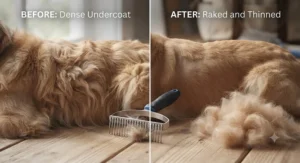
The terminology gets muddled online, but the distinction matters practically. An undercoat rake uses individual metal pins, either single or double row, to physically hook into dense undercoat and pull loose fur free — it’s built for penetration depth, reaching past the topcoat into the woolly layer beneath. A deshedding brush, by contrast, typically uses a wider bank of shorter, blunter teeth or a blade edge across a flatter head, designed to skim a broader surface area with each stroke rather than dig deep into one spot.
For genuinely heavy-shedding, thick-coated breeds, the rake generally wins on raw undercoat removal because its narrower, longer pins can access what a brush’s shorter teeth simply can’t reach. Deshedding brushes tend to perform better on medium-coated or short-haired dogs, where there’s less depth to penetrate and broader surface coverage matters more than digging deep. Reviewers comparing the two tools across different breeds consistently note that Labrador and Beagle owners often prefer brush-style tools, while Husky, German Shepherd, and Malamute owners lean toward rakes almost universally — a pattern that tracks logically with actual coat structure rather than brand preference. Many experienced groomers ultimately keep both: a rake for undercoat-heavy sessions and a brush for quick daily surface maintenance in between.
Rake Tool for Shedding Season: What to Expect
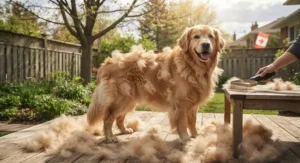
Spec sheets describe teeth counts and materials, but they rarely describe what a genuine shedding-season session actually feels and looks like. Expect volume — during peak blow-out weeks, a single 10-15 minute session with a double-row rake on a Husky or Shepherd can produce enough loose undercoat to fill a small grocery bag, which surprises many first-time owners who assume something has gone wrong. It hasn’t; this is the coat doing exactly what it’s designed to do.
Expect your dog’s tolerance to shift session to session. A rake that felt comfortable on Monday might trigger more fidgeting on Thursday if a new tangle has formed near a sensitive area, so reading your individual dog’s body language matters more than following a rigid schedule. Expect visible improvement quickly — unlike some grooming interventions with delayed results, raking shows an immediate before-and-after difference in coat volume and shedding around the house within the first few sessions. And expect some shedding to continue regardless of tool quality; no rake eliminates shedding entirely, since the underlying biological cycle continues regardless of grooming intervention — the goal is capturing loose fur before it ends up on your furniture, not stopping the process altogether.
Heavy-Shedding Breed Care for Different Coat Types
Not every heavy shedder needs identical treatment, and lumping all double-coated breeds together leads to mismatched tool choices. Nordic and spitz-type breeds — Huskies, Malamutes, Samoyeds — carry exceptionally dense, plush undercoats built for extreme cold, and these dogs generally respond best to wide double-row rakes used frequently during their dramatic biannual coat blows, since the sheer volume of loose fur outpaces what a narrower tool can handle efficiently.
Herding breeds with medium double coats — German Shepherds, Border Collies, Australian Shepherds — tend to shed more consistently year-round with less dramatic seasonal spikes, making a mid-weight rotating-pin rake used two to three times weekly a better long-term fit than an aggressive tool reserved for occasional heavy sessions. Giant working breeds with long double coats — Great Pyrenees, Bernese Mountain Dogs, Newfoundlands — face the highest matting risk given coat length combined with density, and these breeds specifically benefit from pairing a dematting rake like the Mars Coat King with regular maintenance brushing, rather than relying on raking alone.
Smaller double-coated breeds, like Pomeranians or Corgis, shed proportionally just as much relative to their size but need narrower, gentler tools scaled appropriately — a rake built for a Great Pyrenees will simply be unwieldy and potentially uncomfortable on a 10 kg (22 lb) frame.
✨ Don’t Miss These Exclusive Deals!
🔍 Take your grooming routine to the next level with these carefully selected undercoat rakes. Click on any highlighted item to check current pricing and availability. These tools will help you keep a cleaner home and a happier, more comfortable dog all shedding season long!
Common Mistakes When Buying an Undercoat Rake
The most frequent mistake is buying based purely on price without matching tooth spacing to actual coat density — a bargain rake that clogs constantly on a genuinely thick coat ends up costing more in wasted time than a slightly pricier option built for the job. Close behind is ignoring pin length entirely; a rake with short pins looks similar in photos but simply won’t reach a deep undercoat, leaving owners frustrated when shedding doesn’t visibly improve.
Another common misstep is purchasing a single-purpose dematting tool as if it were a maintenance rake, or vice versa — dematting tools like the Mars Coat King are engineered to split established tangles, and using one daily on an already-smooth coat is more aggressive intervention than necessary. Owners also frequently overlook handle ergonomics, assuming any handle will do, then discover during a 20-minute session on a large dog that hand fatigue becomes the limiting factor rather than the dog’s patience. Finally, many buyers skip reading aggregated review patterns around durability specifically for their dog’s coat type, assuming a five-star average applies universally, when in reality a tool beloved by short-haired dog owners may perform quite differently on a dense double coat.
Long-Term Cost & Maintenance
Thinking beyond the initial purchase price reveals a clearer value picture. A budget rake in the C$15-C$25 range might need replacing every one to two shedding seasons as pins loosen or bend, while a premium stainless-steel tool in the C$45-C$65 range, properly dried and stored between uses, can realistically last five or more years of regular seasonal use. Run the simple math over a five-year ownership period: two or three budget replacements can add up to roughly the same total cost as one durable premium tool, without accounting for the time lost re-shopping and re-testing a new tool each time.
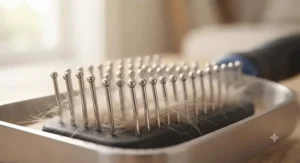
Maintenance itself costs almost nothing beyond a few minutes per use — clearing trapped fur from between teeth after each session, rinsing if the rake has been used outdoors or gotten damp, and storing it fully dry to prevent rust are the main habits that extend a rake’s working life significantly. Stainless steel resists corrosion far better than lower-grade alloys, which is one of the genuine, measurable differences justifying the price gap between entry-level and premium options — it isn’t purely branding.
Safety, Grooming Standards & Coat Health Considerations
Unlike some pet products, there’s no dedicated CSA certification specific to undercoat rakes, since these are simple mechanical grooming tools rather than electrical or safety-critical equipment; the relevant consumer protection instead falls under Canada’s general Canada Consumer Product Safety Act framework administered by Health Canada, which covers material safety and labelling for household goods broadly. What matters more practically is technique-based safety: applying excessive pressure with any rake, regardless of certification status, can cause skin irritation or, in dogs with genuinely thin coats, minor abrasion — which is why gentle, controlled strokes matter more than brand reputation.
Animal welfare organizations reinforce this point consistently. According to the Ontario SPCA, regular, appropriate grooming is considered a core component of responsible pet care, directly tied to skin health and early detection of issues like hot spots or parasites that can hide under a dense, unmanaged undercoat. Never shave a double-coated breed down to the skin as a shortcut around raking — the Ontario Veterinary College’s pet research group has documented ongoing interest in how coat and skin quality relate to overall canine health, and the double coat itself serves genuine insulating and UV-protective functions that shaving permanently disrupts in some breeds. Raking, done consistently and gently, remains the safer long-term approach for managing heavy shedding without compromising the coat’s protective structure.
Benefits vs Traditional Alternatives
| Method | Undercoat Reach | Skin Comfort | Best For |
|---|---|---|---|
| Undercoat rake | Deep | Good with rounded pins | Heavy-shedding double coats |
| Standard slicker brush | Shallow | Very good | Surface tangles, short-medium coats |
| Shedding blade | Moderate-deep | Requires careful technique | Thinning dense topcoat |
| Full shave-down | Complete removal | Risk of sunburn/overheating | Severely matted emergencies only |
Comparing these approaches directly, the undercoat rake occupies a genuinely useful middle ground — it reaches deeper than a standard slicker brush without the skin-comfort trade-offs of an aggressive shedding blade, and it avoids the coat-health risks associated with shaving a double-coated breed down entirely. For the vast majority of heavy-shedding households, rotating between a rake for deep sessions and a slicker brush for quick daily touch-ups covers nearly every practical grooming need without resorting to more drastic measures.
Frequently Asked Questions
❓ How often should I use an undercoat rake on a heavy-shedding dog?
❓ Can an undercoat rake damage my dog's topcoat?
❓ What size undercoat rake do I need for a large dog?
❓ Is a double row undercoat rake better than a single row?
❓ Do undercoat rakes work on cats with thick fur?
Conclusion
A genuinely effective undercoat rake for heavy shedding dogs comes down to matching tooth spacing, pin length, and row count to your specific dog’s coat density — not chasing the highest shedding-reduction percentage printed on a package. For most double-coated households, a solid mid-range double-row rake like the Coastal Pet Safari Double Row Undercoat Rake or GoPets Double Row Dematting Rake handles the majority of routine sessions comfortably, while a dedicated dematting tool like the Mars Coat King Original Dematting Rake earns its place in the kit for the twice-yearly coat blow that overwhelms everyday tools.
Technique matters just as much as the tool itself: dry coat, shallow angle, short gentle strokes, and consistent frequency during peak shedding weeks will outperform even the most expensive rake used carelessly. Combine raking with genuine mat prevention — targeting friction-prone areas like behind the ears before tangles set in — and most heavy-shedding breeds become genuinely manageable rather than a twice-yearly household crisis. Whichever tool from this list matches your dog’s specific coat, consistency in using it will always outweigh which specific brand sits in your grooming drawer.
✨ Don’t Miss These Exclusive Deals!
🔍 Take your grooming routine to the next level with these carefully selected undercoat rakes. Click on any highlighted item to check current pricing and availability. These tools will help you keep a cleaner home and a calmer, more comfortable dog all shedding season long!
Recommended for You
- Slicker Brush vs Pin Brush for Dogs: 7 Top Picks (2026)
- 7 Best Dog Wipes for Puppies in 2026: Gentle Picks That Actually Work
- Deshedding Tool for Double-Coated Dogs: 7 Top Picks for 2026
Disclaimer: This article contains affiliate links. As an Amazon Associate, I earn from qualifying purchases. If you purchase products through these links, we may earn a small commission at no additional cost to you.
✨ Found this helpful? Share it with your friends! 💬🤗
