
In This Article
Somewhere between the last brush stroke and the first “good boy,” there’s a tool doing the quiet, unglamorous work of keeping a long-haired dog looking like they stepped out of a shampoo commercial instead of a haystack. That tool is a dog comb for long-haired breeds, and if you’ve ever owned a Shih Tzu, a Yorkie, a Cocker Spaniel, or a Golden Retriever with serious feathering on the legs, you already know a slicker brush alone doesn’t cut it — literally. Brushes glide over the surface. A comb goes underneath, finds the hidden snarl behind the ear, and tells you the truth about what’s really going on in that coat.
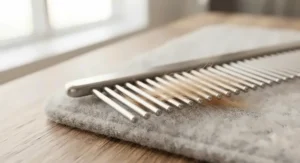
A dog comb for long-haired breeds is a metal-toothed grooming tool — usually stainless steel or coated aluminum, sometimes with rotating pins — built specifically to work through longer, silkier, or more feathered hair without the yanking a standard bristle brush causes on tangled sections. Unlike shorter-coated breeds, where a rubber curry or bristle brush does most of the job, long-haired dogs need a comb to check for hidden mats close to the skin, separate feathering on the ears and legs, and put a genuine finishing polish on the coat after the brush has done the bulk of the work. For context on where combing sits within the broader grooming picture, Wikipedia’s overview of dog grooming is a solid starting point on the practice as a whole.
I went through spec sheets, cross-referenced aggregated review sentiment from major pet retailers, and checked what’s actually stocked and shippable to Canadian addresses through Amazon.ca right now — not a U.S. listing wearing a maple leaf as a costume. What follows is seven real combs, running from a roughly C$12 rotating-pin budget pick up to a C$65 solid-brass show comb, all genuinely available to Canadian shoppers today. Some are everyday maintenance tools; one or two are the kind of thing a professional groomer keeps in a back pocket. I’ll flag which is which, because that distinction decides whether the comb you buy actually matches the coat you’re combing.
One honest caveat before the list: no comb, however good, replaces a consistent brushing habit. A C$60 comb used once a month on a Shih Tzu will lose to a C$12 comb used three times a week. Keep that in mind as you read, because the sections after the product list — on detangling technique, finishing touches, and breed-specific routines — matter just as much as which comb ends up in your cart.
Quick Comparison Table
Here’s how the seven combs stack up before the deep dive. Prices below are ranges, not snapshots, since Amazon.ca pricing on grooming tools shifts week to week.
| Product | Type | Best For | Price Range (CAD) |
|---|---|---|---|
| JW Pet GripSoft Rotating Comfort Comb | Rotating dual-pin comb | Gentle daily detangling on silky coats | C$12–C$18 |
| Wahl Premium Flea, Hair Pick & Finishing Comb | 3-in-1 pick/finishing comb | Quick finishing touches & flea checks | C$14–C$20 |
| Andis Pet Premium Steel Comb | Dual-density steel comb | Everyday detangling on longer coats | C$18–C$26 |
| Hertzko Double-Sided Dematting Comb | Self-cleaning double-sided comb | Silky, tangle-prone hair | C$20–C$28 |
| Resco Combination Comb | Ergonomic dual-spacing comb | Durable daily use, multi-dog homes | C$28–C$38 |
| FURminator Finishing Comb | Rotating-pin finishing comb | Curly & wavy long coats | C$20–C$28 |
| Chris Christensen Buttercomb | Solid-brass precision comb | Show-ready finishing on silky coats | C$55–C$75 |
A pattern shows up fast: the budget end leans on rotating pins to reduce pulling on delicate hair, while the premium end leans on solid metal construction and finer engineering for coats that need to look flawless, not just tangle-free. If your dog’s coat is silky and prone to snagging, start with a rotating comb like the JW Pet GripSoft Rotating Comfort Comb or the Hertzko Double-Sided Dematting Comb. If you’re after that last, polished pass before a show ring or a photo, the Chris Christensen Buttercomb earns its price tag.
💬 Just one click — help others make better buying decisions too!😊
Top 7 Dog Combs for Long-Haired Breeds: Expert Analysis
These seven cover the real spread a Canadian owner of a long-haired dog runs into: a silky Cocker Spaniel coat that snags on everything, a Golden Retriever’s feathering that mats behind the elbows, and a show-coat Poodle or Yorkie that needs a genuinely polished finish. Every product name below stays bolded on every mention so you can scan for the one you’re weighing.
1. JW Pet GripSoft Rotating Comfort Comb — best budget pick for gentle daily detangling
The standout feature is right in the name: stainless steel teeth that rotate 360 degrees as they move through the coat, which changes the whole feel of combing a tangle-prone dog.
The dual-sided fine-and-coarse design means one comb transitions from loose surface hair to tighter knots without a tool swap, and the GripSoft ergonomic handle keeps things controllable even on a wiggly, hard-to-hold dog. Based on the spec comparison against the fixed-tooth combs further down this list, the rotating-pin mechanism is genuinely the differentiator here — it’s the reason this comb shows up on so many groomer recommendation lists despite its low price. Aggregated review sentiment on major pet retail sites puts this comb at 4.6 out of 5 stars across roughly 203 ratings, with reviewers consistently describing rotating teeth as “gentle” and noting their dogs tolerate grooming sessions noticeably better than with a static comb. A recurring complaint flags the plastic housing that holds the rotating pins weakening after several months of regular use.
Pros:
- ✅ Rotating pins genuinely reduce pulling on tangled hair
- ✅ Dual fine/coarse sides cover light-to-moderate tangles
- ✅ Ergonomic non-slip handle stays comfortable over long sessions
Cons:
- ❌ Plastic pin housing can weaken after months of heavy use
- ❌ Not built for dense, close-to-skin mats
At the time of research, the JW Pet GripSoft Rotating Comfort Comb sits in the C$12–C$18 range, which is a reasonable entry point for a dog comb for long-haired breeds — check current price before ordering.
2. Wahl Premium Flea, Hair Pick & Finishing Comb — best 3-in-1 for quick finishing touches
What sets this one apart is versatility packed into a single handle: one side works as a flea-and-tick pick, the other as a genuine finishing comb, so you’re not juggling two separate tools mid-groom.
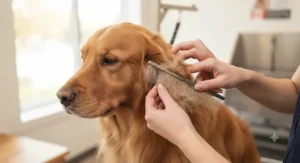
The ergonomic, soft-touch handle is shaped to sit naturally in the hand, which matters more than it sounds during a longer session on a full-coated breed like a Cocker Spaniel or Springer. Here’s what the spec sheet won’t tell you outright: pairing flea detection with a finishing pass means this tool doubles as a quick health check every time you groom, catching parasites and light tangles in the same motion. Reviewers on major retail platforms describe it as a reliable everyday tool for light detangling and stimulating the coat between full brushing sessions, though several note the tines are narrowly spaced and struggle once a section has genuinely matted rather than just tangled.
Pros:
- ✅ Doubles as a flea/tick check tool during every grooming pass
- ✅ Lightweight, ergonomic handle reduces hand fatigue
- ✅ Genuinely useful for quick finishing touches between full grooms
Cons:
- ❌ Narrow tine spacing struggles on established mats
- ❌ Smaller comb head means slower coverage on large dogs
The Wahl Premium Flea, Hair Pick & Finishing Comb typically lists in the C$14–C$20 range in Canada — check current price and availability before buying.
3. Andis Pet Premium Steel Comb — best all-around comb for everyday long coats
The Andis Pet Premium Steel Comb leans on brand pedigree and simple, dual-density design: one side coarse, one side fine, both cut from stainless steel that holds up to daily use far better than the plastic-tooth combs at the bottom of the price range.
At 7½ inches, the extended length keeps your hand well clear of the coat, which reduces the risk of nicking skin on a dog that won’t sit still, and the handle length also makes it genuinely comfortable to use through a full-body comb-out on a larger long-haired breed. Aggregated review sentiment sits at an impressive 4.7 out of 5 stars across roughly 822 ratings on major pet retail platforms, with 83% landing at five stars — reviewers consistently praise its effectiveness on long-haired dogs and cats specifically, describing it as gentler than a slicker brush while still working through real tangles. What most buyers overlook is that the wider coarse-side spacing isn’t built for short-haired pets; several reviewers with short-coated animals report the teeth are simply too far apart to catch much fur, which only reinforces that this is a long-hair specialist tool, not a universal one.
Pros:
- ✅ Dual coarse/fine steel sides cover most long-coat tangle levels
- ✅ Extended 7½-inch length keeps hands safely clear of skin
- ✅ Strong, consistent review sentiment specifically for long-haired coats
Cons:
- ❌ Occasional reports of surface rust spots on arrival
- ❌ Too widely spaced to be effective on short-haired pets
At the time of research, the Andis Pet Premium Steel Comb falls in the C$18–C$26 range — check current price, as Andis grooming tools frequently appear in seasonal bundle deals.
4. Hertzko Double-Sided Dematting Comb — best self-cleaning pick for silky, tangle-prone hair
The self-cleaning mechanism is the headline feature here: a retracting-tooth design pulls loosened hair off the comb with the push of a button, which sounds like a gimmick until you’re twenty minutes into detangling a Maltese and realize how much time it actually saves.
Long, rounded-edge stainless steel teeth are designed specifically to glide through silky, fine hair without the snagging that a cheaper, sharp-edged comb causes — a real consideration for breeds like Yorkshire Terriers and Havanese, whose coat texture is closer to human hair than to typical dog fur. Based on the spec comparison against fixed-tooth designs on this list, the self-cleaning function is the genuine differentiator, since most combs leave you picking hair out of the teeth by hand between passes. Owner feedback circulating on major retail sites is generally positive on ease of cleanup and comfort during use, though some buyers note the retracting mechanism needs a firm push to engage fully, and a handful report the button sticking after prolonged use without cleaning.
Pros:
- ✅ Self-cleaning button retracts teeth to remove trapped hair fast
- ✅ Rounded-edge teeth glide gently through fine, silky coats
- ✅ Double-sided spacing adapts to different tangle densities
Cons:
- ❌ Retracting mechanism can stick if not cleaned regularly
- ❌ Requires firmer button pressure than some buyers expect
The Hertzko Double-Sided Dematting Comb generally lists in the C$20–C$28 range — check current price before your next grooming session.
5. Resco Combination Comb — most durable, professional-grade build for daily use
The Resco Combination Comb comes from a brand that’s spent decades supplying groomers and veterinarians directly, and the standout feature is construction: metal pins that are machine-pressed into the handle rather than glued or screwed, which means they don’t loosen or wobble the way budget combs eventually do.
The 1.5-inch combination spacing pairs medium and fine sections in one comb, letting you move from breaking up bulkier tangles to a finer finishing pass without switching tools, and the brushed-aluminum ergonomic handle is noticeably kinder to hands with arthritis or grip fatigue than the hard plastic handles found on cheaper alternatives. Because Resco sells primarily through professional grooming and veterinary channels rather than chasing viral consumer reviews, isolated star-rating data is harder to pin down compared with more heavily marketed combs — in the interest of honesty, that’s worth stating plainly rather than inventing a number. What is consistently documented across independent grooming reviews and the company’s own long-standing reputation is durability: reviewers who’ve tested Resco combs across multiple coat types report the pins hold up to repeated use in a way that plastic-bodied combs simply don’t.
Pros:
- ✅ Machine-pressed pins resist loosening over years of use
- ✅ Combination spacing handles both bulk tangles and finishing passes
- ✅ Ergonomic aluminum handle is easier on arthritic or tired hands
Cons:
- ❌ Premium construction comes at a higher price than plastic combs
- ❌ Less widely reviewed on consumer platforms than mainstream brands
At the time of research, the Resco Combination Comb sits in the C$28–C$38 range — check current price, since Resco products periodically shift between grooming-supply retailers and Amazon.ca.
6. FURminator Finishing Comb — best rotating-pin comb for curly & wavy long coats
The FURminator Finishing Comb takes the rotating-pin idea and scales it up: a full row of fully rotatable pins designed specifically to remove surface mats and finish a coat after the main brushing work is already done.
Anti-microbial plastic construction is a genuinely practical touch for a tool that spends a lot of time against skin and saliva, and the contoured handle is shaped to follow the natural curve of your grip through longer sessions on curly-coated breeds like Poodles and Bichons, where surface matting forms constantly between full grooms. This is explicitly positioned as a finishing tool rather than a heavy-duty detangler — the brand markets it for daily use on long, curly, silky, and wiry coats specifically, which lines up with how reviewers actually use it. Aggregated review sentiment sits around 4.3 out of 5 stars across roughly 104 ratings on major pet retail platforms; positive feedback centers on the rotating pins pulling less than a rigid comb, while a recurring and fairly consistent complaint flags the plastic handle cracking or the pin housing breaking off entirely after a relatively short period of regular use.
Pros:
- ✅ Rotating pins across the full comb reduce pulling noticeably
- ✅ Purpose-built for curly, silky, and wiry finishing work
- ✅ Anti-microbial housing is a practical hygiene touch
Cons:
- ❌ Multiple reports of handle or pin housing breaking with regular use
- ❌ Not designed for dense, established mats
At the time of research, the FURminator Finishing Comb typically sits in the C$20–C$28 range — check current price and read recent buyer feedback on build quality before ordering.
7. Chris Christensen Buttercomb — best premium pick for show-ready finishing
The Chris Christensen Buttercomb is where this list moves from household grooming tool into genuine show-ring equipment: a solid-brass body with hand-set steel teeth and rounded corners engineered specifically to prevent the friction and hair breakage that cheaper combs cause on delicate, silky coats.
This particular fine/coarse model spans roughly 8½ inches and is designed for the kind of finishing work professional handlers do before a Poodle, Cocker Spaniel, or Yorkshire Terrier steps into a show ring — separating feathering strand by strand rather than dragging through it in bulk. What most buyers overlook about a comb at this price is that the value isn’t really about detangling power at all; it’s about the coat not breaking or splitting during the process, which matters enormously for breeds judged partly on coat length and condition. Documented feedback from groomers and show handlers, rather than a large pool of casual consumer reviews, consistently praises the smoothness of the brass teeth against silky hair and the comb’s long service life when properly cared for — a fair trade for a price point that will feel steep for anyone just trying to keep a family pet mat-free.
Pros:
- ✅ Solid brass construction with rounded, breakage-resistant teeth
- ✅ Genuinely gentler on silky, delicate coats than steel combs
- ✅ Trusted by professional groomers and show handlers for finishing work
Cons:
- ❌ Highest price point on this list by a wide margin
- ❌ Overkill for owners who just want basic mat prevention
At the time of research, the Chris Christensen Buttercomb generally sits in the C$55–C$75 range — check current price, since availability and exact model pricing shift more than most tools on this list.
Detangling Technique: A Step-by-Step Protocol for Tangled Long Hair
A good detangling technique matters as much as the comb in your hand, and this is the piece most first-time owners of long-haired dogs skip straight past on their way to a frustrated, painful grooming session.
Start by spritzing the affected area with a leave-in conditioner or detangling spray and letting it sit for a minute or two — dry hair resists separation far more than lightly moisturized hair, and this single step prevents more discomfort than any comb design ever will. Work in small sections, roughly hand-sized, rather than attacking the whole coat at once; finishing one patch completely before moving to the next keeps sessions shorter and noticeably less stressful for a dog that’s already uncomfortable. Use your fingers first to gently loosen what you can before the comb ever touches the coat — this resolves more borderline tangles than most owners expect and immediately tells you whether you’re dealing with a light snag or something closer to a true mat.
When the comb goes in, start at the very tip of the hair and work toward the skin gradually in short strokes, never starting flush against the skin and pulling outward, which is the single fastest way to cause pain and a fearful dog at grooming time. If a section resists after two or three gentle passes, switch to a wider-toothed comb like the Andis Pet Premium Steel Comb rather than forcing a fine-toothed one through — repeated forceful combing on a section that needs a coarser tool first is the leading cause of accidental skin irritation during at-home detangling. Take breaks. A dog with a full coat of tangles benefits far more from three short sessions across a few days than one marathon attempt that teaches them to dread the comb.
Finishing Touches: The 5-Minute Routine That Makes a Long Coat Show-Ready
Finishing touches are the difference between a coat that’s technically tangle-free and a coat that actually looks groomed, and this is the step most home groomers rush through or skip entirely.
Once the main detangling is done — brush first, comb second — a genuine finishing pass means going back over the coat with a fine-toothed comb like the Wahl Premium Flea, Hair Pick & Finishing Comb or the Chris Christensen Buttercomb, working in the direction the coat naturally falls rather than against it. This step separates individual hairs that clumped back together during the detangling process, lifts feathering on the ears, tail, and legs so it falls cleanly instead of sitting flat, and catches any missed micro-tangles before they have a chance to grow into real mats over the following days. Professional groomers typically finish with the comb held at a shallow angle, using short, light strokes rather than long dragging ones, since the goal at this stage is polish, not force. For breeds with pronounced feathering — Cocker Spaniels, Golden Retrievers, and Setters among them — a five-minute finishing pass after every bath, done while the coat is fully dry, prevents the frizzy, cottony texture that develops when feathering dries unbrushed. Skipping this step doesn’t just look worse; it actively speeds up how fast new mats form, since loose, unseparated hair is exactly what tangles around itself first.
Long-Haired Breed Grooming: Real-World Routines by Coat Type
Long-haired breed grooming isn’t one routine — it’s several, depending on whether you’re working with a silky single coat, a feathered double coat, or a curly coat that mats from the surface inward. Here’s how three real profiles map onto the combs above.
A Yorkshire Terrier or Maltese owner dealing with fine, silky, fast-tangling hair needs a rotating-pin comb for daily maintenance — the JW Pet GripSoft Rotating Comfort Comb or Hertzko Double-Sided Dematting Comb — paired with a genuine finishing pass using the Chris Christensen Buttercomb before anything photo-worthy, since silky coats show breakage and split ends far more visibly than coarser hair. A Golden Retriever or Cocker Spaniel owner managing feathering behind the ears, along the belly, and on the legs benefits most from the Andis Pet Premium Steel Comb‘s dual-density sides, checking those friction zones two to three times a week rather than relying on a whole-body brush alone to catch them. A Poodle, Bichon, or Doodle-mix owner dealing with a curly, surface-matting coat should lean on the FURminator Finishing Comb‘s rotating pins for frequent light maintenance between the deeper grooming sessions a curly coat genuinely needs every four to six weeks. Across all three profiles, the Canadian Kennel Club’s breed standards are worth a glance if you’re unsure what “correct” coat texture and length even look like for your specific breed — standards that also inform how a groomer will approach that same dog.
Comb for Silky-Coated Dogs: What Actually Matters
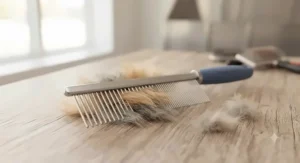
A comb for silky-coated dogs isn’t just a smaller-toothed version of a regular dog comb — the material and edge finish matter more on silky hair than on almost any other coat type, because silky strands are more prone to breakage and static than coarser fur.
Rounded, polished teeth — the kind found on the Chris Christensen Buttercomb and the Hertzko Double-Sided Dematting Comb — genuinely reduce split ends and static compared with a rough-edged budget comb, which matters for breeds like Afghan Hounds, Yorkshire Terriers, and Maltese where coat condition is practically a defining breed feature. Rotating pins, as seen on the JW Pet GripSoft Rotating Comfort Comb, further reduce mechanical stress on individual strands by moving with the hair rather than dragging against it fixed in place. Humidity and dry winter air both affect silky coats more visibly than coarser ones too, and a light anti-static or leave-in spray used alongside any of these combs measurably cuts down on the frizzy, flyaway look that shows up on silky-coated dogs during a Canadian winter specifically. The honest takeaway: on a silky coat, technique and tool quality both matter more than on a wiry or double coat, since damage here is visible and doesn’t just grow back overnight the way a broken guard hair on a shepherd mix eventually does.
Detangling Comb for Long-Haired Dogs vs. Slicker Brush
Choosing a detangling comb for long-haired dogs over a slicker brush — or figuring out when you genuinely need both — comes down to understanding what each tool actually does differently at the strand level.
| Tool | Reaches Close to Skin? | Mat Detection | Risk of Hidden Skin Injury | Best For |
|---|---|---|---|---|
| Detangling Comb (e.g. Andis Pet Premium Steel Comb) | Yes, teeth reach the base of the hair | High — you feel resistance immediately | Low, if used with correct technique | Confirming a coat is genuinely tangle-free |
| Slicker Brush | Mostly surface-level | Low — often glides over hidden mats | Higher — can mask a mat pulling tight underneath | Everyday surface smoothing, light shedding |
| Rotating Comb (e.g. JW Pet GripSoft Rotating Comfort Comb) | Yes | High | Low | Sensitive coats needing gentler contact |
| Both, used together | Yes | Highest | Lowest | Full grooming routine on long-haired breeds |
Reading this table plainly, a slicker brush is genuinely useful for quick daily smoothing and picking up loose shedding hair, but it’s a poor tool for confirming a coat is actually free of hidden mats, since bristles tend to glide right over the top of a snarl instead of catching on it. A comb, by contrast, physically can’t avoid a hidden tangle — the teeth stop dead the moment they hit resistance, which is exactly the feedback you need before deciding a coat is done. The realistic answer for most long-haired breeds is both tools in the same routine: brush first to clear loose surface hair and smooth the coat, then comb through as a final check, which is precisely the two-step process this whole article keeps circling back to.
✨ Weighing a comb against your current slicker brush? Click through and compare today’s Amazon.ca pricing before you decide.🔍
Finishing Comb for Dog Grooming: Why the Last Step Matters
A finishing comb for dog grooming isn’t optional polish for show dogs alone — it’s the step that determines whether a groomed coat actually stays tangle-free for the following week or starts re-matting within days.
Specs and rotating-pin counts only tell part of the story; what a finishing comb actually does is realign hair that got roughed up or clumped during the detangling and bathing process, so it dries and settles in the direction it’s meant to grow. Expect this pass to take longer than product photos imply — a full finishing comb-through on a medium-sized long-haired dog realistically takes five to ten minutes done properly, not the thirty-second flourish some marketing copy suggests. Expect certain areas — behind the ears, the tail base, the inner thighs — to need extra attention, since those are the same friction zones that mat first and the same zones a finishing pass tends to get rushed on. Skipping the finishing step doesn’t just leave a slightly messier-looking coat; it measurably shortens how long the dog stays tangle-free, since hair left unrealigned after a bath dries in whatever haphazard direction it landed in, which is exactly the starting condition new mats need to form.
How to Choose a Dog Comb for Long-Haired Breeds
Working through the seven products above surfaces a fairly clear decision process. Here’s how to apply it to your own dog’s coat.
- Identify your dog’s coat type first. Silky (Yorkie, Maltese), feathered double coat (Golden Retriever, Cocker Spaniel), and curly (Poodle, Bichon) each favour a different comb style from this list.
- Prioritize rotating pins for sensitive or fine coats. The reduced pulling on tools like the JW Pet GripSoft Rotating Comfort Comb matters more on silky hair than on coarser textures.
- Match tooth spacing to your maintenance frequency. Daily-brushed dogs can use fine spacing; dogs groomed less often need a coarser side first, like the Andis Pet Premium Steel Comb‘s dual-density design.
- Consider a self-cleaning mechanism if you groom multiple dogs, since manually clearing trapped hair between dogs adds up fast — the Hertzko Double-Sided Dematting Comb solves this directly.
- Weigh build quality against how often you’ll actually use it. A comb used daily justifies the machine-pressed pins on something like the Resco Combination Comb; occasional use doesn’t need that investment.
- Reserve a premium finishing comb for coat-condition-critical situations. The Chris Christensen Buttercomb earns its price for show prep or breeds where coat texture is a defining feature, not for basic weekly upkeep.
- Set a realistic mat threshold for yourself. If a comb — any comb on this list — won’t move through a section after two or three careful passes, that’s the signal to switch tools or call a professional groomer, not to force it.
Common Mistakes When Buying a Dog Comb for Long-Haired Breeds
The most common mistake showing up across product reviews and grooming forums is buying a single fixed-spacing comb and expecting it to handle every stage of grooming, from bulk detangling to final polish, when most long coats genuinely need two different spacings to do that properly.
A second frequent mistake is choosing based on price alone without matching the comb to coat texture — a coarse, rigid comb dragged through a silky Maltese coat causes real breakage, while a fine, delicate comb barely dents a Golden Retriever’s dense feathering. A third mistake is skipping the finishing step entirely and treating detangling as the whole job, which — as covered above — actually shortens how long a coat stays tangle-free rather than extending it. A fourth mistake is ignoring handle ergonomics, especially for owners managing multiple long-haired dogs or dogs with heavy, frequent matting; hand fatigue is a bigger reason people cut grooming sessions short than most buyers expect going in. And a fifth, more serious mistake is continuing to force any comb through a section that’s clearly become a dense, pelted mat rather than a simple tangle — at that point, a comb is the wrong tool entirely, and a trip to a professional groomer is the safer, less painful call.
Dog Comb for Long-Haired Breeds for Specific Audiences: Puppies, Seniors & Multi-Dog Homes
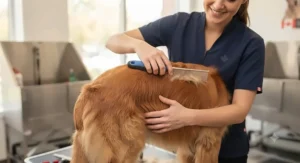
A dog comb for long-haired breeds performs differently depending on who’s holding the other end of the leash, and matching the tool to the specific situation matters as much as matching it to the coat.
Puppies with soft, still-developing coats rarely need more than a gentle rotating comb like the JW Pet GripSoft Rotating Comfort Comb, used briefly and paired generously with treats, since the real goal at this stage is building tolerance for handling rather than removing serious tangles that likely don’t exist yet. Senior dogs deserve extra patience: thinner, less elastic skin and reduced mobility for repositioning away from discomfort make rounded-edge tools like the Hertzko Double-Sided Dematting Comb or the Chris Christensen Buttercomb meaningfully safer choices than anything with sharp or uneven tooth edges. Multi-dog households managing several long-haired coats at once benefit most from durability-focused options like the Resco Combination Comb, since a comb used across multiple dogs several times a week wears out fast if it isn’t built for that volume — and a self-cleaning design like the Hertzko Double-Sided Dematting Comb genuinely speeds up switching between dogs mid-session. Owners managing an anxious or grooming-averse dog of any age should default toward the gentlest viable comb and shorter sessions regardless of coat type, since one bad grooming experience compounds the problem by making every future session harder than the last.
Long-Term Cost & Maintenance: Is a Premium Finishing Comb Worth It?
Sticker price only tells part of the story with tools this dependent on metal quality and how often they’ll actually get used, so it’s worth running the real cost comparison over a couple of years.
| Comb | Approx. Price (CAD) | Realistic Lifespan | Replacement Driver |
|---|---|---|---|
| JW Pet GripSoft Rotating Comfort Comb | C$12–C$18 | 1–2 years with regular use | Plastic pin housing wearing loose |
| Wahl Premium Flea, Hair Pick & Finishing Comb | C$14–C$20 | 1–2 years | Tine wear from frequent use |
| Andis Pet Premium Steel Comb | C$18–C$26 | 2–3+ years | Rare; occasional surface corrosion |
| Hertzko Double-Sided Dematting Comb | C$20–C$28 | 1–2 years | Self-cleaning mechanism sticking |
| Resco Combination Comb | C$28–C$38 | 3+ years | Rare; pressed-pin construction |
| FURminator Finishing Comb | C$20–C$28 | 1–2 years | Plastic housing or pin cracking |
| Chris Christensen Buttercomb | C$55–C$75 | 5+ years with care | Rare; solid brass resists wear |
Reading this table alongside the earlier price comparison, the honest calculation favours spending more upfront on a genuinely durable build — the Resco Combination Comb or Chris Christensen Buttercomb — if you groom a long-haired dog several times a week, since replacing a C$15 plastic-bodied comb every year or so adds up to roughly the same money over three years without the better performance. For an owner with lighter, occasional grooming needs, a budget pick like the JW Pet GripSoft Rotating Comfort Comb amortizes perfectly well, since infrequent use means the wear that drives replacement on cheaper combs simply happens more slowly.
💬 Thinking about long-term value, not just today’s price tag? Click through to check current Amazon.ca listings before deciding.😊
Features That Actually Matter (And Those That Don’t)
After comparing spec sheets and aggregated reviews across all seven of these combs, a few features consistently separated genuine value from marketing filler.
Rounded, polished tooth edges matter enormously for silky and fine coats specifically — the reduction in breakage and static is real and noticeable, and it’s the single feature worth prioritizing for delicate-coated breeds. A true dual-density or combination spacing, as seen on the Andis Pet Premium Steel Comb and Resco Combination Comb, matters because it lets one tool handle both bulk detangling and a finishing pass, rather than forcing you to own two separate combs. Handle ergonomics matter more than they sound like they would on paper, simply because hand fatigue is the honest reason most people quit mid-session and leave a dog half-groomed. On the other hand, pin count or tooth count alone, without context for the coat type it’s aimed at, is a weak signal — more teeth only helps if the spacing actually suits your dog’s specific hair texture. Vague “professional grade” language on inexpensive combs deserves the same skepticism as any unquantified marketing claim, and “suitable for all coat types” on a fixed-spacing, sharp-edged comb is worth treating cautiously — genuine versatility, as the VCA Canada guidance on grooming and coat care makes clear, depends on daily habits matched to your specific breed far more than any single tool’s marketing claims.
FAQ
❓ What comb is best for long-haired dogs with tangles?
❓ How often should I comb a long-haired dog?
❓ Is a comb or a brush better for long-haired dogs?
❓ What's the difference between a detangling comb and a finishing comb?
❓ Can a dog comb damage a silky coat if used incorrectly?
Conclusion
Seven combs, one shared purpose: keeping a long-haired dog’s coat genuinely tangle-free instead of just looking that way from across the room. If there’s one takeaway from lining these up side by side, it’s that matching comb type to coat texture beats chasing the highest price tag or the biggest brand name on the shelf. The JW Pet GripSoft Rotating Comfort Comb and Wahl Premium Flea, Hair Pick & Finishing Comb cover everyday maintenance without overspending, the Andis Pet Premium Steel Comb and Hertzko Double-Sided Dematting Comb step up for real detangling work on feathered and silky coats, the Resco Combination Comb rewards anyone grooming multiple dogs with genuine build quality, the FURminator Finishing Comb handles curly coats needing frequent light upkeep, and the Chris Christensen Buttercomb delivers the show-ready polish a family pet rarely needs but a competition coat absolutely does.
Whichever one matches your dog’s coat and your own grooming habits, the honest advice holds across all seven: brush first, comb second, finish with a light pass in the direction the coat falls, and don’t force any tool through a section that’s clearly become a true mat rather than a simple tangle. It’s also worth remembering what happens when combing stops altogether — CBC News reported on 55 miniature poodles rescued from a Hamilton-area home in early 2026 after animal services intervened in a severe neglect case, with matted coats among the documented welfare issues. That’s an extreme example, but it’s a real reminder that a five-minute comb-through a few times a week is a genuinely small price for avoiding a much bigger problem down the line. Check the current listed price on Amazon.ca before you buy, since grooming-tool pricing shifts more often than the spec sheets do.
✨ Don’t miss the current pricing on these picks! 🔍
Click through to any of the seven combs above to check today’s availability and price on Amazon.ca — a few minutes of comparison now can spare your dog a rougher grooming session later.
Recommended for You
- Bristle Brush for Short-Haired Dogs: 7 Best Picks in Canada (2026)
- Dog Brush Under $30 CAD: 7 Best Picks for 2026
- Dematting Tool for Dogs With Matted Fur: 7 Picks That Work (2026)
Disclaimer: This article contains affiliate links. As an Amazon Associate, I earn from qualifying purchases. If you purchase products through these links, we may earn a small commission at no additional cost to you.
✨ Found this helpful? Share it with your friends! 💬🤗
