
In This Article
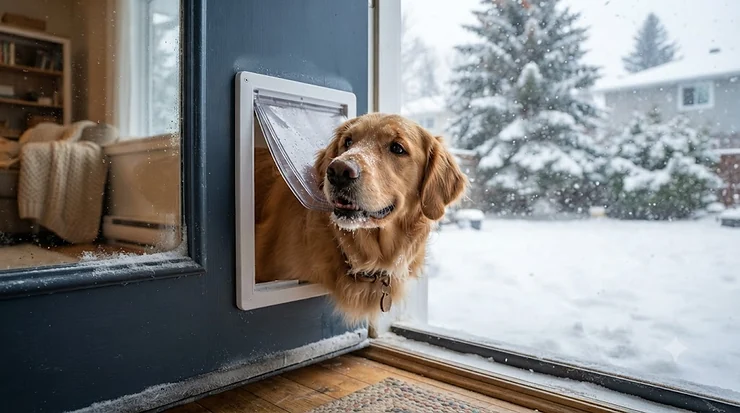
Somewhere between January’s third polar vortex and your furnace’s fourth consecutive cycle of the hour, you’ve probably stood by the back door, watched your dog’s tail disappear through a sad, sagging flap, and felt a very specific kind of cold slap you in the shins. That draft isn’t your imagination. An energy efficient dog door Canada winter buyers actually trust is built from double or triple flaps, magnetic seals, and insulated cores — not the single sheet of stiff vinyl that came free with your last renovation. This matters more in Canada than almost anywhere else: heating alone eats up roughly 61% of the energy used in the average Canadian home, according to Natural Resources Canada, which means a leaky pet door isn’t a minor nuisance — it’s a line item.
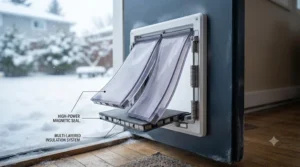
What is an energy efficient dog door? It’s a pet entry system engineered with multiple insulated flaps, magnetic or brush-seal closures, and a frame designed to minimize the air gap between your heated home and the outdoors, reducing draft-driven heat loss compared to a standard single-flap door.
This guide breaks down seven real, currently available doors — from an under-C$150 aluminum flap door to a four-figure electronic system — with honest analysis of where each one earns its keep and where it falls short. We’ll also dig into reduce heating costs with pet door strategies, real thermal efficiency pet door mechanics, and what heat retention dog door claims actually mean once winter wind hits your siding. No fabricated five-star gushing here — just spec comparisons, aggregated review themes, and the kind of plain-language reasoning you’d want from a friend who already researched this so you don’t have to.
Quick Comparison: Energy Efficient Dog Doors at a Glance
| Product | Flap System | Best For | Price Range (CAD) |
|---|---|---|---|
| PetSafe Extreme Weather Energy Efficient Pet Door | Triple flap | Budget-conscious multi-climate homes | C$130–C$230 |
| Ideal Pet Products Designer Series Ruff-Weather | Double flap, magnetic | Everyday moderate-cold climates | C$160–C$310 |
| Petoasis Heavy-Duty Aluminum 3-Flap Door | Triple flap, aluminum | Tight budgets, active chewers | C$95–C$190 |
| Endura Flap Thermo Panel 3e | Single dual-layer, Low-E glass | Renters and sliding glass doors | C$420–C$750 |
| Security Boss MaxSeal PRO | Dual flap, insulated security panel | Extreme cold, security-conscious owners | C$290–C$650 |
| PlexiDor Electronic Pet Door | Rigid RFID panel | Zero passive drafts, wildlife control | C$750–C$1,150 |
| Ideal Pet Products Perfect Pet All-Weather | Double vinyl flap | Large dogs on a mid-range budget | C$115–C$240 |
Looking at the spread above, there’s a clear split between flap-based doors, which trade a small amount of insulation for lower upfront cost, and rigid-panel or dual-pane options like the PlexiDor Electronic Pet Door and Endura Flap Thermo Panel 3e, which eliminate passive air movement almost entirely but ask for a much bigger initial investment. If your priority is winter energy bills specifically, the flap count and seal type matter more than brand recognition — a well-sealed double flap can outperform a poorly fitted triple flap, so don’t assume more layers automatically means less draft.
💬 Just one click — help others make better buying decisions too!😊
Top 7 Energy Efficient Dog Doors: Expert Analysis
1. PetSafe Extreme Weather Energy Efficient Pet Door — best all-around triple-flap value
The PetSafe Extreme Weather Energy Efficient Pet Door built its reputation on a simple idea: three flaps beat one. Its central insulated flap sits between two outer flaps, creating dead-air pockets on both sides — the same principle that makes double-glazed windows outperform single-pane ones. PetSafe rates the door for functional use in temperatures from about -23°C to 38°C, which covers the vast majority of Canadian winters outside the deep North, and the manufacturer states the triple-flap layout is roughly 3.5 times more efficient at blocking airflow than a basic single-flap design.
Who should buy it? Honestly, this is the door for most Canadian households that aren’t dealing with -40°C snaps or a determined 90-pound husky testing the frame daily. It fits standard panelled, wood, metal, and PVC doors between about 1⅝ and 2¼ inches thick, so installation stays within weekend-DIY territory rather than requiring a contractor. Aggregated reviewer sentiment on Amazon and Chewy consistently flags two things: buyers appreciate the noticeably reduced draft compared to older single-flap doors they replaced, and a recurring complaint involves the plastic frame flexing slightly in extreme cold, which can loosen the magnetic seal over a few winters.
Pros:
- ✅ Triple-flap design meaningfully cuts draft versus single-flap doors
- ✅ Wide temperature rating covers most Canadian climate zones
- ✅ Straightforward DIY install into existing door thickness
Cons:
- ❌ Plastic frame can flex and loosen seal after repeated freeze-thaw cycles
- ❌ Snap-in closing panel is a separate accessory for full lockout
At the time of research, the medium-to-large sizes sit in the C$130–C$230 range depending on dog size and retailer promotions — check current pricing before buying, since availability shifts by size. For the money, it’s hard to find a door that balances thermal efficiency pet door performance with this little installation hassle.

2. Ideal Pet Products Designer Series Ruff-Weather — best magnetic seal for everyday cold
The Ideal Pet Products Designer Series Ruff-Weather takes a double-flap approach, and what most buyers overlook about this model is that the 3-inch air pocket between its two flexible vinyl flaps functions almost exactly like the gap in a double-pane window — it’s the trapped, still air doing the insulating work, not the vinyl itself. Both flaps close with a magnetic strip along the bottom edge, and the frame includes brush-pile weatherstripping to reduce drafts where the frame meets the flap assembly.
Based on the spec comparison with single-flap competitors, this door’s real advantage shows up less in raw temperature tolerance and more in consistency: reviewers on Chewy and Lowe’s repeatedly note that installation, while manageable, requires precise leveling between the inside and outside flap units, or the magnetic seal won’t fully close — a detail that matters a lot more in a Canadian winter than a mild autumn. This is the door for a household that wants noticeably better insulation than a basic flap without stepping up to premium pricing, and it’s compatible with both standard door mounting and wall installation if you buy the separate wall kit.
Pros:
- ✅ Double magnetic flaps create genuine dead-air insulation pocket
- ✅ Works on both door-mount and wall-mount (with kit) installations
- ✅ One-year manufacturer warranty backs the build quality
Cons:
- ❌ Requires precise leveling or the magnetic seal won’t close fully
- ❌ Wall kit sold separately and can be harder to source
Prices typically run in the C$160–C$310 range across sizes, with wall kits adding to the total. If your priority is heat retention dog door performance in a door you already own, the Ruff-Weather earns its “everyday insulated” reputation honestly.
3. Petoasis Heavy-Duty Aluminum 3-Flap Dog Door — best budget aluminum pick
Here’s what the spec sheet won’t tell you outright: the Petoasis Heavy-Duty Aluminum 3-Flap Dog Door swaps PetSafe’s plastic frame for rust-resistant aluminum alloy, which matters specifically in Canadian winters because plastic frames can become brittle and prone to hairline cracking in sustained sub-zero temperatures, while aluminum holds its shape. The three-flap structure contains a removable insulation layer between the panels, and both interior and exterior panels lock independently — a security feature that’s rarer at this price point.
This is genuinely a budget pick, and the honest trade-off is fit consistency. Aggregated buyer feedback is mixed on flap tightness: several reviewers in colder regions (including one explicitly based in Minnesota, a climate comparable to the Prairies) reported that the vinyl flaps shrank slightly as temperatures dropped, loosening the magnetic contact at the bottom strip. That’s a real limitation worth weighing against the price. What most buyers overlook is that removing one of the three flaps makes the door far easier for smaller or older dogs to push through, at the cost of some insulation — a trade you can make yourself after installation.
Pros:
- ✅ Aluminum frame resists cracking better than plastic in deep cold
- ✅ Independently lockable interior and exterior panels
- ✅ Removable insulation layer adjusts for smaller dogs
Cons:
- ❌ Vinyl flaps can shrink and loosen seal in sustained sub-zero cold
- ❌ Manufacturer contact for warranty claims can be hard to reach
Expect a price in the C$95–C$190 range depending on size, making it one of the more accessible insulated dog door savings options on this list — provided you’re comfortable with a bit more DIY fussing to keep the seal tight.
4. Endura Flap Thermo Panel 3e — best for sliding glass doors and renters
If your dog’s exit point is a sliding patio door rather than a swing door, the Endura Flap Thermo Panel 3e solves a problem the other doors on this list can’t: it installs into the existing door track without cutting anything, which makes it a rare renter-friendly option. The panel uses 3/16-inch tempered safety glass — 59% thicker than typical patio inserts, per the manufacturer — combined with a single dual-layered polyolefin flap sealed by magnets on three sides, rated to stay flexible down to about -40°F (-40°C) and to resist wind gusts up to 50 mph.
Here’s what most spec sheets skip: a single flap sounds less efficient than a triple-flap door, and in raw flap-count terms it is, but the thick tempered glass panel itself is doing a lot of the insulating work here, not just the flap — the combination is closer in real-world performance to a well-sealed double-flap door than the “single flap” label suggests. Reviewers on Wayfair and elsewhere give it a strong 4.5-star aggregate, consistently praising installation ease and material quality, with occasional notes about minor long-term durability quirks on the flap hinge. This is the pick for apartment and condo dwellers who can’t modify a door but still want serious thermal efficiency pet door performance.
Pros:
- ✅ No-cut installation fits directly into sliding door track
- ✅ Tempered glass panel adds real structural insulation
- ✅ Rated to remain functional down to -40°C
Cons:
- ❌ Premium pricing well above flap-only competitors
- ❌ Requires precise track-height measurement before ordering
At the time of research, pricing lands around C$420–C$750 depending on size and glass configuration — a meaningful jump, but one that’s easy to justify if a swing-door installation simply isn’t possible in your unit.
5. Security Boss MaxSeal PRO — best for extreme cold and security
The Security Boss MaxSeal PRO is the door built for the coldest nights on this list. Its dual flaps use a piano-hinge connection rather than a simple vinyl fold, which the manufacturer says extends flap life by letting the panel swing freely instead of pinching and stressing at the hinge point — a mechanical detail that matters after a few thousand freeze-thaw cycles. The included interior security panel has a 1-inch foam-insulated aluminum-clad core, and staggered stainless strike plates connect to embedded magnets in the frame for what the company calls its tightest seal to date.
What reviewers consistently note, aggregated across the company’s own testimonials and third-party retailers, is above-average satisfaction with build quality and a six-year defect warranty that’s unusually long for this category — most competitors top out around one to two years. The honest trade-off is that every unit is hand-built to order, so lead times run longer than an off-the-shelf Amazon purchase, and the price reflects that customization. This is the door for a household in a harsher climate zone — think Winnipeg, Saskatoon, or rural Quebec — where “good enough” insulation isn’t good enough.
Pros:
- ✅ Six-year warranty is far longer than category average
- ✅ Insulated security panel doubles as a locking barrier
- ✅ Hinged flap design reduces long-term wear at pinch points
Cons:
- ❌ Built-to-order lead times are longer than stock retailers
- ❌ Among the pricier flap-based options on this list
Pricing starts around C$290 for smaller sizes and climbs toward C$650 or more for larger wall-mounted units with the extended tunnel — a real investment, but one aimed squarely at reducing heating costs with pet door hardware that’s rated for the harshest Canadian winters.
6. PlexiDor Electronic Pet Door — best for eliminating drafts entirely
Every door above relies on flaps that a dog physically pushes through, which means some passive air movement is inevitable even with a great seal. The PlexiDor Electronic Pet Door sidesteps that problem completely: it uses a rigid composite panel that slides up and down like a miniature garage door, staying fully closed and sealed until an RFID collar key — worn by your dog, not a battery-dependent transponder — triggers it to open. When inactive, the closed panel also functions as a security barrier.
On paper, this is the most energy efficient dog door Canada winter shoppers can buy, precisely because there’s no passive airflow path when the door isn’t actively in use — a meaningful distinction from every flap-based door on this list. Aggregated owner reviews are notably enthusiastic about the RFID reliability and the “nothing else gets in” security angle, though independent product testers have flagged that the acrylic panel used in some PlexiDor models isn’t as thermally efficient as polycarbonate alternatives, and that the panel can occasionally stick in very cold or very hot conditions. It also requires continuous power (standard outlet or hardwiring), which is a dependency the passive flap doors don’t share.
Pros:
- ✅ Fully sealed rigid panel eliminates passive draft when closed
- ✅ RFID-only access blocks strays, raccoons, and neighbourhood cats
- ✅ Doubles as a locked security barrier automatically
Cons:
- ❌ Requires continuous electrical power to operate
- ❌ Acrylic panel can occasionally stick in temperature extremes
Expect to pay roughly C$750–C$1,150 depending on door versus wall mounting, plus professional installation many owners opt for. It’s the premium pick, but for a household that’s calculated exact winter energy bills lost to a leaky flap door, the payback math can work out over several seasons.
7. Ideal Pet Products Perfect Pet All-Weather Energy Efficient Dog Door — best for large dogs on a mid-range budget
Rounding out the list, the Ideal Pet Products Perfect Pet All-Weather Energy Efficient Dog Door uses the same double-vinyl-flap, air-pocket principle as its Ruff-Weather sibling but comes in four size options ranging from a 5-inch flap up to a 15-inch flap — genuinely accommodating everything from a small terrier to a large shepherd-mix. Reviewers and the manufacturer both note the installation video included on the product page, which aggregated feedback suggests meaningfully reduces the setup friction that trips up first-time installers on other double-flap doors.
Based on the spec comparison with the Ruff-Weather, the Perfect Pet trades a slightly less premium magnetic closure for a lower price point, which makes sense given its positioning as the more budget-accessible sibling in the same product family. It’s designed for interior or exterior door installation, with wall mounting available as a separate purchase. What stands out for large-dog households specifically is that the 15-inch flap option is genuinely rare in this price bracket — most doors this size jump straight into premium territory.
Pros:
- ✅ Widest size range on this list, including large 15-inch flaps
- ✅ Manufacturer installation video reduces first-time setup errors
- ✅ Compatible with both interior and exterior door mounting
Cons:
- ❌ Magnetic seal is less robust than the pricier Ruff-Weather model
- ❌ Wall mounting requires a separately purchased kit
Pricing runs roughly C$115–C$240 across sizes at the time of research, positioning it as one of the better insulated dog door savings picks specifically for owners of larger breeds.
Installing and Sealing Your Dog Door for Maximum Winter Performance
Buying the right hardware is half the job — installation quality decides whether you actually get the thermal efficiency pet door manufacturers promise. Start by measuring your door or wall thickness precisely before ordering; a door door rated for 1⅝–2¼ inches installed in a thicker slab won’t seal correctly, and that gap becomes a permanent draft source no amount of magnet strength fixes. During the first 30 days, the most common mistake isn’t the door itself — it’s skipping a bead of exterior-grade caulking around the frame where it meets your door or wall. Even a perfectly insulated flap system leaks heat around an uncaulked frame edge, which defeats the entire purpose of upgrading.
Once installed, build a light maintenance habit: check magnetic seal contact monthly through winter, since ice buildup or a warped flap can quietly reopen a gap you’d never notice from a quick glance. Wipe frost off the flap’s magnetic strip after freezing rain, and if you’re using a double- or triple-flap system, occasionally test each flap independently to confirm all layers are closing flush. For wall-mounted tunnel installations, line the tunnel interior with a small strip of indoor-outdoor carpeting if it isn’t already included — this single addition materially cuts down on the metallic cold-transfer feeling that aluminum tunnels are prone to. None of this is complicated, but it’s the difference between a door that performs as advertised and one that quietly bleeds heat all season.
Real Canadian Households: Matching the Right Door to Your Situation
Picture three different homes across a typical Canadian winter. First, a young family in a suburban Calgary bungalow with a mid-size Lab mix and a standard exterior door — for them, the budget-friendly PetSafe Extreme Weather Energy Efficient Pet Door or the Petoasis Heavy-Duty Aluminum 3-Flap Dog Door covers their -20°C cold snaps without demanding a big upfront spend, and either installs in an afternoon.
Second, a condo owner in downtown Toronto with a rescue terrier and a sliding balcony door — cutting into a leased unit’s door frame isn’t an option, so the Endura Flap Thermo Panel 3e is close to the only realistic path to giving that dog independent access without violating a lease or compromising the building’s insulation standards.
Third, a rural household outside Saskatoon with two large dogs, frequent -30°C stretches, and real concerns about coyotes near the property line — here, the security-forward Security Boss MaxSeal PRO or the fully sealed PlexiDor Electronic Pet Door justifies its higher price through both insulation performance and the peace of mind that only a programmed pet gets through. In each case, the “best” door isn’t the most expensive one — it’s the one matched to the specific building, budget, and climate reality in front of you.
How to Choose an Energy Efficient Dog Door for Canadian Winters
- Match the flap count to your actual climate zone. A double flap is often sufficient in coastal B.C. or southern Ontario; triple flaps or rigid panels earn their keep in the Prairies and northern regions where sustained sub-zero stretches are common.
- Check the frame material against your installation surface. Aluminum resists cold-induced brittleness better than plastic, which matters most for exterior door installations facing direct winter exposure.
- Confirm the magnetic seal design, not just its presence. Multi-point magnetic strips along the full flap bottom outperform a single center magnet, especially in windy conditions.
- Decide between door-mount and wall-mount based on your door’s insulation value. On energy-efficient steel or fiberglass exterior doors, cutting through the foam core to door-mount can undercut the door’s own insulation — a wall-mount tunnel is often the smarter long-term choice.
- Factor in your dog’s size and confidence level. A flap that’s technically rated for your dog’s weight but feels stiff in the cold may discourage use altogether, leading to scratched frames and door-holding habits that defeat the entire purpose.
- Weigh electrical dependency honestly. RFID and electronic doors like the PlexiDor eliminate passive drafts but require continuous power — a real consideration during a winter storm-related outage.
- Look past marketing language to specific test claims. Terms like “weatherproof” and “energy-efficient” aren’t standardized in this industry, so prioritize doors that cite specific temperature ranges, wind resistance figures, or third-party warranty terms over vague adjectives.
Common Mistakes When Buying an Energy Efficient Dog Door
The single most common mistake is buying based on flap count alone. A cheaply hinged triple-flap door can underperform a well-engineered double-flap system if the magnets are weak or the frame doesn’t seal flush against the door — more layers help only when each layer actually closes. A second frequent misstep is skipping the wall-versus-door-mount decision entirely and defaulting to door-mount out of habit, even when the exterior door is a high-efficiency steel unit whose insulating foam core gets compromised by the cut. Third, buyers regularly underestimate dog behaviour: a nervous or elderly dog may refuse to push through a stiff double- or triple-flap system in cold weather, leading owners to prop the door open — which erases every ounce of insulation value the door was bought for in the first place. Finally, many shoppers forget to budget for the wall kit, security panel, or caulking materials that aren’t included in the base price, only to discover the “budget” door costs considerably more once fully installed and properly sealed.
Insulated Dog Door vs Standard Single-Flap Dog Door
A standard single-flap dog door is essentially a rectangle of stiff vinyl on a hinge — functional, inexpensive, and, from an energy standpoint, roughly equivalent to leaving a small gap in your wall for several seconds every time your dog uses it. An insulated multi-flap or rigid-panel door changes that math meaningfully. The dead-air pocket created between two or three flaps functions the same way a double-glazed window’s air gap does, slowing conductive heat transfer even during the brief moments the door isn’t fully sealed. Reviewers consistently report a noticeable difference in draft near the door itself after switching from single-flap to double- or triple-flap systems, particularly on windy days when a single flap tends to billow and gap at the edges.
The trade-off is upfront cost and installation effort — single-flap doors are cheaper and easier to fit, full stop. But run the math over a Canadian winter: NRCan estimates that draft-proofing and sealing gaps around doors, windows, and other openings is one of the most cost-effective ways to reduce a home’s heating losses, and a swinging pet door is functionally a gap that opens dozens of times a day. For any household in a climate zone with regular sub-zero stretches, the insulated dog door savings from reduced heat loss typically offset the higher purchase price within a few winters, especially paired with proper caulking at installation.
What to Expect: Real-World Winter Performance
Specs on a box tell you what a door is rated to do; real households tell you what it actually feels like at 6 a.m. in February. Based on the aggregated pattern across reviews for multi-flap doors, expect the area immediately around a well-installed insulated pet door to feel noticeably less drafty within the first week — often described by reviewers as “the cold spot near the door finally went away.” Expect some adjustment period for your dog, too: flaps with stronger magnetic seals require slightly more nose-push force to open, and a dog used to a loose single-flap door may hesitate for the first several uses.
What the spec sheet won’t tell you is that thermal performance depends heavily on installation precision, not just the product itself. A door rated to -40°C that’s installed with an uneven gap around the frame will underperform a more modestly rated door installed flush and properly caulked. Expect ice or frost buildup on magnetic strips during freezing rain events regardless of which door you choose — this is a maintenance reality across the category, not a defect specific to any one brand. And expect the difference to show up somewhere unexpected: several reviewers note their furnace cycles noticeably less often after switching to an insulated door, which tracks with NRCan’s broader point that sealing small, frequent air leaks compounds into real furnace-cycle savings over a full heating season.
Long-Term Cost & Maintenance: Insulated Dog Door Savings Over Time
Total cost of ownership for a pet door isn’t just the sticker price — it’s purchase price, installation materials, occasional flap replacement, and the heating costs the door either saves or continues to bleed. A budget single-flap door might cost under C$100 upfront but offers minimal insulation, meaning its ongoing contribution to winter energy bills continues indefinitely. A mid-range double- or triple-flap door in the C$150–C$300 range typically pays down its price premium through reduced draft-driven furnace cycling over a couple of winters, particularly in colder provinces, though the exact payback period depends on your local utility rates and how many hours per day the door is genuinely in use.
Maintenance costs matter too. Vinyl flaps on lower-cost doors, including budget aluminum-framed models, may need replacement every few years as magnetic strips wear or flaps shrink slightly in sustained cold — a C$20–C$40 part, not a full door replacement, but worth budgeting for. Premium options like the Security Boss MaxSeal PRO offset this with unusually long six-year warranties, effectively building flap replacement costs into the original purchase. On the far end, electronic doors like the PlexiDor Electronic Pet Door eliminate flap wear entirely but introduce a small ongoing electricity draw and eventual motor-component costs, which is a different kind of maintenance line rather than a lower one. Whichever tier fits your budget, the general pattern holds: reduce heating costs with pet door upgrades by choosing insulation quality first and treating price as a long-term equation, not a single transaction.
Safety, Regulations & Installation Compliance in Canada
Pet doors themselves aren’t heavily regulated in Canada, but the installation touches areas that are. If you’re modifying an exterior door or wall in a home under warranty, check whether cutting into it affects manufacturer or builder warranty terms — this is especially relevant for steel and fiberglass doors marketed as part of an energy-efficient building envelope, since those doors often carry their own insulation ratings that a cut can compromise. If your home is enrolled in a program like CMHC Eco Plus or Eco Improvement, which offers mortgage insurance premium refunds tied to building-envelope upgrades including doors, windows, and air sealing, keep documentation of your pet door installation and any accompanying caulking or weatherstripping work, since it may count toward qualifying renovations depending on program criteria at the time you apply.
For anyone building or majorly renovating toward a formal efficiency standard, it’s worth understanding how a program like R-2000 — a voluntary Canadian standard developed by Natural Resources Canada in partnership with the Canadian Home Builders’ Association — treats building envelope penetrations like pet doors, since airtightness targets under such certifications are stricter than baseline building code. In practice, this mostly matters for new-construction or deep-retrofit households; most existing homes installing a standard flap or electronic pet door won’t trigger any regulatory review, but it’s still worth a quick check with your municipality if your home is under a heritage designation or a specific energy-efficiency covenant.

Frequently Asked Questions
❓ Do insulated dog doors actually reduce heating bills in winter?
❓ What's the best dog door for extreme cold in Canada?
❓ Should I install a dog door in the wall or the door itself?
❓ How much does an energy efficient dog door cost in Canada?
❓ Can a dog door affect my home's energy efficiency certification?
Conclusion
There’s no single “best” energy efficient dog door Canada winter conditions demand — there’s only the best match for your climate zone, your door type, your dog’s size and confidence, and your budget. Budget-conscious households do genuinely well with the PetSafe Extreme Weather Energy Efficient Pet Door or Petoasis Heavy-Duty Aluminum 3-Flap Dog Door; renters and condo owners get a rare workable option in the Endura Flap Thermo Panel 3e; and anyone facing serious Prairie or northern-Ontario winters should take a hard look at the Security Boss MaxSeal PRO or the fully sealed PlexiDor Electronic Pet Door.
What ties every recommendation together is the same underlying principle NRCan applies to entire homes: air leaks, however small, add up into real dollars over a full heating season. A dog door is one of the most frequently overlooked leak points in an otherwise well-insulated house, and closing that gap — literally and figuratively — is one of the more satisfying upgrades you can make before the next cold snap rolls in. Your dog gets the same freedom either way. Your furnace, and your wallet, notice the difference.
✨ Ready to stop losing heat through your back door?
Compare current prices on the picks above and give your home (and your dog) a warmer winter. 🐾❄️
Recommended for You
- Dog Playpen With Door and Floor: 7 Best Picks for 2026
- Best Dog Playpen 2026: 7 Top-Rated Picks Compared
- Dog Playpen vs Crate: Which Is Better? 7 Top Picks (2026)
Disclaimer: This article contains affiliate links. As an Amazon Associate, I earn from qualifying purchases. If you purchase products through these links, we may earn a small commission at no additional cost to you.
✨ Found this helpful? Share it with your friends! 💬🤗
