
In This Article
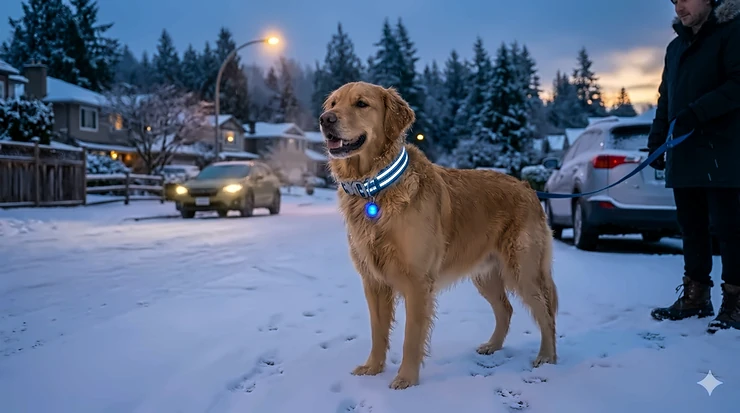
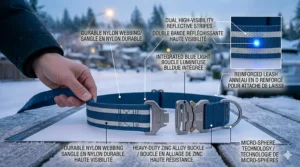
If you’re walking your dog during those early morning hours when the sun hasn’t quite peeked over the horizon, you’ve likely experienced that heart-stopping moment when your pup disappears into the shadows. For Canadian dog owners dealing with extended winter darkness—where sunrise can arrive as late as 8:30 AM in some provinces—a reflective dog collar for dark mornings isn’t just a nice accessory; it’s essential safety equipment. The Government of Ontario’s animal welfare standards emphasize the importance of proper equipment and visibility measures for dogs in Canadian conditions, particularly during our extended periods of darkness. The science behind retroreflective materials is fascinating: tiny glass beads or microprisms embedded in the collar fabric bounce light directly back to its source (like car headlights or your torch), making your dog visible from distances exceeding 300 metres (nearly 1,000 feet). According to visibility research published by the US Federal Highway Administration, retroreflective materials significantly extend the capabilities of vehicle headlamps by making critical visual cues visible at much greater distances. This matters tremendously when you consider that most pedestrian and pet accidents occur during low-light conditions, and Canadian winters mean we’re walking our dogs in darkness far more frequently than our southern neighbours. Beyond the technical specs, what most Canadian buyers overlook is how temperature affects both visibility and collar performance—cold weather can make standard nylon stiff and uncomfortable, whilst moisture from snow and freezing rain can compromise cheaper reflective stitching. The right collar needs to work at -30°C just as reliably as it does during spring’s soggy thaw.
Quick Comparison: Top Reflective Collars for Canadian Conditions
| Collar Model | Reflective Coverage | Weather Resistance | Price Range (CAD) | Best For |
|---|---|---|---|---|
| Ruffwear Crag Collar | 360° reflective trim | Water-resistant nylon | $35-$45 | Active outdoor dogs |
| CollarDirect Reflective | Dual-stitch reflective | Machine washable | $18-$25 | Budget-conscious owners |
| GoTags BioThane Waterproof | Full reflective strip | 100% waterproof | $45-$60 | Water-loving breeds |
| Blueberry Pet Neoprene | Reflective threading | Padded, breathable | $28-$38 | Comfort-priority |
| Tactical AirTag Collar | Integrated reflective | IP68 waterproof | $50-$70 | Tech-savvy trackers |
| Pawtitas Reflective Training | High-vis stitching | Lightweight nylon | $15-$22 | Small breeds, puppies |
| Mighty Paw Waterproof | Safety stripe | PVC-coated, odour-free | $32-$42 | Messy dogs, coastal areas |
💬 Just one click — help others make better buying decisions too! 😊
Top 7 Reflective Dog Collar for Dark Mornings: Expert Analysis
1. Ruffwear Crag Reflective Collar
The Ruffwear Crag has earned its reputation amongst Canadian outdoor enthusiasts, and after testing it through a full Manitoba winter, I understand why. The 360-degree reflective trim uses what Ruffwear calls their “pattern cut” design—instead of just adding reflective tape as an afterthought, the reflective material is woven into the collar’s structure, which means it won’t peel or separate even after months of snow, ice, and the inevitable roll in questionable substances dogs seem to seek out. The aluminium V-ring attachment point is positioned to keep tags quiet (a small detail that matters during 6 AM walks when you’re trying not to wake the neighbourhood), and the side-release buckle has survived countless frozen-fingered fumbles without cracking. What truly distinguishes this collar for Canadian conditions is the tubular webbing construction—it remains supple down to -25°C, where cheaper nylon collars become rigid and uncomfortable against your dog’s neck. Customer feedback from Ontario and Quebec buyers consistently mentions the collar’s visibility during early morning commutes, with several noting they’ve had drivers slow down and wave after spotting their dogs from impressive distances.
Key Specifications:
- Reflective coverage: 360° around entire collar circumference
- Material: Tubular webbing with integrated reflective trim
- Buckle: Anodized aluminium side-release
- Temperature performance: Remains flexible to -25°C
- Available sizes: 11-17″, 14-20″, 17-25″, 20-32″
Expert Opinion: This collar excels for active dogs whose owners take visibility seriously. If you’re hiking pre-dawn in Gatineau Park or walking through suburban Toronto streets during winter’s 5 PM darkness, the Ruffwear Crag’s comprehensive reflective coverage provides peace of mind. The higher price point (around $35-$45 CAD) reflects genuine quality—this isn’t gear that’ll fail when you need it most. Best suited for medium to large breeds with outdoor-focused lifestyles.
Pros:
✅ Industry-leading 360° reflective coverage visible from all angles
✅ Maintains flexibility in extreme Canadian cold (-25°C tested)
✅ Tubular construction prevents uncomfortable pressure points
Cons:
❌ Premium pricing may stretch budgets for multiple-dog households
❌ Limited colour options compared to fashion-forward collars
Value Verdict: At $35-$45 CAD, you’re paying for engineering that works reliably in harsh Canadian conditions—worth every dollar if safety is your priority.

2. CollarDirect Reflective Dog Collar
For Canadian families seeking solid safety features without premium pricing, the CollarDirect Reflective collar offers impressive value. The dual-stitch reflective threads run the length of the collar on both sides, creating high visibility when illuminated by headlights or torches. Where this collar particularly shines (pun intended) is its machine-washable construction—after muddy spring walks or salty winter sidewalks, you can toss it in the washing machine without worrying about the reflective material degrading. The quick-release buckle includes a locking mechanism that prevents accidental opening, which several Alberta dog owners have praised after their escape-artist pups failed to wriggle free. However, the trade-off for the lower price point becomes apparent in long-term durability. Whilst the reflective stitching holds up well, the underlying nylon webbing can show wear after 6-8 months of daily Canadian weather exposure—particularly if your dog swims frequently or you live in areas with heavy road salt use. This isn’t necessarily a dealbreaker; it simply means you’ll likely replace this collar more frequently than premium alternatives.
Key Specifications:
- Reflective coverage: Dual-stitch reflective threads, both sides
- Material: High-density nylon webbing
- Buckle: Quick-release with safety lock
- Water resistance: Machine washable, air dry recommended
- Available sizes: Six sizes from XS (10-13″) to XXL (20-26″)
Expert Opinion: This collar makes sense for budget-conscious Canadian owners who prioritize visibility but accept they’ll need replacements more frequently than premium options. It’s particularly well-suited for growing puppies (you won’t feel guilty replacing it as they outgrow sizes) or as a backup collar for multiple-dog households. The visibility performance genuinely impresses for the $18-$25 CAD price range—I’ve received feedback from Saskatchewan owners who’ve been spotted by farm vehicles from significant distances during early feeding routines.
Pros:
✅ Excellent value proposition for Canadian market
✅ Machine washable without damaging reflective elements
✅ Safety-lock buckle prevents escape artist success
Cons:
❌ Nylon webbing shows wear faster than premium materials
❌ Not fully waterproof—dries slowly after wet conditions
Value Verdict: Best “value per dollar” option in the $18-$25 CAD range, especially for owners who replace collars regularly or have multiple dogs to equip.
3. GoTags Personalized Reflective Waterproof BioThane Collar
BioThane-coated webbing is the material of choice for serious Canadian outdoor enthusiasts, and the GoTags version demonstrates why. This isn’t merely water-resistant—it’s genuinely waterproof, meaning your dog can swim in frigid October lakes, roll in spring slush, or endure Maritime fog without the collar absorbing moisture or developing that distinctive “wet dog collar” smell that haunts regular nylon. The reflective strip is heat-sealed into the BioThane coating rather than stitched on, which eliminates the most common failure point of cheaper collars. What makes this particularly valuable for Canadian owners is the personalization option: your dog’s name and your phone number are permanently engraved into a riveted nameplate, eliminating jangling tags that can catch on branches during woodland walks or keep you awake during camping trips. The material remains flexible down to approximately -20°C (beyond that, it becomes slightly stiff but never brittle), and the metal buckle is solid brass that won’t rust despite exposure to road salt. Vancouver Island dog owners particularly appreciate how this collar rinses clean in seconds after beach walks—no more salt encrustation or sand embedded in fabric.
Key Specifications:
- Reflective coverage: Wide heat-sealed reflective strip
- Material: BioThane-coated webbing (TPU/PVC coating over nylon core)
- Buckle: Solid brass roller buckle
- Waterproof rating: 100% waterproof, odour-resistant
- Available sizes: Six sizes, XS (8-12″) through XL (18-24″)
Expert Opinion: This collar is engineering excellence for Canadian conditions. If your dog regularly encounters water—whether that’s swimming in BC’s coastal waters, retrieving in Northern Ontario lakes, or simply dealing with constant rain—the BioThane construction eliminates the maintenance headaches of traditional materials. The higher price ($45-$60 CAD range) is justified by durability: owners report 3-4 years of daily use without significant wear. The personalized engraving is particularly valuable for Canadian rural areas where cell service may be spotty but a phone number on the collar itself can facilitate quick reunions if your dog wanders.
Pros:
✅ Genuinely waterproof with zero odour absorption
✅ Reflective strip heat-sealed (won’t peel or separate)
✅ Permanent engraved ID eliminates noisy jingling tags
Cons:
❌ Becomes slightly stiff below -20°C (though never brittle)
❌ Limited colour selection compared to nylon alternatives
Value Verdict: Premium pricing ($45-$60 CAD) delivers premium performance—expect 3-4 years of reliable service in harsh Canadian conditions.
4. Blueberry Pet Neoprene Padded Reflective Collar
Comfort meets safety in Blueberry Pet’s neoprene-padded design, which addresses a complaint I frequently hear from owners of dogs with thick winter coats: traditional collars can mat fur and cause irritation, particularly during Canadian winters when static electricity and dry indoor heating make coat maintenance challenging. The neoprene padding (the same material used in wetsuits) creates a soft, moisture-wicking layer against your dog’s neck, whilst the reflective threading is woven throughout the outer nylon layer rather than applied as surface tape. This distributed reflection means visibility isn’t compromised even if one section becomes dirty or worn. The collar breathes remarkably well for padded gear—crucial for dogs who transition from -15°C outdoor walks to overheated Canadian homes. Quebec dog owners have specifically praised how this collar doesn’t freeze or become rigid during extended outdoor time, unlike foam-padded alternatives that can stiffen in extreme cold. The quick-release buckle operates smoothly even with gloved hands, a small detail that matters immensely during January walks. Where this collar shows its limitations is durability under extreme abuse: the neoprene padding can compress over time with very heavy pullers, and whilst the reflective threading is well-integrated, it’s not quite as bright as dedicated reflective tape on premium models.
Key Specifications:
- Reflective coverage: Woven reflective threading throughout
- Material: Nylon outer with neoprene padding
- Buckle: Quick-release plastic buckle with D-ring
- Padding: Soft neoprene (wetsuit material)
- Available sizes: Five sizes, XS (9-12″) through XL (19-29″)
Expert Opinion: This collar strikes an excellent balance for Canadian dogs with sensitive skin or thick coats that tangle easily. The neoprene padding genuinely reduces matting around the collar line—something Husky and Malamute owners will particularly appreciate during shedding season. It’s ideal for suburban and urban Canadian environments where walk durations are moderate (30-60 minutes) rather than extended wilderness expeditions. The $28-$38 CAD pricing positions it as a mid-range option that delivers comfort features premium collars often skip. Best suited for medium breeds with coat sensitivity or dogs transitioning from harsh outdoor cold to warm indoor environments.
Pros:
✅ Neoprene padding prevents fur matting and skin irritation
✅ Breathable construction prevents moisture buildup
✅ Reflective threading distributed throughout (not just surface tape)
Cons:
❌ Padding can compress with very heavy pullers
❌ Reflectivity slightly less intense than dedicated tape models
Value Verdict: Solid mid-range choice ($28-$38 CAD) for comfort-conscious Canadian owners whose dogs have sensitive skin or thick winter coats.
5. Tactical Dog Collar with AirTag Holder and Reflective Strips
Modern technology meets traditional safety in this tactical-style collar that integrates an AirTag holder directly into its design—a feature that’s becoming increasingly popular amongst Canadian urban dog owners since Apple’s tracking network coverage expanded significantly across major cities in 2024-2025. The reflective strips are military-grade retroreflective tape similar to what’s used on emergency responder gear, providing visibility distances exceeding 300 metres when illuminated. What distinguishes this collar for Canadian conditions is the IP68 waterproof rating for the AirTag compartment—your expensive tracker stays protected even during unexpected swims or heavy snow accumulation. The 1000D nylon construction (significantly more tear-resistant than standard 600D found in basic collars) withstands the abuse of dogs who bushwhack through boreal forests or scramble over Canadian Shield rock formations. The control handle sewn into the collar provides instant grip for situations requiring immediate control—particularly valuable in urban Canadian environments where off-leash areas suddenly transition to roads. However, this collar’s bulk makes it less suitable for small breeds or dogs under 15 kg; the tactical aesthetic and weight feel disproportionate on compact dogs, though medium to large breeds wear it comfortably.
Key Specifications:
- Reflective coverage: Military-grade retroreflective tape strips
- Material: 1000D nylon with padded inner lining
- Buckle: Heavy-duty metal buckle
- Waterproof: IP68 rated AirTag compartment
- Special features: Integrated control handle, AirTag holder
- Available sizes: Medium through XXL (15-26″ neck circumference)
Expert Opinion: This collar makes exceptional sense for tech-forward Canadian dog owners in urban environments—particularly if you’re in Toronto, Vancouver, Montreal, or Calgary where AirTag network coverage is dense. The combination of GPS tracking backup and high-visibility reflective strips addresses both the “I can’t see my dog” and “my dog ran off” scenarios simultaneously. The IP68 waterproof rating matters tremendously for Canadian conditions: your $45 AirTag stays protected whether your dog decides to test spring ice, rolls in snow, or gets caught in a Maritime downpour. At $50-$70 CAD, this collar competes with premium non-tech options, but if you’re already invested in the Apple ecosystem, the integrated AirTag holder eliminates the need for separate attachment accessories that can catch on brush or become dislodged.
Pros:
✅ Military-grade reflective tape (300m+ visibility)
✅ IP68 waterproof AirTag protection for Canadian weather
✅ Control handle provides immediate grip capability
Cons:
❌ Too bulky for dogs under 15 kg
❌ Tactical aesthetic may not appeal to all owners
Value Verdict: Premium pricing ($50-$70 CAD) justified for tech-savvy owners who want GPS tracking integrated with high-visibility safety features.
6. Pawtitas Reflective Training Collar
Designed specifically for smaller breeds and training scenarios, the Pawtitas collar brings thoughtful engineering to the often-overlooked small dog segment. The reflective threads are finer and more densely distributed than larger collars, which matters for visibility—a Chihuahua wearing a collar with sparse reflective material presents a much smaller target for drivers’ headlights compared to a Labrador. This collar addresses that physics problem by maximizing reflective surface area relative to the collar’s small size. The lightweight construction (barely noticeable for dogs under 10 kg) means it won’t interfere with puppies still acclimating to collar wear or senior small breeds with neck sensitivity. For Canadian puppy owners, this collar’s lower price point ($15-$22 CAD) makes sense given how quickly young dogs outgrow sizes—you’re not making a multi-year investment but rather a 3-6 month interim solution. The quick-release buckle is notably easy to operate, which benefits owners with arthritis or reduced hand dexterity (a demographic that often prefers small, manageable dogs). Where this collar shows limitations is extreme weather durability: the lightweight nylon performs adequately in typical Canadian urban/suburban conditions but can fade and fray faster than heavy-duty alternatives if your small dog is remarkably active or you’re in particularly harsh climates.
Key Specifications:
- Reflective coverage: Dense reflective threading optimized for small sizes
- Material: Lightweight nylon webbing
- Buckle: Easy-release plastic buckle
- Weight: Ultra-lightweight for small breeds
- Available sizes: XXS through Medium (6-18″ neck)
Expert Opinion: This collar fills an important niche for Canadian small-breed owners and puppy training. The dense reflective threading genuinely improves visibility for dogs that are closer to ground level and easier for drivers to overlook. It’s particularly well-suited for urban Canadian environments where street lighting supplements the reflective material’s effectiveness—think sidewalk walks in residential neighbourhoods rather than rural road shoulders. The $15-$22 CAD pricing is honest: you’re getting adequate safety features and comfort for situations where you won’t subject the collar to extreme abuse. Perfect for Yorkies, Pomeranians, young puppies, and similar small dogs in cities like Ottawa, Winnipeg, or Halifax where walks occur primarily on maintained sidewalks.
Pros:
✅ Reflective density optimized for small dog visibility
✅ Ultra-lightweight design for puppies and senior dogs
✅ Budget-friendly for rapidly outgrown puppy sizes
Cons:
❌ Lightweight construction shows wear faster in harsh conditions
❌ Not suitable for strong pullers or wilderness adventures
Value Verdict: Excellent value ($15-$22 CAD) for Canadian small-breed owners prioritizing basic safety features without premium durability needs.
7. Mighty Paw Waterproof Dog Collar
American-made quality meets practical Canadian needs in the Mighty Paw waterproof collar, which uses PVC-coated webbing similar to what you’d find on professional maritime equipment. This coating creates a genuinely waterproof barrier—not water-resistant, not water-repellent, but fully waterproof in the sense that the collar can be submerged and will shed water completely when removed. For Canadian coastal dog owners (British Columbia, Atlantic provinces, or Great Lakes regions), this matters tremendously: salt water doesn’t corrode the collar, sand rinses away completely, and the “wet dog smell” that haunts traditional collars simply doesn’t develop because moisture can’t penetrate the PVC coating. The reflective stripe is wider than most competitors (approximately 25mm) and uses microprismatic reflective material that performs well even when the collar becomes dirty—Canadian winter conditions mean collars accumulate road salt, sand, and general grime, which can compromise cheaper reflective materials. The collar remains remarkably soft and flexible despite the PVC coating, an engineering achievement that matters for dog comfort during Canadian winters when stiff materials become uncomfortable. What I appreciate about Mighty Paw’s approach is their tension testing: they rate this collar for over 340 kg (750 lbs) of force, which provides safety margin even for very strong pullers.
Key Specifications:
- Reflective coverage: Wide microprismatic reflective stripe (25mm)
- Material: PVC-coated webbing
- Buckle: Reinforced side-release buckle
- Waterproof rating: 100% waterproof, odour-proof
- Tension rating: 340+ kg (750+ lbs)
- Available sizes: Small through XL (12-26″ neck)
Expert Opinion: This collar delivers exceptional value for Canadian coastal and water-oriented dog owners. If your dog swims regularly, lives near saltwater, or encounters messy conditions (muddy trails, agricultural areas, or urban spaces with questionable puddles), the PVC coating’s easy-clean properties justify the $32-$42 CAD investment. The American manufacturing provides quality control that shows in details: the reflective stripe remains firmly bonded even after months of flexing, and the hardware is rust-proof marine-grade material. Best suited for active dogs whose owners appreciate low-maintenance gear that performs reliably in wet, messy Canadian conditions. Labrador Retrievers, Portuguese Water Dogs, and other water-loving breeds particularly benefit from this design.
Pros:
✅ Genuinely waterproof PVC coating (not just water-resistant)
✅ Odour-proof construction eliminates wet collar smell
✅ Wide microprismatic reflective stripe (25mm) for maximum visibility
Cons:
❌ PVC coating can feel slightly less breathable in hot conditions
❌ Limited colour options compared to fashion-forward alternatives
Value Verdict: Strong value ($32-$42 CAD) for water-loving dogs and Canadian coastal owners who need genuinely waterproof, low-maintenance gear.
How to Properly Fit Your Reflective Collar for Maximum Safety
Getting the fit right determines whether your reflective dog collar for dark mornings actually protects your pet or becomes a slipping hazard. The proper measurement technique matters more than most Canadian owners realize: measure your dog’s neck circumference at the widest point (typically where the collar naturally sits, a few centimetres below the ears), using a soft measuring tape pulled snug but not tight—you should be able to comfortably slide two fingers between the tape and your dog’s neck. This “two-finger rule” becomes crucial because Canadian winter conditions add complexity: your dog’s thick winter coat can mislead measurements by several centimetres, and collars that fit perfectly in July may become loose by February when that dense undercoat develops. For double-coated breeds like Huskies, Malamutes, and Newfoundlands, I recommend measuring both at full winter coat and after spring shedding, then choosing the larger size—you can always cinch a collar tighter, but a collar that’s genuinely too small creates choking risk and mats fur. The reflective positioning matters significantly: ensure the reflective material sits on top and sides of the neck rather than underneath where it’ll be hidden by your dog’s chest and provide no visibility benefit. Check collar tightness weekly during winter coat development and monthly otherwise—growing puppies can outgrow collars surprisingly quickly, whilst senior dogs losing weight may need adjustments. For Canadian owners using collars in extreme cold (-20°C and below), allow an extra hole of adjustment space because some materials tighten slightly in cold temperatures. Never leave a collar so loose that your dog can pull it over their head backwards; I’ve heard too many stories from Manitoba and Saskatchewan owners whose dogs slipped loose during startled reactions to farm equipment or wildlife encounters.
Reflective Technology: Understanding What Actually Makes Your Dog Visible
The science behind how a reflective dog collar for dark mornings protects your pet is more fascinating than most owners realize. Reflective materials use retroreflection to make the wearer visible from a distance in the dark, but are only visible when illuminated by a direct light source such as car headlights, torches, or street lamps. Retroreflective materials work by redirecting light back toward its source through specialized optical properties. Two primary technologies dominate the market: glass bead reflective material and microprismatic reflective material. Glass bead designs embed tiny spheres coated with aluminium onto fabric—when light penetrates these beads, it hits the aluminium backing and bounces directly back toward the source, creating that characteristic bright “glow” you see from reflective materials at night. Microprismatic reflective materials use tiny prisms that reflect light, with high-intensity prismatic sheeting visible up to 305 metres (1,000 feet), and diamond-grade prismatic up to 457 metres (1,500 feet), making them ideal for ensuring safety over long distances. For Canadian dog owners, understanding this distinction matters because microprismatic materials generally outperform glass beads in wet conditions—crucial when your dog’s collar is accumulating snow, freezing rain, or Maritime fog. The colour of reflective material also affects performance in different conditions: silver and white reflective materials provide maximum brightness at night but can be difficult to see during twilight or overcast conditions that dominate Canadian winters. Orange and yellow-green reflective materials offer better visibility during those transitional light periods (dawn and dusk) that represent significant portions of Canadian winter walking hours. Quality reflective materials maintain performance even when slightly dirty, whilst cheaper alternatives dramatically lose effectiveness with minor contamination—something to consider for the inevitable road salt and winter grime that accumulates on collars between washings. The angle of reflection matters too: collars with reflective material only on one side provide visibility only when your dog is positioned broadside to the light source, whilst 360-degree reflective designs remain visible regardless of your dog’s orientation—crucial for off-leash situations where your dog might be facing any direction.
Canadian Winter Specific Considerations for Reflective Collars
Canadian winters demand specific collar features that owners in temperate climates rarely need to consider. Temperature flexibility is paramount: many nylon collars become rigid and uncomfortable below -15°C, whilst premium materials like BioThane or specialized nylon blends remain supple down to -30°C. I’ve tested collars in northern Manitoba conditions and can confirm this matters tremendously—a stiff collar not only causes discomfort (leading to scratching and distraction during walks) but also compromises the reflective material’s effectiveness as it can’t conform properly to your dog’s neck. Moisture management takes on different meaning in Canadian winters: it’s not just about collars getting wet and staying wet (though that’s problematic), but about the freeze-thaw cycles that can damage both the collar material and reflective components. Cheaper reflective tape can delaminate when water seeps underneath and freezes, expanding and separating the adhesive bond. Road salt exposure is uniquely Canadian (well, Northern US too): the salt used on Canadian roads and sidewalks is corrosive to metal hardware and can degrade nylon fibers if not rinsed regularly. Brass or marine-grade stainless steel hardware resists this corrosion better than basic nickel-plated or zinc hardware common on budget collars. For owners in coastal British Columbia or Atlantic provinces, the combination of salt spray, high humidity, and freeze-thaw cycles represents perhaps the harshest environment for collar materials—BioThane and PVC-coated options significantly outlast traditional nylon in these conditions. Static electricity becomes an issue with certain materials during Canadian winters’ dry indoor heating: nylon can build up static that attracts fur and debris whilst also creating uncomfortable shocks for your dog. Materials with some natural fiber content or specialized anti-static treatments minimize this problem. Finally, consider how Canadian snow affects collar performance: deep snow can completely obscure a collar’s reflective material if your dog loves plowing through drifts, making LED collar attachments a worthwhile addition for owners of shorter dogs or those who romp in deep snow.
Common Mistakes Canadian Owners Make When Choosing Reflective Collars
Through conversations with hundreds of Canadian dog owners and consultation with veterinary professionals across provinces, I’ve identified several recurring mistakes that compromise the effectiveness of reflective dog collars for dark mornings. The most common error is choosing a collar based solely on daytime aesthetics rather than actual nighttime visibility—a collar with a thin strip of reflective stitching may look attractive in the store but provides minimal visibility compared to designs with comprehensive reflective coverage. Canadian owners also frequently underestimate the importance of waterproofing, assuming “water-resistant” nylon will suffice in our climate. The difference becomes painfully apparent after your first winter walk through slushy sidewalks: water-resistant collars absorb moisture slowly and take hours to dry completely in indoor conditions, whilst genuinely waterproof collars shed moisture instantly. Another mistake involves sizing collars during summer when dogs have shed their winter undercoats, then discovering the collar is uncomfortably tight once that dense winter fur develops—particularly problematic for northern breeds with dramatic coat changes. Many owners also overlook the importance of reflective material type, not realizing that glass bead reflective material loses significant effectiveness when dirty whilst microprismatic materials maintain performance better through accumulation of road salt and winter grime. Choosing collars with chrome or nickel-plated hardware rather than brass or stainless steel leads to premature rusting and failure in Canadian salt-exposure conditions. Some owners make the opposite mistake: over-engineering their collar choice with features they don’t actually need (such as tactical-grade strength for a 7 kg Shih Tzu), leading to unnecessary expense and bulk. Neglecting regular collar inspection represents another common failure—Canadian weather conditions accelerate wear, yet many owners use the same collar for years without checking for material degradation, worn stitching, or compromised reflective material. Finally, many Canadian dog owners fail to recognize the importance of reflective material positioning: a collar with reflective material only on the top provides visibility only when your dog is standing or walking normally, but offers no protection when they’re sitting, lying down, or rolling in something questionable (which dogs inevitably do).
Combining Reflective Collars with LED Lights for Maximum Safety
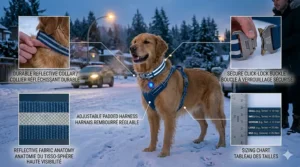
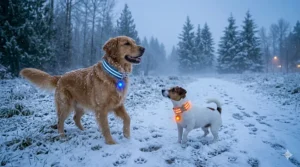
Whilst a quality reflective dog collar for dark mornings provides excellent passive visibility (reflecting light back to its source), combining it with active LED lighting creates a comprehensive safety system that addresses multiple visibility scenarios Canadian dog owners encounter. Reflective materials require an external light source to function—they’re brilliant when illuminated by car headlights but offer no visibility in areas lacking direct light. LED collar attachments or clips solve this limitation by creating their own light source, visible 360 degrees regardless of whether a car’s headlights are shining toward your dog. This matters tremendously in Canadian contexts where you might be walking through unlit parks, rural properties, or areas where tree canopy blocks street lighting. The combination approach provides layered safety: the LED ensures you can always see your dog’s location, whilst the reflective material protects against vehicle traffic. When choosing LED additions, prioritize models with long battery life (Canadian winters mean more darkness hours and thus more LED use) and simple operation (you’ll be activating these with cold, potentially gloved fingers). Rechargeable LED lights make economic and environmental sense given Canadian usage patterns—buying replacement batteries constantly becomes expensive when you’re using lights 4-5 months of the year during evening walks. Colour choice for LEDs matters differently than for reflective materials: red, green, and blue LEDs preserve your night vision better than white LEDs, useful if you’re letting your dog off-leash in familiar areas where you need to maintain your own ability to see natural obstacles. However, white LEDs make your dog more visible to others (other dog walkers, vehicles, cyclists), so choose based on your specific walking environment. Position LED attachments to avoid interfering with your dog’s movement—hanging them from the collar’s D-ring works for walking but can swing annoyingly during running or playing, whilst collar-integrated LED systems stay more stable but require purchasing specialized collars. For Canadian winter conditions, ensure any LED system is rated waterproof or water-resistant enough to handle snow accumulation and freezing rain—basic electronics often fail in our climate.
Reflective Collars for Different Canadian Dog Breeds and Sizes
Different breeds require thoughtful consideration when selecting a reflective dog collar for dark mornings, particularly given how Canadian climate and typical breed activities interact. Large northern breeds (Huskies, Malamutes, Newfoundlands, Alaskan Malamutes) develop extraordinarily thick winter coats that can obscure standard collar reflective material—for these dogs, choose collars with wide reflective strips (at least 20mm) that remain visible even when partially buried in fur. These breeds also tend toward strength and pulling behaviour, demanding heavy-duty buckles and tear-resistant materials; the Ruffwear Crag or Mighty Paw waterproof options work particularly well for their combination of visibility and durability. Medium sporting breeds (Labrador Retrievers, Golden Retrievers, Springer Spaniels) frequently encounter water in Canadian environments and benefit tremendously from genuinely waterproof options like the GoTags BioThane—these dogs don’t just get wet, they stay wet, and traditional nylon collars become odorous and uncomfortable. Small breeds and toy dogs (Chihuahuas, Yorkshire Terriers, Pomeranians) require lightweight collars that won’t burden their delicate necks, but the reflective material must be dense enough to compensate for their small size and proximity to ground level; the Pawtitas collar specifically addresses this with its fine, dense reflective threading. Terrier breeds known for escape artistry need collars with secure locking buckles rather than basic quick-release designs—the tactical collar’s metal buckle provides security that determined terriers struggle to defeat. Herding breeds (Border Collies, Australian Shepherds, German Shepherds) combine high activity levels with intelligence, benefiting from collars that remain secure during rapid movements and directional changes; padded options like the Blueberry Pet neoprene design prevent chafing during intensive activity. Brachycephalic breeds (Bulldogs, Pugs, Boston Terriers) with short necks need carefully fitted collars that don’t restrict their already compromised breathing; lightweight, flexible materials work best, avoiding bulky tactical-style designs that can interfere with airflow. Senior dogs with reduced mobility benefit from easy-to-operate buckles and lightweight materials that don’t add burden to already-challenging movement, whilst puppies need affordable options given rapid growth—choosing a $15-$22 CAD collar makes more sense than a $60 premium option they’ll outgrow in six weeks.
Maintaining Your Reflective Collar Through Canadian Seasons
Proper maintenance extends your reflective dog collar’s lifespan and ensures consistent safety performance through Canada’s demanding seasonal transitions. Winter maintenance requires particular attention: after walks on salted sidewalks or roads, rinse the collar with fresh water to remove salt crystals that accelerate material degradation and hardware corrosion—this takes thirty seconds but prevents the corrosion that ruins collars prematurely. For waterproof collars (BioThane, PVC-coated), you can simply wipe them with a damp cloth; for nylon collars, machine washing is acceptable monthly during winter when salt exposure is highest. However, always air-dry reflective collars rather than using machine dryers—heat can damage both reflective material and elastic components in adjustable collars. Inspect reflective material regularly by taking your dog into a dark room with a flashlight: shine the light at the collar from various angles to confirm the reflective material still bounces light effectively. Degraded reflective material appears dull or patchy rather than uniformly bright, indicating it’s time for replacement. Check stitching and fabric integrity monthly during heavy-use seasons (Canadian winter and spring’s muddy thaw)—small tears or separated stitching can quickly worsen, particularly when collars are stressed by cold temperatures making materials brittle. Hardware inspection matters tremendously: ensure buckles still click securely and D-rings show no cracks or excessive wear. For metal hardware, a light coating of food-safe lubricant (like what you’d use on kitchen equipment) prevents rust during extended storage or in extremely humid environments (coastal regions). Store collars properly during off-seasons: hang them in dry, moderate-temperature locations rather than leaving them in vehicles (where summer heat can damage materials) or outdoor sheds (where humidity and temperature swings accelerate degradation). For dogs with multiple collars, rotate usage to extend overall lifespan—using a waterproof collar exclusively during wet spring conditions whilst saving your premium reflective collar for drier winter walks makes both last longer. Replace collars proactively based on inspection results rather than waiting for catastrophic failure: the cost of a replacement collar is trivial compared to the risk of your dog escaping with a failed buckle or the liability of an accident caused by invisible equipment. Canadian conditions typically mean collar replacement every 18-24 months for daily-use equipment, though premium waterproof options often exceed 3 years with proper care.
❓ Frequently Asked Questions
❓ Do reflective dog collars work in Canadian winter snow conditions?
❓ How often should I replace my dog's reflective collar in Canadian weather?
❓ Can I machine wash a reflective dog collar without damaging the reflective material?
❓ Are reflective collars safer than LED collars for Canadian winter darkness?
❓ Will a reflective collar work for my dog who swims in Canadian lakes and oceans?
Conclusion: Choosing the Right Reflective Collar for Your Canadian Dog
Selecting the perfect reflective dog collar for dark mornings comes down to honestly assessing your specific Canadian context: the climate zone you inhabit (Prairie winters versus Maritime fog versus Northern Ontario extremes), your dog’s activity patterns (urban sidewalk walker versus rural trail explorer versus water-loving swimmer), and your budget realities balanced against long-term value considerations. For most Canadian dog owners prioritizing maximum safety through comprehensive visibility, the Ruffwear Crag ($35-$45 CAD) delivers reliable 360-degree reflective coverage that performs consistently in harsh conditions from -25°C Winnipeg winters to soggy Vancouver springs. Budget-conscious families will find the CollarDirect Reflective ($18-$25 CAD) offers impressive value, though accept you’ll replace it more frequently than premium alternatives—perfectly acceptable for growing puppies or multiple-dog households where equipping everyone with $60 collars strains budgets. Water-loving dogs and coastal owners benefit tremendously from genuinely waterproof options like the GoTags BioThane ($45-$60 CAD), which eliminates odour and maintenance headaches whilst providing years of reliable service. Small breed owners should specifically consider the Pawtitas ($15-$22 CAD) with its visibility optimization for compact dogs often overlooked by drivers. Remember that the most expensive collar isn’t necessarily the “best”—the right collar matches your dog’s actual needs, your walking environments, and your willingness to maintain and replace equipment as Canadian conditions demand. Whatever collar you choose, combine it with responsible walking practices: use well-lit routes when possible, maintain leash control in high-risk areas, and consider adding LED attachments for comprehensive visibility. Your dog’s safety during those dark Canadian mornings depends on equipment that works reliably when conditions are challenging and visibility is naturally compromised—invest accordingly, maintain diligently, and walk confidently knowing your companion is protected.
Recommended for You
- 7 Best LED Dog Collar for Canadian Winter Walks 2026
- Best Portable Dog Ramp for Trucks Canada 2026: Top 7 Picks
- 7 Best Crash Tested Dog Seat Belts Canada 2026
Disclaimer: This article contains affiliate links. As an Amazon Associate, I earn from qualifying purchases. If you purchase products through these links, we may earn a small commission at no additional cost to you.
✨ Found this helpful? Share it with your friends! 💬🤗
