
In This Article
Stand in the pet aisle for five minutes and you’ll see it: someone holding two brushes, turning them over like they’re defusing a bomb, trying to decide which one their dog actually needs. If you’ve landed here mid-debate over slicker brush vs pin brush for dogs, you’re in good company — it’s one of the most common forks in the road for Canadian dog owners, right up there with “raw or kibble” and “who let the dog on the bed.” The short version is that a slicker brush and a pin brush are built for different jobs, and using the wrong one daily can leave you fighting mats you didn’t need to fight, or worse, scraping at skin that just wanted to be left alone.
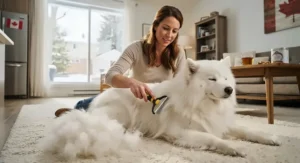
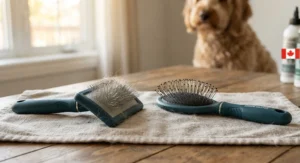
A slicker brush uses dozens of short, fine bent-wire pins packed tightly onto a flat or slightly curved head. It’s a workhorse — the tool groomers reach for when there’s an undercoat to manage or loose fur that needs pulling before it becomes a tumbleweed under your couch. A pin brush, by contrast, has fewer, longer, round-tipped pins spaced further apart, more like a wide-tooth comb crossed with a hairbrush. It’s gentler, better suited to finishing work, detangling silky or long hair, and everyday maintenance on coats that don’t mat as aggressively.
Neither tool is objectively “better.” The right one depends entirely on your dog’s coat, your climate (hello, Canadian winters and their fur-shedding aftermath), and how often you’re realistically going to pick up a brush. As the Winnipeg Humane Society points out, regular brushing is one of the simplest ways to catch mats, fleas, or skin issues before they become bigger problems — which is exactly why picking a brush you’ll actually use matters as much as picking the “right” one. Below, we’ve researched seven real, currently available options across both categories — budget, mid-range, and premium — with honest analysis of what each one actually does well, and where it falls short.
Quick Comparison Table
| Feature | Slicker Brush | Pin Brush |
|---|---|---|
| Pin type | Short, fine, densely packed bent wires | Longer, rounder, widely spaced pins |
| Best for | Undercoat removal, mats, shedding season | Detangling, finishing, sensitive skin |
| Coat type | Curly, wavy, double-coated | Long, silky, medium-length |
| Daily use? | Yes, but lighter pressure needed | Yes, very forgiving for daily use |
| Price range (CAD) | Under C$20 to around C$60 | Under C$15 to around C$55 |
| Best For | Doodles, Poodles, double-coated shedders | Setters, Spaniels, Yorkies, silky coats |
A slicker brush earns its keep on coats that tangle close to the skin — think Goldendoodles or German Shepherds mid-shed — because those densely packed pins can actually reach the undercoat that’s causing the trouble. A pin brush, meanwhile, is the better daily habit-builder for dogs with longer, straighter hair that mostly needs smoothing rather than excavating. Where the two genuinely overlap is in routine maintenance: a lot of experienced owners keep both in rotation and reach for whichever one matches the day’s problem.
💬 Just one click — help others make better buying decisions too!😊
Top 7 Slicker & Pin Brushes for Dogs: Expert Analysis
1. Chris Christensen Big G Slicker Brush — best for thick, curly doodle and poodle coats
The Big G was built with a specific problem in mind: coats that mat close to the skin faster than most owners can keep up with. Its oversized, gently curved head and coral-coated pins are engineered for volume brushing on dogs with a lot of hair to move through.
The stainless-steel pins are set at an angle and coated to reduce pin scratch, which matters more than it sounds — on a Poodle or Labradoodle, straight-in pins on lesser slickers can drag against skin that’s already irritated from a half-formed mat. The handle is intentionally large and contoured for a full-hand grip, which reduces wrist fatigue during longer sessions — genuinely useful if you’re working through a whole double coat rather than a quick touch-up.
Based on the spec comparison with other slickers in this category, this is a groomer-grade tool rather than a casual one; it’s overbuilt for a Chihuahua and just right for anything with real volume. Reviewers consistently note that the brush holds up over years of regular use without pins bending or falling out, though some mention the larger head takes getting used to around a dog’s face and legs.
Pros:
- ✅ Handles thick, curly, or double coats without excessive pressure
- ✅ Coated pins reduce scratching on sensitive, mat-prone skin
- ✅ Large ergonomic handle reduces hand fatigue on long sessions
Cons:
- ❌ Bulky head is awkward for small dogs or facial areas
- ❌ Premium price point compared to entry-level slickers
Expect to pay in the mid-to-upper range for a slicker brush — often C$45-C$60 depending on retailer — and for a dog with a genuinely demanding coat, that cost buys durability most budget brushes simply won’t match.
2. Hertzko Self-Cleaning Slicker Brush — best self-cleaning slicker for daily grooming
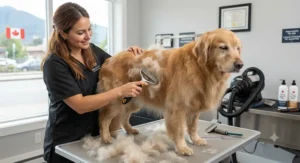
If the idea of pulling fistfuls of fur out of brush bristles by hand sounds like your personal nightmare, this is the slicker built to skip that step. A retractable mechanism, triggered by a button on the back, pulls the fine bent-wire pins flush with the head so loose hair releases in one motion.
The pins themselves are fine and closely spaced, which is standard for the slicker category, and the self-cleaning function doesn’t come at the cost of grooming performance — it still pulls loose undercoat and light tangles effectively. What most buyers overlook about self-cleaning slickers is that the retracting mechanism adds moving parts, which means slightly more to maintain long-term compared to a fixed-head brush, even if day-to-day cleanup is dramatically easier.
This is a strong pick for anyone building a slicker brush for daily grooming habit, since the low-friction cleanup removes the single biggest reason people quietly stop brushing their dog after week two. Aggregated review sentiment across major retailers is largely positive, with owners frequently mentioning the time saved on cleanup as the standout feature; a smaller subset of reviewers report the retraction button feeling less durable after heavy daily use.
Pros:
- ✅ One-button retraction makes hair cleanup genuinely fast
- ✅ Fine pins effectively lift loose undercoat and light tangles
- ✅ Comfortable grip encourages consistent, low-effort daily brushing
Cons:
- ❌ Retraction mechanism is an extra moving part to maintain
- ❌ Less pressure control than a fixed-head slicker for stubborn mats
Priced in the budget-to-mid range — typically under C$30 — this is one of the more accessible entry points into daily slicker maintenance without sacrificing much performance.
3. Safari Dog Slicker Brush by Coastal Pet — best budget slicker for general shedding control
Not every dog needs a groomer-grade tool, and this is the honest, no-frills slicker for owners who just want loose hair gone without overthinking it. It uses the same basic bent-wire-pin design as premium slickers, just without the extras — no retraction, no oversized ergonomic grip, just a straightforward plastic handle and a functional head.
The pins are stainless steel and angled to reduce direct skin contact, which is the baseline safety feature you want in any slicker regardless of price. Based on the spec sheet, this brush is best matched to short-to-medium coats or as a light-duty option for owners easing into a regular brushing routine rather than tackling heavy seasonal shedding.
Here’s what to weigh: budget slickers like this one trade the ergonomic refinements for a genuinely low cost of entry, which makes it a smart first purchase if you’re not yet sure how often your specific dog will need brushing. Reviewers commonly describe it as “good enough” for routine upkeep, with the most frequent complaint being that the plastic handle feels less substantial than pricier alternatives during extended sessions.
Pros:
- ✅ Very accessible price point for first-time slicker buyers
- ✅ Stainless steel pins handle everyday loose hair effectively
- ✅ Lightweight design is easy to manoeuvre around smaller dogs
Cons:
- ❌ Plastic handle feels less durable over long-term heavy use
- ❌ Not built for serious matting or dense double coats
At typically under C$18, this is the low-risk way to find out whether your dog even needs frequent slicker sessions before investing further.
4. Chris Christensen 27mm Oval Pin Brush, Original Series — best premium pin brush for long-haired dogs
This is the pin brush groomers actually reach for on show coats, and the reason comes down to the tips. Each stainless-steel pin is ground and polished by hand, which sounds like a small detail until you run it through a dog with fine, silky hair and notice there’s no snagging at all.
The lightweight beech wood body is a deliberate choice — it keeps the brush balanced during long detangling sessions, and it’s noticeably less fatiguing on the wrist than the plastic-handled alternatives in this list. On paper, this means the brush is optimized for finishing work: smoothing hair after a slicker or dematting comb has done the heavy lifting, rather than being the primary tool for a heavily matted coat.
For a pin brush for long-haired dogs specifically — Yorkies, Afghan Hounds, silky-coated Spaniels — this is close to the gold standard, and the aggregated sentiment among long-time users reflects that: the polished tips and coat-smoothing result come up again and again. The trade-off is obvious the moment you check the price tag, and a handful of reviewers note the wooden body requires more careful handling than a synthetic one.
Pros:
- ✅ Hand-polished pin tips glide through fine hair without snagging
- ✅ Lightweight wood body reduces hand fatigue during long sessions
- ✅ Excellent finishing tool for silky and show-quality coats
Cons:
- ❌ Premium pricing well above entry-level pin brushes
- ❌ Wood construction needs more careful, gentler handling
Expect a price in the C$40-C$55 range — a real investment, but one that specifically pays off on coats where hair quality and shine actually matter to you.
5. JW Pet GripSoft Pin Brush — best everyday pin brush for sensitive skin
This is the pin brush built for the 90% of grooming that isn’t dramatic — the daily few minutes of upkeep on a medium-to-long coat that doesn’t need heroics, just consistency. The oval head carries long, round-tipped bristles designed to glide rather than dig, and the non-slip rubber handle is genuinely comfortable for repeated daily strokes.
What most buyers overlook about “soft” pin brushes is that the rounded tips aren’t just about comfort — they’re about preventing the fine scratches that build up over months of daily brushing on thin-coated or sensitive-skinned dogs, an issue that doesn’t show up after one session but absolutely does over a year. Based on the spec comparison, this sits comfortably in the middle of the pin brush category: gentler than a slicker, sturdier than the ultra-soft puppy brushes.
Reviewers consistently describe this as their “grab it without thinking” daily brush, which is exactly the kind of low-friction tool that actually gets used. A smaller number of reviews mention that on genuinely matted sections, this brush simply glides over the tangle rather than working it out — which tracks, since that’s a slicker’s job, not a pin brush’s.
Pros:
- ✅ Non-slip ergonomic handle is comfortable for daily use
- ✅ Rounded pin tips are gentle on sensitive skin
- ✅ Solid mid-range value for everyday coat maintenance
Cons:
- ❌ Not effective on established mats or heavy tangles
- ❌ Some colour variation between shipped units, per buyer reports
Typically priced in the C$15-C$22 range, it’s a sensible default pick if your main goal is building a sustainable daily brushing routine rather than solving a specific coat crisis.
6. Safari Wire Pin Brush by Coastal Pet — best budget pin brush for general coat health
Sometimes the job really is simple: distribute natural oils, lift loose debris, keep the coat looking cared for. This brush does exactly that without extra features, using stainless-steel pins on a straightforward plastic handle that won’t win design awards but gets the basics right.
The pin spacing is wider than the JW GripSoft, which the spec sheet suggests is aimed at short-to-medium coats where you want oil distribution and light debris removal rather than deep detangling. Here’s what to weigh: this brush works especially well as a “fluffing” tool used against the direction of hair growth to add volume before a bath or outing — a trick more owners should know about and don’t.
Reviewers commonly position this as a reliable secondary brush — the one that lives in the car or the grooming bag as backup — rather than the sole tool in a household. The most consistent critique is that the pins, while functional, feel less refined than pricier competitors, and a few users report the handle becoming slippery when wet.
Pros:
- ✅ Genuinely low price point for a functional daily brush
- ✅ Distributes natural coat oils effectively with regular use
- ✅ Doubles well as a portable backup grooming tool
Cons:
- ❌ Handle grip weakens noticeably when wet
- ❌ Less refined pin quality than premium alternatives
At generally under C$15, it’s hard to argue with the value here for dogs with straightforward, low-maintenance coats.
7. Wahl Premium Pet Double-Sided Pin & Bristle Brush — best hybrid pick for mixed coat needs
Not every household has just one dog, or one coat type — and that’s exactly the gap this brush fills. One side carries a patented stacked-pin design for lifting loose hair and stimulating the skin, while the flip side offers a bristle surface for smoothing and shine.
The stacked-pin engineering on the pin side is genuinely clever: rather than pins in a flat row, they’re layered to reach deeper into the coat on the first pass, which based on the spec comparison puts it a notch above basic single-row pin brushes for shedding control. The bristle side is a nice-to-have for finishing strokes on shorter coats or for dogs who tolerate a slicker or pin brush poorly and need a gentler alternative.
This is a smart pick for multi-dog households or anyone who wants one tool that flexes between “get the loose hair out” and “make it look nice” without buying two separate brushes. Aggregated review sentiment leans positive on versatility specifically, with the most common critique being that neither side is quite as specialized as a dedicated slicker or premium pin brush would be.
Pros:
- ✅ Two brushing surfaces cover more coat situations in one tool
- ✅ Stacked-pin design lifts loose hair more efficiently than basic pins
- ✅ Solid mid-range choice for multi-dog or mixed-coat households
Cons:
- ❌ Neither side matches a dedicated specialist brush’s performance
- ❌ Bulkier profile than single-purpose pin or slicker brushes
Generally priced in the C$15-C$25 range, it’s a genuinely practical middle-ground purchase for households that don’t want to manage three different brushes on the shelf.
| Product | Type | Best For | Price Range (CAD) |
|---|---|---|---|
| Chris Christensen Big G Slicker Brush | Slicker | Thick, curly, double coats | ~C$45-C$60 |
| Hertzko Self-Cleaning Slicker Brush | Slicker | Easy daily cleanup | Under C$30 |
| Safari Dog Slicker Brush | Slicker | Budget general shedding | Under C$18 |
| Chris Christensen 27mm Oval Pin Brush | Pin | Long, silky show coats | ~C$40-C$55 |
| JW Pet GripSoft Pin Brush | Pin | Sensitive skin, daily use | ~C$15-C$22 |
| Safari Wire Pin Brush | Pin | Budget general maintenance | Under C$15 |
| Wahl Double-Sided Pin & Bristle Brush | Hybrid | Multi-dog, mixed coats | ~C$15-C$25 |
Looking at the lineup as a whole, the Chris Christensen Big G Slicker Brush and the Chris Christensen 27mm Oval Pin Brush sit at the top of their respective categories for a reason — both use pin construction that noticeably outperforms budget competitors on comfort and durability. Owners on a tighter budget shouldn’t feel shortchanged, though: the Safari Dog Slicker Brush and Safari Wire Pin Brush cover the fundamentals competently for dogs without complicated coats. If you only want to own one brush, the Wahl Double-Sided Pin & Bristle Brush is the most defensible single-purchase compromise.
✨ Ready to Build Your Grooming Kit?
🔍 Compare current pricing and availability on any of the seven picks above before you commit — stock and promotions shift often on amazon.ca, so it’s worth a quick check before checkout.
Practical Usage Guide: Building a Daily Brushing Routine
A brush sitting in a drawer helps nobody, so let’s talk about actually using one. The goal of any daily brushing routine isn’t a single perfect session — it’s consistency, because five minutes a day beats a heroic forty-minute wrestling match once a month, every single time.
Start with the coat dry, not wet, unless you’re specifically using a detangling spray — wet hair mats more easily under brush pressure, which is a common first-week mistake. Work in sections, starting at the legs and belly where mats tend to form first, then move to the back and tail. For a slicker brush, use light, short strokes and let the pins do the work rather than pressing hard; heavy pressure on a slicker is the single fastest way to cause skin irritation on a sensitive dog. For a pin brush, longer, smoother strokes in the direction of hair growth work best, especially for a pin brush for long-haired dogs where the goal is glide, not extraction.
In the first 30 days, the most common mistake is inconsistency — brushing hard for a week, then skipping ten days, which lets small tangles compound into real mats. A second common mistake is skipping the “line brushing” technique on double-coated dogs: parting the coat in sections and brushing each layer individually rather than skimming the top, which leaves the undercoat untouched and shedding continues unchecked.
Maintenance matters too. Clean pins weekly by removing trapped hair and wiping down with a damp cloth; a slicker brush loaded with old fur simply can’t do its job. Rotate a slicker and pin brush together when the coat allows — slicker first to lift loose undercoat, pin brush second to smooth and finish — and you’ll get results that neither tool delivers alone.
Real-World Scenarios: Matching the Right Brush to Your Dog
Consider three fairly typical Canadian dog owners, each with a different coat problem, because the “right” brush genuinely depends on who’s holding it.
Scenario one: a first-time Goldendoodle owner in an Ottawa condo, brushing twice a week between professional grooms. This is a textbook slicker brush for tangle removal situation — the dense, curly coat mats close to the skin fast, and a pin brush alone won’t reach the trouble spots. Pairing something like the Chris Christensen Big G Slicker Brush with occasional line-brushing sessions keeps mats from forming between salon visits.
Scenario two: a retiree in rural Alberta with an aging Cocker Spaniel that has thinning, sensitive skin and a silky coat. Here, a gentler daily approach wins — the JW Pet GripSoft Pin Brush or the Chris Christensen 27mm Oval Pin Brush for finishing avoids aggravating sensitive areas while still keeping the coat smooth and mat-free.
Scenario three: a busy multi-dog household in Toronto with a Husky and a Beagle. Coat needs vary wildly between the two, so a flexible option like the Wahl Double-Sided Pin & Bristle Brush for the Beagle’s short coat, paired with a self-cleaning slicker like the Hertzko Self-Cleaning Slicker Brush for the Husky’s seasonal blow-outs, covers both without buying five different tools.
None of these scenarios are prescriptive — your dog’s actual coat, temperament, and your own patience level should always be the deciding factors — but they illustrate how the “right” answer to slicker brush vs pin brush for dogs shifts based on real circumstances rather than a single universal rule.
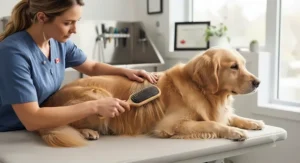
Problem → Solution: Fixing Common Tangle and Shedding Issues
Problem: recurring mats behind the ears and in the armpits. These high-friction zones mat fastest on almost any coat type. Solution: focus slicker brush sessions here twice weekly using short, gentle strokes, and follow immediately with a pin brush to smooth the area — this combination is far more effective for tangle prevention than either tool alone.
Problem: excessive shedding during spring and fall. Double-coated breeds “blow” their undercoat seasonally, and a light daily pass won’t keep up. Solution: increase slicker brush sessions to near-daily during peak shedding weeks, focusing on the flanks and hindquarters where undercoat builds up fastest.
Problem: a dog that hates being brushed. Often this traces back to a slicker brush being used too aggressively on sensitive areas. Solution: switch to a softer pin brush for a few sessions to rebuild trust, pairing each session with treats, before reintroducing the slicker gradually.
Problem: static and flyaway hair, especially in dry winter air. Solution: a light misting of water or a dog-safe detangling spray before brushing reduces static significantly, and a pin brush finishes the job better than a slicker in this specific scenario.
Problem: mats that have already tightened close to the skin. Neither brush is designed to break these apart safely. Solution: use a dedicated dematting comb or seek a professional groomer rather than forcing a slicker or pin brush through it — as the Canadian Veterinary Medical Association notes, routine preventive grooming is far safer and less stressful for the dog than reactive mat removal.
How to Choose Between a Slicker Brush and a Pin Brush
- Assess your dog’s coat density first. Thick, curly, or double coats generally need a slicker’s fine wire pins to reach the undercoat; thinner, silkier coats do better with a pin brush’s gentler spacing.
- Consider skin sensitivity. Dogs with thin or reactive skin often tolerate a soft pin brush far better than a slicker, at least for daily maintenance.
- Think about mat frequency. If your dog mats weekly, a slicker earns its place as the primary tool; if tangles are rare, a pin brush alone may suffice.
- Factor in your climate and season. Canadian winters and the subsequent spring blow-out season increase undercoat shedding significantly, which favours slicker use during those windows.
- Weigh your own consistency. A self-cleaning slicker or an ultra-comfortable pin brush that you’ll actually pick up daily beats a “perfect” brush gathering dust in a drawer.
- Check your budget realistically. Both categories span from under C$15 to over C$50 — there’s no need to overspend if your dog’s coat is genuinely low-maintenance.
- When in doubt, own both. Most experienced groomers rotate a slicker and a pin brush rather than relying on a single tool, since each solves a different half of the grooming equation.
Slicker Brush vs Pin Brush: The Full Breakdown
The honest answer to slicker brush vs pin brush for dogs is that they’re not really competitors — they’re specialists with overlapping territory. A slicker brush’s dense, fine pins excel at penetrating deep into a coat to lift loose undercoat, break up light tangles, and manage shedding at its source. A pin brush’s longer, more widely spaced pins excel at smoothing, detangling without excess pulling, and daily maintenance on coats that don’t mat aggressively close to the skin.
Where they genuinely diverge is pressure tolerance and skin contact. A slicker’s pins, even angled and coated ones, make more direct and repeated contact with skin, which is exactly why they’re effective at undercoat removal but also why heavy-handed use causes irritation faster than a pin brush would. A pin brush’s rounder tips are more forgiving on sensitive areas but simply lack the density to work through a genuinely matted section — running one over a mat mostly just glides across the surface without resolving anything underneath.
| Comparison Point | Slicker Brush | Pin Brush | Best For |
|---|---|---|---|
| Undercoat removal | Excellent | Poor to fair | Chris Christensen Big G Slicker Brush |
| Gentle daily detangling | Fair | Excellent | JW Pet GripSoft Pin Brush |
| Long, silky coat finishing | Fair | Excellent | Chris Christensen 27mm Oval Pin Brush |
| Heavy shedding season | Excellent | Poor | Hertzko Self-Cleaning Slicker Brush |
| Sensitive skin tolerance | Fair | Excellent | JW Pet GripSoft Pin Brush |
Reading this table plainly: if you had to pick one tool for a curly or double coat, the slicker wins on functional necessity, while a silky or medium coat leans pin brush for comfort and daily ease. Where budget allows, owning one of each and rotating based on the week’s grooming need consistently outperforms trying to force a single brush to do both jobs.
Compared to traditional alternatives like a plain bristle brush or basic grooming comb, both slicker and pin brushes offer more targeted coat penetration — a bristle brush mostly polishes the surface, while a comb only catches what’s already loose. According to research published on grooming-related health concerns in companion animals, chronically matted coats are linked to real medical complications including skin irritation and restricted circulation, which underscores why choosing the right brush — and using it consistently — matters more than it might first appear.
Coat Type Differences: Which Brush Matches Which Coat
Coat type differences drive almost every decision in this article, so it’s worth breaking down explicitly. Curly and wavy coats — Poodles, Doodles, Bichons — mat fastest and benefit most from regular slicker sessions, ideally paired with line brushing to reach the undercoat rather than skimming the surface. Double coats — Huskies, Golden Retrievers, German Shepherds — need slicker or undercoat-rake attention during seasonal shedding, with lighter pin brush finishing the rest of the year.
Long, silky coats — Yorkies, Shih Tzus, Cocker Spaniels — are where a premium pin brush genuinely shines, since these coats tangle rather than mat densely, and a slicker’s aggressive pin density can actually damage the hair shaft over time on this coat type. Short, smooth coats — Beagles, Boxers, Labradors — need the least intervention overall; a light pin brush or even a rubber curry brush handles routine maintenance, with a slicker reserved only for shedding season touch-ups.
Wire-haired and broken coats — Terriers — sit in an unusual middle ground, often needing a slicker for the undercoat but a pin brush or comb for the wiry topcoat texture, which is part of why many terrier owners end up owning both categories rather than settling on one.
Common Mistakes When Brushing Your Dog
The most frequent mistake is brushing only the topcoat while ignoring the undercoat entirely — the surface looks tidy while mats quietly build underneath, undetected until a groomer finds them weeks later. A close second is pressing too hard with a slicker brush, mistaking firm pressure for thoroughness when light, repeated strokes actually work more effectively and cause far less skin stress.
Skipping high-friction zones — behind the ears, armpits, and between the toes — is another common oversight, since these areas mat fastest but are also the most awkward to reach, so they get rushed or skipped. Some owners also make the mistake of only brushing before a bath, when brushing beforehand actually prevents mats from tightening further once wet; a mat that gets wet before it’s brushed out often becomes a mat that needs to be cut out instead.
Finally, inconsistent frequency undermines results more than brush choice ever does — a premium slicker used once a month will always underperform a budget pin brush used several times a week, because coat maintenance is fundamentally about habit, not hardware.
What to Expect: Real-World Grooming Results
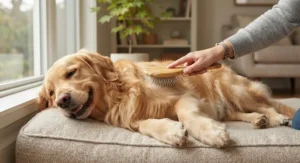
Translating specs into lived experience: a slicker brush used correctly on a moderately shedding double-coated dog typically pulls a visibly noticeable amount of loose undercoat within the first few minutes of a session, especially during seasonal shedding. That’s the fur ending up on the brush instead of the couch — a small win, but a satisfying one.
A pin brush, used daily on a long or silky coat, produces a more subtle but cumulative result: over a couple of weeks, the coat tends to tangle less at the root and generally looks smoother between full grooming sessions. It won’t dramatically reduce shedding the way a slicker can, but that’s not really its job.
What most owners report anecdotally — and what aligns with general veterinary guidance on preventive coat care — is that the combination of both tools used consistently, rather than either one used sporadically, produces the most noticeable long-term improvement in coat condition and mat frequency.
Long-Term Cost & Maintenance: Slicker vs Pin Brush ROI
A quality slicker or pin brush, cared for properly, typically lasts one to several years of regular use before pins bend, dull, or the head needs replacing — meaning the real cost-per-use on even a premium C$50 brush works out to just a few cents per session over its lifespan. Budget brushes in the C$12-C$18 range may need replacing more often if pins loosen or bend under heavier use, which can narrow the total-cost-of-ownership gap between budget and premium options more than the sticker price suggests.
Maintenance costs are minimal for either category — occasional replacement is really the only ongoing expense, since neither tool requires batteries, blades, or consumables. Where cost genuinely compounds is in what happens without regular brushing at all: mats that require professional dematting or shave-downs cost significantly more than a brush ever would, both in dollars and in stress on the dog, which makes the C$15-C$60 spent on a decent brush look like one of the better-value purchases in a grooming budget. This is especially true for double-coated breeds, where, as Spot Pet Insurance Canada explains, skipped brushing during seasonal shedding compounds quickly into matting that a simple weekly routine would have prevented entirely.
Price Range & Value Analysis
| Budget Tier | Price Range (CAD) | Best Pick | Value Verdict |
|---|---|---|---|
| Budget | Under C$20 | Safari Wire Pin Brush | Solid for low-maintenance coats |
| Mid-Range | C$15-C$30 | Hertzko Self-Cleaning Slicker Brush | Best cleanup-to-performance ratio |
| Premium | C$40-C$60 | Chris Christensen Big G Slicker Brush | Worth it for demanding, curly coats |
The value story here isn’t simply “spend more, get better results” — it’s about matching spend to actual need. A dog with a short, low-maintenance coat gets essentially the same practical outcome from a Safari Wire Pin Brush as from a premium alternative, while a dog with a genuinely demanding double coat sees a real, tangible difference from the Chris Christensen Big G Slicker Brush‘s build quality over months of use. Mid-range picks like the Hertzko Self-Cleaning Slicker Brush land in a sensible middle ground for owners who want convenience without premium pricing.
🐾 Compare Current Prices Before You Buy
🔍 Prices and stock on amazon.ca shift regularly, so it’s worth checking current availability on any of the seven picks in this guide before adding one to your cart.
FAQ
❓ What's the main difference between a slicker brush and a pin brush for dogs?
❓ Can I use a slicker brush every day on my dog?
❓ Which brush is better for tangle prevention?
❓ Is a pin brush good for long-haired dogs?
❓ Do I need both a slicker brush and a pin brush?
Conclusion
If there’s one takeaway from this whole slicker brush vs pin brush for dogs comparison, it’s that the “right” brush was never a universal answer — it’s a question about your specific dog’s coat, skin, and your own realistic grooming habits. A curly-coated Doodle mid-shedding-season and a silky-coated Yorkie getting a daily smooth-down are simply not solving the same problem, and forcing one tool to handle both jobs usually means one of those dogs is getting a worse result than they deserve.
Across the seven products covered here, the pattern holds steady: premium options like the Chris Christensen Big G Slicker Brush and the Chris Christensen 27mm Oval Pin Brush earn their price through build quality and comfort on demanding coats, while budget-friendly picks like the Safari Dog Slicker Brush and Safari Wire Pin Brush genuinely cover the basics well for lower-maintenance dogs. The Hertzko Self-Cleaning Slicker Brush and Wahl Double-Sided Pin & Bristle Brush land in a practical middle ground worth considering if you want flexibility without a premium price tag.
Whatever you land on, the biggest factor in results still isn’t the brush itself — it’s consistency. A decent brush used three times a week will always outperform a perfect brush used once a month.
🐕 Start Your Dog’s Grooming Upgrade Today
🔍 Take another look at the seven picks above, check current pricing on amazon.ca, and pick the one that actually matches your dog’s coat — future you (and your couch) will thank you.
Recommended for You
- 7 Best Dog Wipes for Puppies in 2026: Gentle Picks That Actually Work
- Deshedding Tool for Double-Coated Dogs: 7 Top Picks for 2026
- 7 Best Hypoallergenic Dog Wipes for Sensitive Skin in 2026
Disclaimer: This article contains affiliate links. As an Amazon Associate, I earn from qualifying purchases. If you purchase products through these links, we may earn a small commission at no additional cost to you.
✨ Found this helpful? Share it with your friends! 💬🤗
