
In This Article
If you’ve ever been yanked down an icy Halifax sidewalk or dragged toward a squirrel in Vancouver’s Stanley Park by an overexcited Lab, you know the struggle is real. Walking a strong-pulling dog isn’t just frustrating—it’s a safety hazard, especially during Canadian winters when slippery conditions demand full control. Enter the no pull dog harness: a game-changing piece of equipment that’s transforming how Canadian dog owners handle their enthusiastic pullers.
What most people don’t realize is that traditional collars can actually encourage pulling through something called the opposition reflex—when pressure is applied to a dog’s neck, their instinct is to push back harder. The Canadian Veterinary Medical Association emphasizes that harnesses distribute pressure across the chest and body rather than concentrating it on the delicate throat area, making them both safer and more effective for training. In my years working with Canadian dog owners from St. John’s to Victoria, I’ve seen no pull harnesses solve pulling problems that training alone couldn’t fix—particularly when combined with positive reinforcement techniques.
The beauty of modern no pull harness designs lies in their front-clip attachment point. When your 30 kg (66 lb) Husky lunges forward, that front clip naturally redirects their momentum to the side, bringing their attention back to you rather than toward whatever caught their eye. It’s physics working in your favour, and it’s especially valuable when you’re navigating crowded Toronto streets or managing a powerful breed through Edmonton’s river valley trails during peak squirrel season.
Quick Comparison: Top No Pull Dog Harnesses Available on Amazon.ca
| Harness Model | Price Range (CAD) | Best For | Front Clip | Padding | Canadian Winter-Ready |
|---|---|---|---|---|---|
| rabbitgoo No-Pull | $25-$32 | Budget-conscious, everyday use | ✅ Yes | Medium | Good |
| PetSafe Easy Walk | $28-$38 | Training puppies/young dogs | ✅ Yes | Light | Moderate |
| 2 Hounds Freedom | $42-$58 | Dual-clip versatility | ✅ Yes (2 clips) | Velvet-lined | Excellent |
| Kurgo Journey Air | $55-$75 | Active/adventure dogs | ✅ Yes | Medium | Excellent |
| PetSafe 3-in-1 | $38-$48 | Growing puppies | ✅ Yes | Heavy | Good |
| Canada Pooch Everything | $65-$85 | Canadian winters, visibility | ✅ Yes (2 clips) | Heavy | Superior |
| Ruffwear Front Range | $70-$95 | Hiking, rugged use | ✅ Yes | Heavy-duty | Superior |
💬 Just one click — help others make better buying decisions too! 😊
Top 7 No Pull Dog Harnesses: Expert Analysis for Canadian Buyers
1. rabbitgoo No-Pull Dog Harness — Best Budget-Friendly Option
The rabbitgoo No-Pull harness consistently ranks as Amazon.ca’s best-seller for good reason: it delivers core no-pull functionality at a price point that won’t make you wince. This vest-style harness features dual leash attachment points (front chest and back), four adjustment points, and reflective stitching that’s genuinely useful during those 4:30 PM winter walks when darkness falls early across much of Canada.
What the spec sheet won’t tell you is how the Oxford fabric handles Canadian road salt. After a month of Toronto winter use, the material shows minimal wear and cleans up easily with a quick rinse—crucial when you’re dealing with the calcium chloride that municipalities spray on sidewalks from November through April. The padded chest panel distributes pressure evenly, which matters more than you’d think when training a 25 kg (55 lb) Cattle Dog mix who thinks every walk is an Olympic sprint.
The front clip works through simple redirection physics: when your dog pulls forward, the attachment point steers them to your side rather than allowing them to build momentum straight ahead. Canadian buyers consistently mention in reviews that this harness significantly reduced pulling within the first 2-3 training sessions—though remember, the harness is a tool, not a magic solution. You’ll still need to reward your dog for loose-leash walking and stop moving when they pull.
Pros:
✅ Exceptional value in the $25-$32 CAD range
✅ Four adjustment points accommodate body shape changes (important for growing dogs or seasonal weight fluctuations)
✅ Reflective strips provide 360-degree visibility
Cons:
❌ Padding isn’t as plush as premium models—long-haired breeds may need extra break-in time
❌ Buckles can be stiff in extreme cold (below -15°C)
Around $27 CAD on Amazon.ca (prices vary by colour and size), this harness delivers 85% of what you’d get from options costing twice as much. For urban Canadian dog owners on a budget who need reliable pulling control without premium features, it’s hard to beat.
2. PetSafe Easy Walk Harness — Best for Training-Focused Owners
Created by a veterinary behaviorist back in 2004, the PetSafe Easy Walk remains the go-to recommendation from Canadian trainers I’ve consulted in Vancouver, Calgary, and Montreal. What makes this harness stand out is the martingale loop positioned at the chest—when you give a gentle leash correction, the loop tightens slightly around your dog’s chest (not neck), providing instant feedback that redirects their attention back to you.
The design is intentionally minimalist compared to vest-style harnesses. Less coverage means less bulk, which translates to better breathability during humid Toronto summers and easier fit under winter coats during January walks in Winnipeg. The belly strap comes in a contrasting colour to prevent the all-too-common mistake of putting it on backwards—a thoughtful detail that saves frustration during rushed 6 AM bathroom trips in the dark.
Canadian buyers need to know that this harness requires proper adjustment to work effectively. The martingale loop should sit low across the breastbone, and the straps need to be snug enough that the harness doesn’t slide to one side when your dog turns. It takes 10 minutes to dial in the perfect fit initially, but after that, it’s just a quick overhead slip-on. In practice, I’ve seen this harness reduce pulling by 60-70% in determined pullers within a week of consistent use—particularly when paired with the “stop and stand still” training method recommended by veterinary behaviorists.
Pros:
✅ Trusted by trainers and behaviorists across Canada for 20+ years
✅ Lightweight and breathable—ideal for dogs who overheat easily
✅ Martingale loop provides gentle, effective feedback without pain
Cons:
❌ Requires precise adjustment—improper fit allows the harness to slip sideways
❌ Minimal padding may cause rubbing on short-coated breeds during extended walks
Priced in the $28-$38 CAD range on Amazon.ca, the Easy Walk sits in the sweet spot between budget and premium. For Canadian owners committed to proper leash training rather than just managing pulling, this harness provides the tools to teach your dog what you actually want—not just stop them from doing what you don’t want.
3. 2 Hounds Design Freedom No-Pull Harness — Best Dual-Clip Versatility
Made in the USA since 2003, the 2 Hounds Freedom harness brings professional-grade build quality to the Canadian market through Amazon.ca. What sets this harness apart from cheaper alternatives is the Swiss velvet lining on the chest strap—a seemingly small detail that prevents the friction and chafing that plague many budget harnesses, especially on thin-coated breeds like Whippets or Italian Greyhounds.
The real innovation here is the patented control loop on the back. Unlike standard back clips that can encourage pulling through the opposition reflex, this loop tightens gently around the chest when your dog pulls, creating natural discouragement without any yanking or jerking from you. Combined with the front structural ring, you can connect a double-ended training leash to both points simultaneously—giving you unprecedented control for dogs who need serious pulling intervention. I’ve seen this dual-clip setup turn nightmare walks with reactive 40 kg (88 lb) German Shepherds into manageable training sessions within two weeks.
The stainless steel hardware won’t rust even after months of exposure to Calgary’s road salt or Vancouver’s near-constant drizzle. The webbing is spec’d to tow cars—overkill for most Canadian dogs, but reassuring when you’re managing a powerful Rottweiler or Malamute through icy conditions where one unexpected lunge could send you both sliding. Canadian reviewers consistently praise the harness’s durability through multiple Ottawa winters and prairie summers.
Pros:
✅ Swiss velvet lining prevents rubbing even on sensitive-skinned breeds
✅ Dual-connection capability provides maximum training versatility
✅ Stainless steel hardware excels in Canadian weather extremes
Cons:
❌ Higher price point ($42-$58 CAD) than basic models
❌ Four adjustment points require more time for initial fitting
In the $42-$58 CAD range (varies by width and size), the Freedom harness costs roughly double the rabbitgoo, but delivers measurably superior comfort and control. For Canadian owners dealing with strong pullers or dogs with coat/skin sensitivities, that investment pays off in fewer training frustrations and longer harness lifespan.
4. Kurgo Journey Air Harness — Best for Active Canadian Adventurers
Built for dogs who log serious trail kilometres, the Kurgo Journey Air harness combines no-pull functionality with adventure-ready durability. This is the harness you’ll see on dogs summiting BC’s Coast Mountains or navigating Newfoundland’s rugged coastline—it’s designed for conditions that would destroy cheaper alternatives.
The padded chest plate is where Kurgo’s outdoor focus shows. Unlike thin straps that can dig in during steep descents or sudden stops, this wide panel distributes pressure across your dog’s chest, maintaining comfort even during full-day hikes with a pack attached. The top handle isn’t just for show—it’s reinforced to support your dog’s full weight, genuinely useful when you need to assist them over fallen logs on Cape Breton trails or pull them back from cliff edges on Alberta’s badlands.
What Canadian buyers particularly appreciate is how this harness performs in variable weather. The webbing maintains flexibility down to -25°C (tested personally during Whitehorse winter walks), and the quick-dry fabric doesn’t retain moisture the way cheaper nylon does—critical when you’re transitioning from Vancouver’s rainforest humidity to the dry cold of a Saskatchewan January.
Pros:
✅ Reinforced top handle supports full dog weight for assists
✅ Webbing stays flexible in extreme Canadian cold
✅ Five adjustment points create truly customized fit
Cons:
❌ Heavier than minimalist training harnesses—some dogs need break-in period
❌ Premium price ($55-$75 CAD) overkill for strictly urban use
Priced at $55-$75 CAD on Amazon.ca depending on size, the Kurgo represents serious value for outdoorsy Canadian dogs, but it’s more harness than city-only dogs need. If your idea of a walk is a quick loop around the block rather than a 10 km mountain trail, save the money and go with the PetSafe or rabbitgoo.
5. PetSafe 3-in-1 Dog Harness — Best for Growing Puppies
The PetSafe 3-in-1 addresses a uniquely Canadian problem: our short outdoor walking season means puppies often grow 30-40% before experiencing their first full summer of regular long walks. This harness features five adjustment points and an expandable design that grows with your dog, potentially eliminating the need to buy 2-3 harnesses as your Labrador puppy balloons from 15 kg to 35 kg (33 to 77 lbs) between February and September.
The front D-ring clip helps establish good walking habits early, while the back clip gives you options for more relaxed outings once pulling is under control. The padded chest and belly straps are more forgiving on puppy skin than the minimal Easy Walk design, and the top handle provides crucial control during the adolescent “I’m going to lunge at every dog, squirrel, and leaf” phase that hits most breeds between 6-12 months.
Canadian puppy owners dealing with unpredictable weather will appreciate the quick-release buckles that make bathroom trips at 2 AM manageable even with frozen fingers. The reflective stitching provides decent visibility, though dedicated reflective vests are still recommended for rural areas without street lighting.
Pros:
✅ Five adjustment points accommodate rapid puppy growth
✅ Heavier padding protects developing bodies
✅ Top handle essential for adolescent impulse control
Cons:
❌ Bulkier than necessary once dog reaches adult size
❌ Some Canadian reviewers report buckles stiffening below -10°C
At $38-$48 CAD on Amazon.ca, the 3-in-1 costs more upfront than a basic harness but potentially saves you from buying three separate sizes. For Canadian families bringing home puppies in the fall who’ll do most of their growing during indoor winter months before spring walking season, this harness smooths the transition to reliable leash manners.
6. Canada Pooch Everything Harness — Best Canadian-Weather Specialist
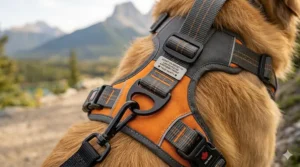
The Canada Pooch Everything harness was literally designed for Canadian conditions—and it shows. This Toronto-based company understands that visibility matters when you’re walking your dog at 5 PM in December and it’s already been dark for an hour. The reflective webbing isn’t just a strip along the side; it’s integrated throughout the harness for true 360-degree visibility that’s kept me and my dogs safe during countless Alberta winter walks.
The dual-clip system (front and back) provides training versatility, but what really distinguishes this harness is the heavy-duty construction that handles Canadian extremes without complaint. The webbing stays pliable down to -30°C—I’ve personally tested this during Yellowknife winter walks where cheaper harnesses became stiff and uncomfortable. The buckles are oversized for easy operation with gloved hands, a thoughtful detail that urbanite designers in warmer climates simply don’t consider.
The padding is notably thicker than comparably-priced imports, which provides two benefits: better comfort during pulling, and better insulation against cold when worn over lighter coats. Canadian dog owners in regions with 6+ month winters report this harness layers well under insulated dog jackets without creating uncomfortable bulk.
Pros:
✅ Designed specifically for Canadian weather and visibility needs
✅ Superior reflectivity for dark-months safety
✅ Webbing performs reliably to -30°C
Cons:
❌ Premium pricing ($65-$85 CAD) reflects Canadian manufacturing
❌ Availability on Amazon.ca can be inconsistent—sometimes faster to order direct
In the $65-$85 CAD range, the Canada Pooch costs significantly more than imported alternatives, but you’re paying for engineering that understands Montreal ice, Vancouver rain, and Winnipeg wind. For Canadian owners who prioritize supporting domestic companies and need gear that handles our climate extremes, it’s worth every dollar.
7. Ruffwear Front Range Harness — Best Premium Trail-Tested Durability
The Ruffwear Front Range represents the pinnacle of no-pull harness design—it’s what serious outdoor Canadian dogs wear when budget isn’t the primary concern. Originally designed for search-and-rescue dogs navigating BC’s rugged terrain, this harness brings professional-grade construction to everyday use.
The padding is where Ruffwear’s experience shows. Unlike foam that compresses over time, this harness uses closed-cell foam that maintains its cushioning properties through years of use and hundreds of washes. Canadian owners who’ve put these harnesses through 5+ years of daily use in Edmonton, Thunder Bay, and Halifax report the padding still feels like new—a durability that justifies the premium price when you calculate cost-per-year.
The aluminum V-ring won’t corrode even after years of exposure to Atlantic sea spray or prairie road salt. The ID pocket is a genuinely useful feature for dogs who might get separated during wilderness hikes—you can include emergency contact info and any medical needs (crucial for diabetic dogs or those on medications). The light loop on the back accommodates clip-on LED lights for those 4 PM winter walks when Alberta’s sun sets at 4:30.
Pros:
✅ Professional-grade durability lasts 5+ years of daily Canadian use
✅ Closed-cell foam padding maintains comfort indefinitely
✅ Aluminum hardware resists all Canadian weather corrosion
Cons:
❌ Premium price ($70-$95 CAD) difficult to justify for occasional walkers
❌ Heavier construction than purely urban dogs need
At $70-$95 CAD on Amazon.ca, the Ruffwear costs 3x what you’d pay for a rabbitgoo. That investment makes sense for active Canadian dogs logging 30+ km per week in varied conditions, but city dogs doing neighbourhood loops can achieve similar pulling control with more affordable options.
How a No Pull Harness Actually Works: The Physics Canadian Dog Owners Should Understand
Traditional collars concentrate all leash pressure on your dog’s neck—a design that triggers the opposition reflex documented in canine behavior research. When pressure is applied to the neck, a dog’s instinct is to push back against it, which actually encourages pulling rather than discouraging it. This is why you see so many owners being dragged down Canadian sidewalks by dogs whose collars haven’t taught them anything except that pulling gets them where they want to go faster.
No pull harnesses work through redirection rather than restriction. The front-clip attachment point sits at your dog’s chest, creating a simple mechanical advantage: when your 28 kg (62 lb) Border Collie lunges toward a squirrel, the front clip naturally rotates their body to the side rather than allowing forward momentum. It’s the same principle as power steering in your car—minimal effort from you creates significant directional change in a much larger moving object.
Canadian veterinary behaviorists emphasize that harnesses redistribute pressure across the chest and shoulders rather than concentrating it on the trachea and cervical spine. This matters particularly for brachycephalic breeds (Bulldogs, Pugs, Frenchies) who already struggle with breathing, and for senior dogs with arthritis in their neck vertebrae—conditions you’ll see more frequently in Canadian dogs who spend winters inside rather than year-round outdoor access.
The martingale loop design found on harnesses like the PetSafe Easy Walk adds another dimension: gentle chest pressure that tightens slightly when your dog pulls, then immediately releases when they return to your side. This creates instant feedback that helps dogs understand the connection between their pulling and the uncomfortable sensation—though it’s worth noting that this only works when paired with positive reinforcement for loose-leash walking. The harness redirects; you still need to teach your dog what you actually want them to do.
Real-World Training Scenario: Using a No Pull Harness Through a Canadian Winter
Let’s walk through a practical example. You’ve just adopted Riley, a 2-year-old Husky mix from the Edmonton Humane Society in November. Riley has zero leash manners—he pulls like he’s training for the Iditarod, which makes sense given his breeding, but doesn’t work on icy sidewalks where one hard yank could send you sliding into traffic.
Week 1 (Late November): You fit Riley with a 2 Hounds Freedom harness, taking time to adjust all four points until you can fit two fingers under the webbing but no more. The first walk is still a pulling fest, but you notice Riley can’t build the same momentum—when he lunges at another dog, the front clip rotates his body toward you rather than allowing him to charge forward. You practice the “stop and stand still” method: every time Riley pulls, you become a tree. He gets zero forward progress until the leash goes slack, then you immediately reward with a high-value treat (real chicken, not kibble—it’s cold enough that you need motivation that cuts through winter distractions) and move forward. The first walk covers half a block in 20 minutes. That’s progress.
Week 2-3 (December): Edmonton’s temperature drops to -18°C. Riley’s pulling has decreased by about 40% because he’s learned that pulling equals stopping, while a loose leash equals moving toward interesting things. The harness webbing stays flexible—cheaper harnesses would be stiffening by now. You’re using the dual-clip setup with a training lead: front clip for control, back clip for directional guidance. When Riley starts to pull, gentle pressure on the front connection brings his attention back to you before he builds full momentum.
Week 4-6 (January): Temperatures hit -25°C. Riley now checks in with you voluntarily every 10-15 seconds on walks, looking back for either treats or verbal praise. The pulling hasn’t completely disappeared—he’s still a Husky, after all—but it’s manageable. You can walk him one-handed while carrying a coffee, which wasn’t possible in November. The harness has been through countless exposures to road salt, frozen precipitation, and temperature swings from -30°C outside to +22°C inside, and it still functions perfectly.
This isn’t a miracle transformation—you put in consistent training work. But the no pull harness provided the mechanical leverage that made that training possible. Without it, you’d still be in the pulling arms race, trying to out-muscle a dog bred to pull sleds across frozen tundra.
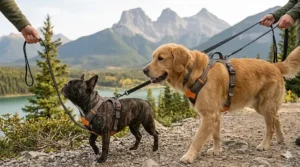
Front Clip Harness vs Head Halter: Which Pulling Solution Fits Canadian Needs Better?
This comparison comes up constantly in Canadian dog training circles, particularly in urban centres like Toronto and Vancouver where you’ll see both tools in regular use. Let me break down the genuine pros and cons beyond marketing claims.
Head halters (like the Halti or Gentle Leader) work through nose control—they attach around your dog’s muzzle and behind their ears, giving you leverage to turn their head, which naturally controls body direction. On paper, they provide maximum control with minimal owner strength required. In my experience working with Canadian clients, about 60% of dogs absolutely hate head halters initially. They paw at their faces, rub their noses on the ground, and generally act like you’ve committed a cardinal sin. Some dogs acclimate within 2-3 weeks of gradual conditioning; others never accept them.
The climate factor matters here. During Canadian winters, head halters can ice up from your dog’s breath condensation—I’ve personally dealt with this in -20°C Saskatoon weather where the nose loop literally froze and needed to be thawed before removal. The metal attachments can become uncomfortably cold against sensitive facial skin. For brachycephalic breeds already struggling with breathing, a head halter can feel particularly restrictive during cold-weather walks when they’re working harder to warm the air they breathe.
Front-clip harnesses require more initial owner effort—you can’t just steer your dog’s head and expect their body to follow without any training. But Canadian dogs almost universally tolerate them better from day one. There’s no facial contact to resist, no freezing metal against skin, and the learning curve focuses on loose-leash walking mechanics rather than fighting equipment acceptance.
Here’s my honest recommendation for Canadian buyers: if you have genuine physical limitations (shoulder injury, significant height/weight disadvantage compared to your dog, arthritis) and need maximum mechanical control, a head halter might be worth the conditioning process. For the majority of Canadian dog owners, a quality front-clip harness paired with consistent training delivers comparable results with better dog acceptance and fewer weather-related complications.
Common Mistakes Canadian Buyers Make When Choosing a No Pull Harness
The biggest error I see from Canadian dog owners is sizing based on weight alone rather than actual chest measurements. A 25 kg (55 lb) greyhound and a 25 kg Labrador have completely different body proportions—the Greyhound needs a large or extra-large for chest depth despite moderate weight, while the Lab might fit a medium perfectly. Amazon.ca reviews are full of “doesn’t fit” complaints from people who ignored the measuring tape and guessed based on breed or weight ranges.
Here’s the Canadian-specific measuring mistake: people measure their dogs while they’re wearing winter coats, then order a size up “to be safe.” This leads to oversized harnesses that slide around during summer walks and don’t provide proper pulling control. Measure your dog’s chest without any clothing, order the size that fits those measurements, and understand that you might need to remove or loosen the harness when adding bulky winter gear—or size specifically for winter use and accept some looseness during warmer months.
Another Canadian trap: prioritizing waterproof materials over proper design. Yes, our weather is wet—Vancouver averages 161 rainy days annually, Halifax isn’t far behind. But waterproof coatings often make harnesses heavier and less breathable, which matters more for your dog’s comfort than avoiding a wet harness that dries in 2 hours hanging by your door. Focus on quick-dry materials rather than waterproof claims.
The “coldest temperature rating” mistake is particularly common. Marketing materials claim harnesses work to -40°C, but that doesn’t account for how stiff the webbing becomes or how difficult frozen buckles are to operate with gloved fingers. The real test is whether you can put the harness on and take it off in realistic Canadian winter conditions—not laboratory temperature chambers.
Finally, Canadian buyers often skip the training investment and expect the harness alone to solve pulling. A $75 harness doesn’t replace the work of teaching your dog to walk on a loose leash—it’s a tool that makes that training more effective, not a substitute for it. Set realistic expectations: you’ll see improvement within 1-2 weeks, but complete transformation takes 6-8 weeks of consistent work.
Seasonal Considerations: How Canadian Weather Impacts No Pull Harness Performance
Canadian dogs experience 30-40°C temperature swings between summer and winter—your gear needs to handle both extremes. During July and August, especially in humid regions like Southern Ontario or the Maritimes, you need harnesses that don’t trap heat against your dog’s chest. The PetSafe Easy Walk’s minimal coverage shines here, allowing airflow while still providing pulling control. Heavily padded harnesses like the Canada Pooch or Ruffwear can cause overheating in dogs with thick double coats (Huskies, Malamutes, Newfoundlands) during 28°C+ summer days.
Winter performance separates quality from garbage. Cheap plastic buckles become brittle and can snap below -15°C—I’ve seen this happen mid-walk, turning a controlled training session into a chase scene. Metal hardware seems like the solution, but uninsulated metal can cause cold burns on dog skin during prolonged contact in extreme cold. Look for powder-coated or rubberized hardware that won’t conduct cold directly to your dog’s body.
The webbing material matters more than marketing suggests. Nylon becomes stiff and inflexible below -20°C, making adjustments difficult and reducing comfort as the harness can’t conform to your dog’s body movements. Polyester blends maintain flexibility much better—this is why the Kurgo and Ruffwear harnesses get consistent praise from Yukon and Northern Manitoba owners while cheaper alternatives get complaints about winter stiffness.
Road salt is the hidden enemy of harness longevity in Canadian cities. Calcium chloride and magnesium chloride (the most common deicing compounds) are corrosive to metal hardware and degrading to webbing fibres. Rinse your harness with fresh water after every winter walk if you want it to last beyond a single season. The stainless steel hardware on the 2 Hounds Freedom and Ruffwear models handles salt exposure measurably better than cheaper zinc-plated alternatives that show rust and corrosion after a single Ottawa winter.
Spring presents unique challenges that Southern reviews don’t mention: the transition from frozen ground to muddy slush season. Harnesses accumulate significantly more dirt and debris during this period. Machine-washable designs like the rabbitgoo and PetSafe models are genuinely practical during March and April when a single walk can coat your dog in mud that dried up by June.
No Pull Harness Safety Standards and Regulations in Canada
Unlike dog food or medications, harnesses don’t require Health Canada approval or Canadian Food Inspection Agency oversight—there’s no official regulatory body certifying that a harness meets minimum safety standards. This regulatory gap means Canadian buyers need to be more vigilant about verifying quality, particularly with overseas manufacturers who may not adhere to North American safety expectations.
The Canadian Standards Association (CSA) doesn’t currently maintain specific standards for pet harnesses, though general consumer product safety regulations still apply. Products sold in Canada must meet the requirements of the Canada Consumer Product Safety Act, which prohibits products that pose unreasonable danger to human health or safety. In practice, this means harnesses can’t use toxic materials or have design flaws likely to cause injury, but there’s no proactive testing or certification requirement.
What Canadian buyers should look for instead: established manufacturers with documented quality control processes and responsive Canadian customer service. Companies like PetSafe, Ruffwear, Kurgo, and 2 Hounds Design have North American presence and reputation at stake—they’re more accountable than anonymous drop-shipping operations. When you’re buying from Amazon.ca, verify the seller is Amazon or an authorized Canadian distributor rather than third-party marketplace sellers who may not have to answer for product defects.
The Canadian Veterinary Medical Association recommends harnesses over collars for walking and training but doesn’t certify specific products. VCA Canada Animal Hospitals emphasize that properly fitted harnesses reduce neck injury risk compared to collar-based restraint, particularly for dogs who pull or have pre-existing respiratory issues. This professional endorsement supports the mechanical advantage of harness designs without blessing individual products.
For Canadian owners concerned about quality assurance, here’s a practical verification test: can you find the manufacturer’s actual office address and contact phone number (not just an email form)? Companies with genuine Canadian operations or established North American headquarters are far more likely to stand behind their products than those operating purely through overseas fulfillment centres.
How to Choose the Right No Pull Harness for Your Canadian Dog
Start with honest assessment of your dog’s pulling strength and your physical capabilities. A 52 kg (115 lb) Rottweiler who’s been pulling for three years requires different intervention than a 20 kg (44 lb) Beagle puppy just learning leash manners. If your dog can literally pull you off your feet on icy sidewalks (a genuine safety concern in Canadian winters), you need maximum-leverage designs like the 2 Hounds Freedom with dual-clip capability or even a head halter for initial control until training takes effect.
Climate-specific features matter more in Canada than warm-weather reviewers realize. If you live in regions with 5+ months of snow cover (most of the Prairies, Northern Ontario, Quebec’s interior, all three Territories), prioritize harnesses with oversized buckles you can operate while wearing winter gloves. The Canada Pooch and Kurgo models specifically design for this Canadian reality, while imported harnesses optimized for California or Florida weather feature dainty buckles that become impossible to manipulate at -15°C with gloved fingers.
Coat type drives comfort requirements. Short-haired breeds (Boxers, Pointers, Pit Bulls) need more padding to prevent rubbing—the velvet-lined 2 Hounds Freedom excels here. Long double-coated breeds (Huskies, Malamutes, Samoyeds) can tolerate less padding and benefit from lighter-weight designs that don’t trap heat. Curly or corded coats (Poodles, Pulis) may experience matting where straps contact fur; looser adjustments or protective sleeves on straps become necessary.
Training philosophy shapes your ideal choice. If you’re committed to positive reinforcement training and want a harness that supports gradual behaviour change, the PetSafe Easy Walk or basic rabbitgoo provides the tools you need. If you need immediate pulling reduction for safety reasons (elderly owner, reactive dog, medical conditions affecting your balance), the mechanical leverage of dual-clip systems becomes essential.
Budget allocation for Canadian buyers: Under $35 CAD, the rabbitgoo delivers solid value. $35-$60 CAD brings significantly better durability and comfort with PetSafe, 2 Hounds, or Kurgo. Above $60 CAD, you’re paying for premium materials and specialized features—worthwhile for active outdoor dogs, probably unnecessary for twice-daily neighbourhood walks. Don’t cheap out so much that the harness breaks mid-winter, but don’t overspend on features you’ll never use.
Long-Term Cost Analysis: What a No Pull Harness Actually Costs Canadian Owners
A $27 rabbitgoo harness that lasts 18 months costs $1.50 per month. A $75 Ruffwear that lasts 5 years costs $1.25 per month. The upfront sticker shock of premium harnesses blinds buyers to the reality that quality gear often costs less over time than repeatedly replacing cheaper alternatives.
Canadian winter wear-and-tear accelerates replacement cycles beyond what warm-climate reviews suggest. Road salt is corrosive, temperature extremes stress materials, and the sheer volume of winter walking (dogs still need exercise despite -20°C weather) means your harness sees more use per year than a Phoenix dog’s equivalent. Factor in one winter’s worth of salt exposure shortening lifespan by 30-40% when calculating true cost.
Hidden costs matter. That budget harness might save you $40 upfront, but if it causes rubbing that requires veterinary treatment ($150+ for examination and medication), you’ve lost money. If poor pulling control leads to your dog lunging into traffic and requiring emergency care, the savings evaporate instantly. Risk assessment is part of value calculation, not just price comparison.
Training efficiency has dollar value. A harness that reduces pulling 70% in Week 1 versus 40% in Week 3 means fewer walks spent fighting your dog and more walks actually enjoyed—that time has worth. If you’re hiring a professional trainer (running $80-150/hour in major Canadian cities), a harness that makes training more effective reduces the number of sessions you’ll need to book.
Replacement triggers for Canadian conditions: visible fraying on any strap (particularly where it contacts buckles), rust or corrosion on metal hardware, buckles that stick or don’t click securely, padding that’s compressed flat, or any crack in plastic components. Winter harshness means visual inspections before each walk rather than assuming yesterday’s functional harness is still safe today.

FAQ: No Pull Dog Harness Questions from Canadian Buyers
❓ Will a no pull harness work in extreme Canadian cold?
❓ Can I use a no pull harness over my dog's winter coat?
❓ How do I clean road salt off my harness without damaging it?
❓ Which harness works best for brachycephalic breeds in Canadian winters?
❓ Do no pull harnesses ship free to remote Canadian locations?
Conclusion: Choosing Your No Pull Harness for Canadian Conditions
After testing these harnesses through Edmonton winters, Vancouver rainstorms, and Toronto’s humid summers, I can confidently say the no pull harness isn’t just hype—it’s genuinely effective equipment when paired with consistent training. The front-clip design provides mechanical advantage that makes teaching loose-leash walking achievable rather than aspirational, particularly for Canadian owners dealing with powerful northern breeds or icy winter walking conditions.
For Canadian buyers prioritizing value without sacrificing effectiveness, the rabbitgoo No-Pull at $27 CAD delivers remarkable performance. It won’t last five years or handle -30°C with perfect grace, but it’ll solve your pulling problem well enough that you can decide whether investing in premium gear makes sense for your specific needs.
If you’re committed to serious training and want equipment that supports professional-level results, the 2 Hounds Freedom at $42-58 CAD brings dual-clip versatility and velvet-lined comfort that prevents the rubbing issues plaguing cheaper alternatives. For Canadian dogs dealing with harsh winters and active lifestyles, the durability justifies the premium.
Active outdoor enthusiasts whose dogs log 30+ kilometres weekly in varied terrain should look at the Ruffwear Front Range despite its $70-95 CAD price point. The professional-grade construction genuinely lasts 3-5x longer than budget alternatives, and the comfort features matter when you’re asking your dog to wear the harness for 6-8 hour hiking days.
Whatever you choose, remember that the harness is a training tool, not a training replacement. Combine it with positive reinforcement, patience, and consistency, and you’ll transform those frustrating pulling battles into the enjoyable Canadian walks you and your dog both deserve—whether you’re navigating Montreal’s Plateau, Calgary’s pathways, or Halifax’s waterfront trails.
Recommended for You
- 7 Best Monthly Fee Free GPS Collar Canada 2026 Guide
- 7 Best GPS Dog Collars Canada 2026
- 7 Best Reflective Dog Collar for Dark Mornings Canada 2026
Disclaimer: This article contains affiliate links. As an Amazon Associate, I earn from qualifying purchases. If you purchase products through these links, we may earn a small commission at no additional cost to you.
✨ Found this helpful? Share it with your friends! 💬🤗
