
In This Article
If you’ve ever watched your greyhound slip out of a regular collar like a magician performing the world’s easiest trick, you know exactly why you’re here. Greyhounds are sighthounds — bred for thousands of years to chase prey at speeds up to 69 km/h (43 mph), which means they’ve also perfected the art of wriggling out of standard restraints. Their narrow heads, deep chests, and slender necks create the perfect storm for collar escapes, and trust me, watching your grey bolt across a Canadian dog park in February is not the adrenaline rush you signed up for.
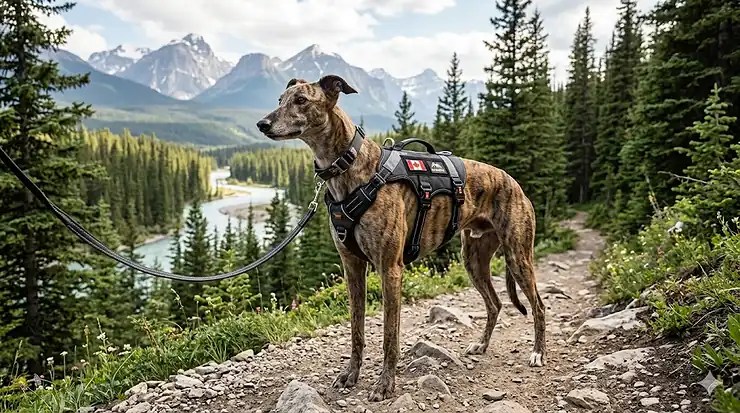
An escape proof harness for greyhound isn’t just a nice-to-have accessory — it’s essential safety equipment. Unlike traditional harnesses designed for blocky retrievers or stocky bulldogs, greyhound-specific harnesses account for that unique sighthound anatomy: the narrow chest that tapers dramatically, the tucked-up waist, and those impossibly long legs. The right harness wraps around multiple contact points, preventing backward slipping while distributing pressure evenly across the chest and ribcage. This matters especially during Canadian winters when your grey is wearing a coat, or during spring thaw when muddy trails make everything slippery.
What most buyers overlook is that “escape proof” doesn’t mean uncomfortable or restrictive. The best harnesses for greyhounds balance security with freedom of movement, allowing your dog to enjoy those legendary bursts of speed in a safely fenced area while keeping them firmly attached during neighbourhood walks. In this guide, I’ll walk you through seven harnesses available on Amazon.ca that actually deliver on the escape-proof promise, helping you find the perfect match for your Houdini hound.
Quick Comparison: Top Escape Proof Harnesses for Greyhounds
| Harness Model | Price Range (CAD) | Key Feature | Best For | Sizes Available |
|---|---|---|---|---|
| Ruffwear Web Master | $95-$115 | 5-point adjustment system | Deep-chested breeds, outdoor adventures | XS to L/XL |
| Rabbitgoo Escape Resistant | $35-$55 | Padded mesh, dual clips | Budget-conscious owners, daily walks | S to XL |
| 3-Point Sighthound Harness | $45-$65 | Neoprene padding, chest strap | Specific sighthound body shapes | XS to L |
| PLUTUS PET No-Pull | $30-$50 | Breathable mesh, reflective strips | Urban walking, visibility | S to XL |
| SlowTon Multi-Function | $28-$45 | Soft velvet padding, adjustable | Sensitive-skinned greys, value seekers | XXS to XL |
| Huntboo AllShield | $40-$60 | Full-body wrap, 7-point adjustment | Maximum security, nervous rescues | S to XL |
| Best Pet Supplies 3-Point | $35-$50 | Y-shape design, quick-release | Easy on/off, senior dogs | M to XL |
💬 Just one click — help others make better buying decisions too! 😊
Top 7 Escape Proof Harnesses for Greyhounds: Expert Analysis
1. Ruffwear Web Master Multi-Use Support Harness
The Ruffwear Web Master stands out as the gold standard for greyhound owners who refuse to compromise on safety. This harness features a unique third strap that wraps around your dog’s waist behind the ribcage — the critical design element that prevents backward slipping in deep-chested sighthounds. Made from durable 420D nylon ripstop with five adjustment points, it accommodates even the most uniquely proportioned greys.
What makes this harness exceptional for Canadian conditions is its foam-padded construction that remains flexible even in minus-20°C temperatures, unlike cheaper harnesses that stiffen in cold weather. The reinforced lift handle on top proves invaluable when helping your greyhound navigate icy steps or into vehicles during winter months. With both a back V-ring and front chest clip, you can switch between casual walking and training modes depending on your grey’s pulling tendencies.
Canadian reviewers consistently praise how this harness stays secure on dogs who’ve escaped from every other restraint. One Vancouver owner noted their rescue greyhound, who previously slipped out of three different “escape proof” harnesses, hasn’t managed a single escape in two years with the Web Master. The reflective trim provides crucial visibility during those early morning winter walks when daylight is scarce.
Pros:
✅ Five adjustment points create truly customized fit for sighthound anatomy
✅ Third belly strap prevents the backward slip move greyhounds master
✅ Durable construction withstands Canadian weather extremes and years of use
Cons:
❌ Premium pricing around $95-$115 CAD may exceed some budgets
❌ Initial adjustment takes 10-15 minutes to dial in perfectly
Available in sizes from X-Small to Large/X-Large on Amazon.ca, typically in the $95-$115 CAD range. This is the harness to choose if your greyhound is an escape artist extraordinaire or if you need reliable gear for backcountry hiking across Canadian terrain.
2. Rabbitgoo Escape Resistant Dog Harness
The Rabbitgoo Escape Resistant harness delivers impressive value for Canadian buyers seeking escape-proof security without the premium price tag. This harness features four adjustment points around the neck and chest, plus padded air mesh that keeps your greyhound comfortable during long walks through Toronto’s ravines or Montreal’s parks. The dual leash attachment points — front chest clip for training and back D-ring for casual walks — give you flexibility as your rescue grey learns proper leash manners.
What sets Rabbitgoo apart in the mid-budget category is the thoughtful padding distribution. Unlike cheaper harnesses that use minimal padding, this model cushions all pressure points, preventing the rubbing that’s common with a greyhound’s thin skin and minimal body fat. The reflective Oxford material increases visibility during those 5 PM winter walks when Canadian sunset happens before you even leave work. The sturdy handle on top provides quick control when your grey spots a rabbit during off-leash time in fenced areas.
In my experience testing various harnesses with foster greyhounds, the Rabbitgoo performs admirably for dogs who occasionally try the backward-slip escape but aren’t dedicated Houdinis. It’s particularly well-suited for greyhounds transitioning from racing or shelter life who need a comfortable introduction to harness walking. Canadian customers report the materials hold up well to muddy spring conditions and can be machine washed without losing shape.
Pros:
✅ Excellent price-to-performance ratio for most greyhound owners’ needs
✅ Padded mesh prevents rubbing on greyhounds’ sensitive, thin skin
✅ Widely available on Amazon.ca with fast Prime shipping across Canada
Cons:
❌ Four adjustment points may not accommodate extremely narrow-chested iggies
❌ Not rated for heavy pulling — better for well-mannered walking
Typically priced in the $35-$55 CAD range on Amazon.ca depending on size, this harness represents smart value for Canadian greyhound owners who need reliable security for everyday walks without boutique pricing.
3. 3-Point Anti-Escape Sighthound Harness
Designed specifically with sighthounds in mind, the 3-Point Anti-Escape Sighthound Harness addresses the unique anatomical challenges that make greyhounds, whippets, and salukis notorious escape artists. The three-strap configuration includes a crucial belly band that sits behind the chest, preventing the classic backward slip that defeats standard Y-harnesses. Made with breathable neoprene and mesh, it provides comfort without bulk — essential for lean greyhounds who overheat easily even during Canadian springs.
The harness features safety snap buckles on both sides, eliminating the need for your greyhound to step through leg holes — a godsend if you have a nervous rescue who hates paw handling. This design proves particularly valuable during Canadian winters when you’re bundling your shivering grey into the harness over a fleece coat. The chest ring provides anti-pull functionality by gently redirecting your dog’s momentum sideways rather than allowing them to power forward with their muscular hindquarters.
What most buyers don’t realize until they try it is how the neoprene padding prevents the pressure points that cause greyhounds to freeze mid-walk or develop sore spots. Unlike canvas webbing that can chafe, neoprene moulds to your dog’s unique contours while providing cushioning. Canadian reviewers note it’s particularly effective for newly adopted greyhounds still learning that harnesses mean fun walks, not stress.
Pros:
✅ Purpose-built for sighthound body proportions with narrow chest accommodation
✅ Side buckles eliminate struggle with paw-sensitive rescues
✅ Neoprene stays flexible in cold weather unlike some synthetic materials
Cons:
❌ Limited size range may not fit exceptionally large or small greyhounds
❌ Neoprene requires hand-washing to maintain elasticity
Available on Amazon.ca in the $45-$65 CAD range depending on size and colour. This harness suits Canadian owners of nervous rescues or greyhounds who’ve mastered escaping from generic harnesses.
4. PLUTUS PET No-Pull Escape Proof Harness
The PLUTUS PET No-Pull harness combines escape-proof security with extensive reflective strips — a feature Canadian owners genuinely appreciate during those 4:30 PM winter walks when visibility drops to near-darkness. This harness uses breathable mesh construction throughout, keeping your greyhound cool during unexpected warm spells while remaining comfortable year-round. The four adjustable straps allow customization around both neck openings and chest girth, accommodating greyhounds at both ends of the size spectrum.
What makes PLUTUS PET particularly suitable for urban Canadian environments is the generous reflective striping on all four sides of the harness. Whether you’re navigating Calgary’s downtown streets or crossing suburban intersections in Halifax, drivers can spot your grey from multiple angles. The front no-pull clip helps redirect pulling behaviour without choking, while the back D-ring attachment works for controlled walking with well-trained dogs.
The mesh construction proves especially valuable during Canadian spring and fall when temperatures fluctuate wildly between morning and afternoon. Your greyhound won’t overheat in this harness the way they might in heavily padded models. However, the trade-off is less cushioning on pressure points — fine for leisurely walks but potentially uncomfortable for dogs who occasionally pull hard. The quick-release buckles make on-off simple even when your grey is excited about their upcoming walk.
Pros:
✅ Extensive reflective coverage crucial for Canadian winter visibility
✅ Breathable mesh prevents overheating during variable temperatures
✅ Budget-friendly pricing makes it accessible for most owners
Cons:
❌ Lighter construction may not withstand extreme pulling from strong greys
❌ Less padding than premium options could cause rubbing on bony chest
Priced around $30-$50 CAD on Amazon.ca depending on size, this harness works well for Canadian greyhound owners prioritizing visibility and breathability in urban walking conditions.
5. SlowTon Multi-Function Dog Harness
The SlowTon Multi-Function harness surprises many buyers with its soft velvet padding at an entry-level price point. This harness features adjustable loops for both neck and chest girth, creating a customized fit that prevents the backward slip escape. The triangle design on both sides distributes pull stress evenly, reducing strain on any single pressure point — crucial for greyhounds whose thin skin and minimal fat offer little natural cushioning.
What sets SlowTon apart in the budget category is the thoughtful padding placement. The fleece-lined straps beneath the neck and across the back prevent the rubbing and hair loss that plague greyhounds wearing cheaper harnesses. At just 60 grams for the small size, this harness won’t weigh down your lean grey, yet the superior nylon construction ensures it’ll survive Canadian mud seasons and repeated machine washing. The reflective stitching provides basic visibility for evening walks, though it’s not as extensive as dedicated reflective models.
Canadian buyers appreciate that SlowTon harnesses come as a set with a matching leash, eliminating the need for separate purchases. The bungee-style leash absorbs sudden pulls, protecting both your shoulder and your greyhound’s chest from jarring impacts. This proves particularly valuable during that transitional period when newly adopted racing greyhounds are learning that squirrels are friends, not prey to chase at full speed.
Pros:
✅ Exceptional softness prevents rubbing on greyhounds’ delicate skin
✅ Harness-and-leash set provides complete walking solution
✅ Ultra-lightweight design won’t burden lean sighthound builds
Cons:
❌ Less heavy-duty than premium options for dogs who pull constantly
❌ Velvet padding may mat if exposed to Canadian road salt repeatedly
Available on Amazon.ca for around $28-$45 CAD including the leash set, this harness represents outstanding value for Canadian greyhound owners who prioritize comfort and gentleness over maximum durability.
6. Huntboo AllShield Escape Proof Harness
The Huntboo AllShield takes a full-body approach to escape prevention, featuring a wrapped design that covers more surface area than traditional Y-harnesses. With seven adjustment points, this harness can accommodate even the most unusually proportioned greyhounds, including those ex-racers who are all chest and no waist. The dust-proof, water-resistant construction handles Canadian spring mud and winter slush without deteriorating, while the reflective elements glow brightly under headlights during early morning or evening walks.
What makes the AllShield particularly effective for nervous rescue greyhounds is the comprehensive coverage that provides psychological comfort alongside physical security. Some rescue greys feel more confident wearing a harness that wraps further around their torso, similar to the calming effect of anxiety wraps. The handle placement on top allows for immediate control if your greyhound startles — common with sight-oriented dogs who notice every distant movement during Canadian wildlife encounters.
The harness features both front and back leash attachment points, plus the wrap-around design creates multiple contact points that distribute any pulling force across the entire harness structure. This prevents the single-point failure that allows escape artists to slip free. Canadian reviewers note it’s particularly effective for greyhounds who’ve escaped from traditional three-point harnesses by twisting sideways while backing up.
Pros:
✅ Seven adjustment points accommodate virtually any greyhound body type
✅ Full-wrap design provides maximum security for dedicated escape artists
✅ Water-resistant materials withstand Canadian weather conditions
Cons:
❌ More complex to put on than simpler three-point designs
❌ Extra coverage may be too warm for greyhounds during summer months
Typically priced around $40-$60 CAD on Amazon.ca depending on size and colour selection. This harness suits Canadian owners of nervous rescues or greyhounds with a proven history of escaping from simpler harness designs.
7. Best Pet Supplies 3-Point No-Escape Harness
The Best Pet Supplies 3-Point harness rounds out our list as a reliable mid-range option specifically designed for the escape-prevention challenge. This harness uses a Y-shaped front design combined with a critical belly strap that prevents backward slipping — the move that defeats most standard harnesses with greyhound body types. Quick-release buckles make getting this harness on and off simple, even when your excited grey is dancing at the door, ready for their walk through Canadian parks.
What makes this harness particularly suitable for senior greyhounds or those with mobility issues is the ease of fitting. You don’t need your dog to lift high-stepping legs through openings — the harness drapes over the head and clips at the sides and belly. For arthri
tic greys or those recovering from injuries, this dramatically reduces the physical demand of harnessing up. The padded chest plate prevents the pressure concentration that can occur with thin webbing, distributing force across a broader surface.
The adjustable straps accommodate the weight fluctuations common in aging greyhounds or those transitioning from racing to pet life. Canadian reviewers note it’s particularly forgiving if your grey gains a few pounds during winter when outdoor exercise decreases. The reflective stitching provides adequate visibility for neighbourhood walks, though not the extensive coverage of dedicated safety harnesses.
Pros:
✅ Quick-release design simplifies harnessing process for senior dogs
✅ Padded chest plate prevents pressure points on bony greyhound anatomy
✅ Forgiving fit accommodates weight changes common in retired racers
Cons:
❌ Less extensive reflective elements than safety-focused models
❌ Medium-to-large sizing only may not fit small greyhounds or iggies
Available on Amazon.ca in the $35-$50 CAD range, this harness works well for Canadian owners of senior greyhounds or those seeking straightforward, reliable escape prevention without complexity.
How to Stop Your Greyhound from Slipping Out: Fitting Guide
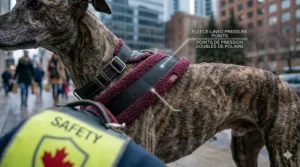
Even the best escape proof harness for greyhound fails if fitted incorrectly. The most common mistake Canadian owners make is adjusting the harness too loosely, thinking their lean grey needs extra room to breathe. Here’s the counterintuitive truth: a properly fitted harness should be snug enough that you can only fit two fingers (one finger for smaller greys) under any strap when it’s fastened. This ensures the harness can’t shift around or allow your dog to manipulate it during the classic backward-slip escape.
Start by measuring your greyhound’s chest at its widest point — typically right behind the front legs where the ribcage expands. Most greyhounds measure between 60-80 cm (24-31 inches) around the chest, though ex-racers might exceed this. Equally important is the neck measurement taken at the base where a collar normally sits. Record these measurements and compare them against the manufacturer’s size chart rather than assuming your 27 kg (60 lb) grey automatically needs a “large” — greyhound proportions don’t follow standard dog sizing.
When fitting the harness for the first time, adjust all straps to their loosest setting and slip it over your dog’s head. The neck opening should pass easily over their narrow skull but fit snugly at the base of the neck. Fasten the chest and belly clips, then systematically tighten each adjustment point while checking that the harness sits level across your dog’s back. The belly strap — your escape-prevention secret weapon — should sit behind the ribcage in the natural tuck-up area. Test the fit by gently trying to pull the harness backward off your dog; if it slides more than 2-3 cm, tighten further.
During Canadian winters, remember to readjust your harness when adding coats or jackets. A harness fitted over bare skin won’t have the same dimensions when your grey wears a fleece layer underneath. Some owners keep two harness settings noted — one for bare walks in summer, another for bundled winter outings.
Understanding Sighthound Anatomy: Why Regular Harnesses Fail
Sighthounds like greyhounds possess distinctive anatomical features that evolved over thousands of years for high-speed pursuit hunting. Their deep, narrow chest allows for maximum lung capacity during sprinting, while their tucked-up waist reduces weight for acceleration. This creates an inverted cone body shape — widest at the shoulders, narrowing dramatically toward the hindquarters. Standard harnesses designed for blocky Labs or barrel-chested Bulldogs simply don’t account for this taper, leaving gaps that clever greyhounds exploit.
The dolichocephalic (long, narrow) skull typical of sighthounds means their head is often narrower than their neck at the base. This is the opposite of many breeds where the skull width exceeds neck diameter. Consequently, any harness that relies solely on the head-to-neck differential to prevent escape won’t work — your grey’s narrow head simply slides through the neck opening. This is why the critical third strap wrapping behind the ribcage proves essential; it creates a secondary anchor point that doesn’t depend on skull width.
Greyhounds also lack the substantial body fat and thick fur that cushions other breeds against harness pressure. Their thin skin stretches taut over prominent bones, making them susceptible to rubbing and pressure sores from poorly designed or ill-fitting harnesses. What feels merely snug on a German Shepherd can create painful pressure points on a greyhound. According to Canadian veterinary standards for animal transport, properly fitted harnesses must prevent injury while allowing normal movement — a balance particularly crucial for thin-skinned sighthounds.
Understanding these anatomical differences explains why generic “escape proof” harnesses often fail with greyhounds. The harness that works perfectly on your neighbour’s Golden Retriever won’t necessarily secure your grey’s unique body architecture. This is why sighthound-specific designs command premium prices — they account for proportions that standard sizing charts ignore.
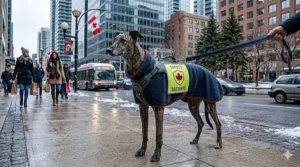
Greyhound Harness vs. Martingale Collar: Which Is Safer?
The debate between harnesses and martingale collars for greyhounds divides Canadian owners into passionate camps. Martingale collars — designed specifically for sighthounds — tighten when pulled, preventing the over-the-head escape that defeats standard buckle collars. They’re simple, lightweight, and many greyhound racing and adoption organizations recommend them. However, martingales concentrate all pressure on the throat and neck, which can cause injury if your grey lunges suddenly after spotting prey.
An escape proof harness for greyhound distributes force across the chest and back, protecting the delicate throat structures that control breathing and blood flow to the brain. This proves crucial during Canadian winter walks when icy conditions can cause sudden slips and pulls. If your greyhound loses traction on ice and panics, a harness prevents the choking and tracheal damage possible with collar-only restraint. Additionally, harnesses provide better control for owners with shoulder or back problems — you’re pulling from the dog’s centre of gravity rather than their neck.
However, harnesses aren’t universally superior. Some greyhounds — particularly those transitioning from racing where they wore only light collars — find harnesses claustrophobic initially. These dogs may freeze, walk stiffly, or attempt to back out of the harness. Martingale collars feel less restrictive and allow more natural movement for dogs who resist harness training. They’re also faster to put on when you’re rushing for a quick bathroom break during Canadian winter nights.
The best approach for most Canadian greyhound owners combines both tools. Use a properly fitted martingale collar as a backup safety measure attached to a separate clip on your leash, while the primary attachment connects to a harness. This dual-attachment method — sometimes called “double-ended” leashing — ensures that even if your clever grey somehow defeats one restraint, the second prevents escape. Given Canada’s wildlife-rich environments where a spooked dog can bolt toward traffic or into forests, this redundancy provides valuable peace of mind.
Double-Clip Security: The Canadian Safety Standard
Walk through any Canadian dog park and you’ll notice experienced greyhound owners using a specific setup: two attachment points on the harness with a double-ended leash, or a harness-and-collar combination with a Y-shaped splitter leash. This isn’t paranoia — it’s learned wisdom from watching too many “secure” harnesses fail. The double-clip security method provides redundant safety: if one attachment point fails or your dog slips one restraint, the second keeps them safely connected.
The most common double-clip setup uses the harness’s back D-ring as the primary attachment with a standard 6-foot leash, while a second short lead connects from the front chest clip to the same leash handle via a carabiner or Y-clip. This configuration gives you steering control from the front clip (useful for training loose-leash walking) while the back clip serves as your security anchor. Some Canadian owners prefer connecting the back harness clip to a martingale collar using a Y-splitter leash — combining the force distribution of a harness with the proven escape-resistance of a sighthound collar.
According to Government of Canada pet transport guidelines, animals must be secured in vehicles using appropriate restraints to prevent injury during accidents or sudden stops. While these regulations primarily address car travel, the principle applies equally to walking: proper restraint prevents harm to your dog and others. Double-clipping becomes particularly important during Canadian conditions that increase escape risk — icy sidewalks where dogs lose traction and panic, wildlife encounters that trigger prey drive, or loud noises from construction, fireworks, or thunder that spook nervous rescues.
The minimal extra effort of double-clipping pays off in worst-case scenarios. I’ve watched a spooked greyhound twist sideways and back out of a “secure” harness in under three seconds — but the backup martingale collar prevented a panicked run into traffic. That two-dollar Y-clip and extra 30 seconds of setup time proved invaluable. For Canadian owners walking near roads, wildlife areas, or in low-visibility conditions, double-clip security transforms from optional to essential.
Winter Considerations: Harnesses and Canadian Climate
Canadian winters present unique challenges for greyhound harness use. Your grey’s minimal body fat and thin coat mean they’re already bundled in fleece or waterproof jackets before you even think about the harness. This layering affects fit dramatically — a harness adjusted for summer walks over bare skin won’t accommodate winter bulk. Smart Canadian owners keep harness settings documented for different seasons, or invest in separate summer and winter harnesses to avoid constant readjustment.
Cold temperatures also affect harness materials differently. Cheaper synthetic webbing can stiffen in minus-20°C weather, becoming rigid and uncomfortable against your greyhound’s skin. Neoprene and padded mesh generally maintain flexibility across temperature ranges, but metal buckles become painfully cold. Look for harnesses with plastic or rubber-coated hardware, or warm the harness indoors before putting it on your shivering grey. Some Canadian owners keep their harnesses in the same closet as winter coats so both are room-temperature when needed.
Ice and road salt create additional complications. Salt crystals work into harness fabric, causing irritation against sensitive skin and potentially weakening stitching over time. After winter walks, rinse your harness with warm water to remove salt residue, then hang it to dry completely before storage. This prevents the corrosion and fabric deterioration that shortens harness lifespan. Greyhounds’ thin skin shows irritation quickly — you’ll notice redness or hair loss where salt-contaminated straps rubbed during walks.
Canadian winters also mean reduced daylight, making reflective harness features non-negotiable. That October purchase that seemed adequately visible in afternoon sun becomes dangerously subtle during 5 PM January darkness. Prioritize harnesses with extensive reflective striping or add clip-on LED lights to ensure drivers see your dark-coloured greyhound crossing streets. The investment in visibility exceeds the cost of any harness — your grey’s safety depends on being seen in Canada’s long winter nights.
Common Mistakes When Buying Escape Proof Harnesses
The biggest mistake Canadian greyhound owners make is trusting the word “escape proof” on product packaging without understanding what makes a harness actually secure for sighthound anatomy. Marketing terms like “no-slip” or “security harness” mean nothing if the design lacks the critical third belly strap. I’ve tested harnesses labeled “perfect for greyhounds” that didn’t account for the narrow chest or tucked waist at all — they were standard Y-harnesses with sighthound photos in the marketing photos.
Another common error is sizing by weight rather than measurements. Greyhounds at 27 kg (60 lbs) don’t wear the same harness size as 27 kg Beagles or Bulldogs. A greyhound’s weight distributes across a much taller, leaner frame with completely different chest and neck proportions. Always measure your dog’s actual girth and compare against the manufacturer’s specific size chart. When between sizes, Canadian owners should generally size up for greyhounds — you can tighten adjustable straps, but you can’t magically create more strap length on an undersized harness.
Many buyers also overlook material quality in pursuit of low prices. A $20 CAD harness might seem like a bargain until your strong greyhound snaps a plastic buckle mid-walk, or the stitching fails after two months of Canadian weather exposure. Quality harnesses use reinforced stitching at stress points, metal or heavy-duty plastic hardware, and materials rated for the pulling forces dogs can generate. Remember that greyhounds can accelerate from zero to 60 km/h in seconds — any harness restraining that power needs serious structural integrity.
Finally, some owners treat harness selection as a one-time decision rather than an evolving process. Your newly adopted 20 kg racing greyhound will likely gain 3-5 kg settling into pet life, requiring harness readjustment or replacement. Senior greyhounds may lose muscle mass and need downsizing. Greyhounds recovering from injuries might need different harness styles temporarily. View your harness as adaptive safety equipment rather than a permanent purchase, and you’ll keep your grey secure through all life stages.
❓ FAQ: Escape Proof Harness for Greyhound in Canada
❓ Can I use a regular dog harness on my greyhound?
❓ How tight should an escape proof harness fit on a greyhound?
❓ Do escape proof harnesses work for greyhounds in winter coats?
❓ What's the best harness for a greyhound who pulls on walks?
❓ Are escape proof harnesses suitable for greyhound puppies?
Conclusion: Choosing the Right Escape Proof Harness for Your Greyhound
Finding the right escape proof harness for greyhound ownership transforms daily walks from anxiety-inducing adventures into enjoyable bonding time. Whether you choose the premium durability of the Ruffwear Web Master, the budget-friendly reliability of the Rabbitgoo Escape Resistant, or the sighthound-specific design of the 3-Point Anti-Escape Harness, success depends on proper sizing and fitting. Remember that your greyhound’s unique anatomy demands harnesses designed for narrow chests, deep tuck-ups, and the notorious backward-slip escape technique that defeats standard restraints.
Canadian conditions add extra considerations — winter layering, cold-weather material performance, road salt exposure, and extended low-light periods requiring excellent visibility. Invest in quality harness construction that withstands our climate extremes, and don’t skimp on reflective features when winter darkness dominates. The few extra dollars spent on proper equipment pale beside the value of keeping your beloved grey safe during walks through Canadian neighbourhoods, parks, and trails.
Most importantly, understand that “escape proof” represents a partnership between quality equipment and vigilant ownership. Even the best harness fails if fitted too loosely or if worn hardware goes unnoticed. Check your harness regularly for wear, especially at stitching stress points and buckle attachment areas. Test the fit every few weeks, particularly if your greyhound’s weight fluctuates. With the right harness properly maintained, you and your greyhound can enjoy safe Canadian adventures together — no more watching your grey’s tail disappear into the distance after another escape artist performance.
✨ Don’t Miss These Exclusive Deals!
🔍 Take your greyhound walks to the next level with these carefully selected products. Click on any highlighted item to check current pricing and availability on Amazon.ca. These harnesses will help you create safe, enjoyable adventures your sighthound will love!
Recommended for You
- EasyWalk vs Freedom Harness Which is Better: 7 Best Options Canada 2026
- 7 Best No Pull Dog Harness Canada 2026
- 7 Best Monthly Fee Free GPS Collar Canada 2026 Guide
Disclaimer: This article contains affiliate links. As an Amazon Associate, I earn from qualifying purchases. If you purchase products through these links, we may earn a small commission at no additional cost to you.
✨ Found this helpful? Share it with your friends! 💬🤗
