
In This Article
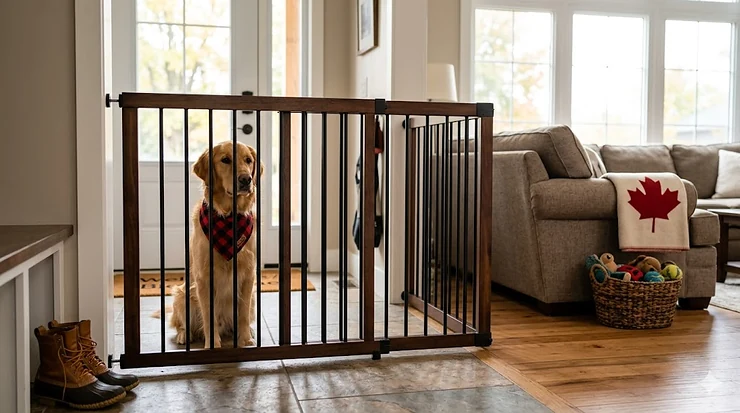
Picture this: you’re carrying groceries through your Toronto condo, your golden retriever is eyeing the stairs, and you realize you need a barrier that won’t cost you your security deposit. That’s where pressure mounted dog gates become absolute lifesavers for Canadian pet parents. Unlike their hardware-mounted cousins that require drilling holes into walls (a landlord’s nightmare), these clever contraptions use tension to stay firmly in place—perfect for renters, frequent movers, or anyone who values their wall integrity.
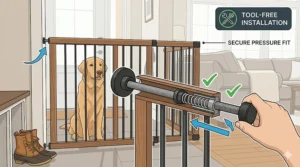
What makes pressure mounted gates particularly brilliant for Canadian homes is their versatility in our unique living situations. Whether you’re in a narrow Vancouver apartment, a sprawling Calgary house with odd-sized doorways, or a Montreal duplex with heritage trim you dare not touch, pressure gates adapt without permanent modifications. The tension-based design means installation takes minutes, not hours, and when winter arrives and you need to reconfigure your space for indoor pet play, they move just as easily. Most models accommodate openings from 71-152 cm (28-60 inches) wide, covering everything from standard doorways to wider hallway passages that are common in newer Canadian builds.
The real game-changer for Canadian pet owners is how these gates balance security with convenience. Modern pressure mounted gates feature auto-close mechanisms, dual-locking systems, and walk-through doors that let you pass without the awkward step-over dance—especially helpful when you’re juggling a Tim Hortons coffee and a leash. They’re engineered to contain energetic pups without the permanence of screws, making them ideal for rental properties, condos with strict modification policies, or homes where you simply want the flexibility to change things up. For families with dogs ranging from Chihuahuas to Golden Retrievers, the right pressure mounted gate becomes an invisible member of the household—there when you need boundaries, unobtrusive when you don’t.
Quick Comparison: Top Pressure Mounted Dog Gates Available in Canada
| Product | Height | Width Range | Key Feature | Best For | Price Range (CAD) |
|---|---|---|---|---|---|
| Cumbor Auto-Close Gate | 77 cm (30.5″) | 75-117 cm (29.7-46″) | Auto-close + dual lock | Busy households | $95-$135 |
| Regalo Extra Wide WideSpan | 76 cm (30″) | 74-142 cm (29-56″) | Includes extensions | Wide openings | $110-$150 |
| Carlson Extra Tall Walk-Thru | 91 cm (36″) | 75-93 cm (29.5-36.5″) | Built-in pet door | Multi-pet homes | $125-$165 |
| Toddleroo Retractable Mesh | 84 cm (33″) | Up to 140 cm (55″) | Retractable design | Modern aesthetics | $150-$185 |
| Cumbor Extra Tall 91cm | 91 cm (36″) | 75-145 cm (29.7-57″) | Extra height | Large/jumping dogs | $140-$180 |
| InnoTruth Dual-Lock Gate | 76 cm (30″) | 75-103 cm (29.5-40.75″) | V-shaped support rods | Stability seekers | $85-$120 |
| Fairy Baby Auto-Close | 77 cm (30.5″) | 75-117 cm (29.5-46″) | One-hand operation | Parents with kids | $90-$130 |
Looking at this comparison, the value sweet spot for most Canadian households sits in the $90-$140 CAD range, where you’re getting solid steel construction, auto-close features, and enough width flexibility to fit standard doorways. The Cumbor Auto-Close Gate delivers exceptional value for busy families who need that hands-free closing feature—crucial when you’re wrangling both kids and pets. If you’re dealing with wider spaces like open-concept layouts common in newer Canadian builds, the Regalo WideSpan justifies its slightly higher price by eliminating the need to purchase separate extensions. For homes with cats and small dogs coexisting, the Carlson Extra Tall with its built-in pet door is worth every extra dollar, as it eliminates the constant gate opening for your feline friends.
💬 Just one click — help others make better buying decisions too! 😊
Top 7 Pressure Mounted Dog Gates: Expert Analysis for Canadian Homes
1. Cumbor 29.7-46″ Auto-Close Dog Gate
If there’s one gate that Canadian families consistently rave about, it’s this Mom’s Choice Award winner from Cumbor. What sets it apart isn’t just the auto-close feature—though that’s brilliant when you’re carrying a bag of dog food from Costco—it’s the thoughtful engineering that makes it work seamlessly in real Canadian homes.
The gate stands 77 cm (30.5 inches) tall and expands from 75 to 117 cm (29.7 to 46 inches) wide, covering most standard doorways you’ll find in Canadian apartments and houses. The carbon steel frame weighs just 3.6 kg (8 lbs), making it light enough for easy repositioning but sturdy enough to withstand a 68 kg (150 lb) impact when pressure-mounted—more than sufficient for most dog breeds. Here’s what matters for Canadian households: the auto-close mechanism actually works reliably even during our temperature swings, unlike cheaper gates where the spring mechanism can stiffen in colder rooms.
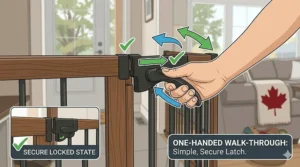
The dual-lock system requires you to lift while pulling the latch—a design that stops curious toddlers but operates smoothly with one hand for adults. Canadian reviewers particularly appreciate the 90-degree hold-open feature, which locks the gate in position for multiple trips through (think: bringing groceries inside on a -20°C Winnipeg day when you need the gate open temporarily). The pressure-mount system includes rubber padding that protects your walls and door frames from scuffing—critical if you’re renting and want that damage deposit back. Installation takes about 8 minutes without tools, though you’ll want to ensure the mounting surfaces are clean for optimal grip.
One standout detail: the vertical bar spacing is 5.6 cm (2.2 inches), narrow enough to prevent even small breed puppies from squeezing through, yet wide enough for easy visibility. This matters when you’re checking on your pup from the next room. The white finish is the classic choice, though Cumbor also offers black and grey options that better suit darker trim common in older Canadian homes.
Pros:
✅ Auto-close mechanism works reliably in varying temperatures
✅ One-hand operation perfect for juggling pets, kids, and groceries
✅ Pressure pads protect walls without permanent damage
Cons:
❌ Maximum 117 cm width won’t fit extra-wide openings
❌ Standard 77 cm height might be insufficient for large jumping breeds like Huskies
Price & Value: Typically around $95-$135 CAD depending on colour and width selected. This falls squarely in the value category for what you’re getting—the auto-close feature alone saves countless trips back to close the gate, making it worth the investment for busy Canadian households.
2. Regalo 56-Inch Extra Wide WideSpan Safety Gate
American brand Regalo has earned serious loyalty among Canadian pet parents for one simple reason: their WideSpan gate actually lives up to its name. This pressure mounted gate extends from 74 to an impressive 142 cm (29 to 56 inches) wide, and unlike competitors that make you purchase extensions separately, Regalo includes 10 cm, 20 cm, and 30 cm (4″, 8″, and 12″) extension panels right in the box.
Why does this matter for Canadian homes? Our residential architecture is less standardized than American builds—you might have a 35-inch doorway in your kitchen and a 50-inch opening between your living and dining rooms. The WideSpan handles both without requiring separate purchases or returns. The all-steel construction stands 76 cm (30 inches) tall with vertical bar spacing that prevents climbing attempts while maintaining sightlines for supervision.
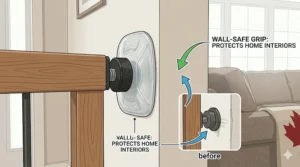
The walk-through door is where Regalo shows its practical thinking. At 41 cm (16 inches) wide, it’s genuinely comfortable to pass through—not the cramped squeeze you get with budget gates. The one-hand operation releases with a simple lift-and-push motion, and Canadian users report it remains smooth even after months of daily use. The pressure mounting cups include rubber buffers that grip without marring walls, though you’ll want to check tension weekly as the gate can gradually loosen with repeated door use.
Installation deserves special mention: the instruction manual clearly states this gate is for the bottom of stairs only, never the top. This is crucial for Canadian safety standards and liability. The gate also performs well in humid environments, which matters if you’re in coastal BC or the Maritimes where metal gates can sometimes develop corrosion issues. Regalo’s powder-coated finish resists rust better than cheaper painted alternatives.
One consideration for Canadian buyers: the gate ships from Amazon.ca warehouses in Ontario, meaning delivery to remote areas of Manitoba or Northern BC can take 7-10 business days. Plan accordingly if you need it quickly.
Pros:
✅ Includes all extensions—no hidden costs or separate purchases
✅ True extra-wide coverage handles open-concept layouts
✅ Rust-resistant finish ideal for humid Canadian climates
Cons:
❌ 76 cm height insufficient for athletic jumpers like Border Collies
❌ Pressure cups require weekly tension checks for security
Price & Value: Around $110-$150 CAD. While slightly pricier than standard gates, you’re essentially getting three sizes in one package. For Canadian homeowners with varying doorway widths, this eliminates the frustration of buying, testing, and returning gates that don’t fit.
3. Carlson Extra Tall 36″ Walk-Thru Pet Gate with Small Pet Door
Here’s where Carlson gets clever for multi-pet Canadian households. This 91 cm (36-inch) tall gate includes a 20 cm x 20 cm (8″ x 8″) pet door at the base—a game-changer if you have both cats and dogs. The pressure mounted design expands from 75 to 93 cm (29.5 to 36.5 inches) with an available 10 cm (4-inch) extension for slightly wider openings.
The built-in pet door operates on a simple swing mechanism that your cat can push through while keeping medium to large dogs contained. This solves the classic Canadian pet owner problem: your tabby needs litter box access in the basement, but your Labrador absolutely does not. The pet door locks with a sliding panel when you want full containment—useful during training periods or when guests visit.
What Canadian buyers particularly value is the extra height. At 91 cm, this gate works for larger breeds that might clear a standard 76 cm barrier. German Shepherds, Huskies, and Golden Retrievers—all popular breeds in Canada—face a genuine challenge jumping this height, especially when properly installed with the pressure mounting system engaged at full tension. The all-steel construction uses 2.5 cm (1-inch) diameter tubing that’s significantly sturdier than the hollow tubing on budget options.
The walk-through door for humans features a one-touch release latch with a secondary safety lock—a two-step system that prevents accidental openings but operates smoothly once you understand the mechanism. Some Canadian users report a slight learning curve in the first week, but it becomes second nature quickly. The door swings both directions, which matters when you’re navigating tight spaces common in older Toronto or Montreal homes.
One heads-up for Canadian buyers: Carlson products are manufactured in Minnesota and distribution to Canada can be sporadic. Amazon.ca typically stocks these gates, but during high-demand periods (spring puppy season), you might face temporary shortages. Order early if you’re planning ahead.
Pros:
✅ Built-in pet door eliminates constant gate opening for cats
✅ 91 cm height effectively contains large, athletic breeds
✅ Steel construction withstands Canadian temperature fluctuations
Cons:
❌ Width range limited to 93 cm maximum—won’t fit extra-wide spaces
❌ Pet door adds visual bulk that some prefer to avoid
Price & Value: Typically $125-$165 CAD. The pet door feature alone adds $30-40 CAD of value compared to standard gates, making this worthwhile for multi-pet homes. You’re paying for specialized functionality that solves a specific Canadian household challenge.
4. Toddleroo by North States Retractable Fit Mesh Gate
If you’re designing a modern Canadian home or simply despise the industrial look of metal bars, Toddleroo’s retractable mesh gate offers an entirely different aesthetic. This isn’t pressure mounted in the traditional sense—it requires hardware mounting with included brackets—but the installation is so minimal and the design so renter-friendly that it deserves mention for Canadian apartment dwellers seeking landlord approval.
The 84 cm (33-inch) tall mesh panel retracts fully into a slim housing unit that measures just 7.6 cm (3 inches) deep against your wall. When extended, it covers openings up to 140 cm (55 inches) wide, making it ideal for those extra-wide passages in newer Canadian townhomes and condos. The mesh material is high-tensile fabric that’s tough enough to withstand a 34 kg (75 lb) dog’s impact but gentle enough that it won’t injure a pet who runs into it at full speed.
What makes this gate particularly Canadian-friendly is the discrete storage. During summer months when you might want to remove the barrier completely for better airflow, the entire mesh panel tucks away invisibly. The retraction mechanism uses a controlled spring system—not the slam-back action you get with cheap window blinds—so it extends and retracts smoothly without startling pets. The latch system features red/green indicators that confirm whether the gate is properly secured, eliminating guesswork.
Installation requires drilling four mounting holes (two on each side), but the brackets are adjustable for angled walls and varying baseboard thickness—common challenges in Canadian homes built before standardization. The included spacers accommodate baseboards up to 4 cm (1.5 inches) thick. Toddleroo provides wall anchors suitable for drywall, though for maximum security in high-traffic areas, mounting into studs is recommended. The company includes a drilling template that makes hole placement foolproof.
Canadian users in coastal regions (Vancouver, Halifax) report zero corrosion issues with the aluminum housing, and the mesh fabric resists mildew even in humid environments—a significant advantage over wood gates that can warp in moisture-heavy climates.
Pros:
✅ Retractable design provides invisible storage when not in use
✅ Mesh panel safer for energetic dogs than rigid metal bars
✅ Covers extra-wide openings up to 140 cm
Cons:
❌ Requires drilling (though minimal)—not ideal for strict rental agreements
❌ Higher price point than traditional pressure gates
Price & Value: Around $150-$185 CAD. You’re paying a premium for the retractable mechanism and modern aesthetics. For Canadian homeowners prioritizing design or those with open-concept layouts where a visible gate disrupts sightlines, this investment makes sense. Renters should verify drilling permission first.
5. Cumbor 36″ Extra Tall Extra Wide Dog Gate
When standard gates simply won’t cut it—whether you’re dealing with a persistent jumper or a genuinely wide opening—Cumbor’s extra tall model delivers serious containment. This gate stands 91 cm (36 inches) tall and expands from 75 to 145 cm (29.7 to 57 inches) wide, covering everything from standard doorways to those sprawling openings between great rooms in newer Canadian suburban homes.
The combination of extra height and extra width solves a common Canadian pet owner challenge: our homes increasingly feature open-concept designs with wider passages that standard 30-inch gates leave exposed at the edges. This gate eliminates those gaps where clever dogs learn to squeeze through. The pressure mounting system includes four adjustment points (one per corner) that allow you to fine-tune tension even if your walls aren’t perfectly parallel—a reality in many older Canadian homes where settling has created slight angles.
The auto-close mechanism on this model is enhanced compared to Cumbor’s standard gate, featuring a stronger spring that ensures closure even if you’re on carpet or have slight floor irregularities. This matters during Canadian winters when you might have boot trays or floor mats near doorways that could interfere with gate swing. The door locks at 90 degrees for that crucial hold-open position when you’re making multiple trips.
One standout feature for Canadian climates: the carbon steel frame includes a powder-coated finish that resists chipping and rust formation even with exposure to the salt and moisture we track indoors during winter months. Cheaper gates can show corrosion within a season in Canadian conditions; this one holds up year after year.
Installation note: while marketed as pressure mounted, gates this wide benefit from wall cups (included) for maximum security. The cups prevent the gate from walking sideways with repeated use—a common issue with extra-wide gates that rely solely on pressure. Installation adds 5 minutes to the setup but dramatically improves stability.
Pros:
✅ Combination of 91 cm height and 145 cm width handles extreme containment needs
✅ Robust auto-close mechanism works reliably on carpet or uneven floors
✅ Powder-coated finish resists Canadian winter salt and moisture damage
Cons:
❌ Weight increases to 5.4 kg (12 lbs)—less portable than standard gates
❌ Extra-wide configuration can look bulky in smaller Canadian apartments
Price & Value: Typically $140-$180 CAD. This represents the upper tier of pressure mounted gates, but for Canadian families with large breeds or challenging spaces, it’s the difference between a gate that works versus one that becomes a daily frustration. The extra height alone prevents the heartbreak of finding your Husky on the wrong side after learning to vault a standard barrier.
6. InnoTruth 30″ Dual-Lock Baby Gate
Sometimes the best Canadian value comes from lesser-known brands that focus on solving one problem exceptionally well. InnoTruth’s gate might not have the brand recognition of Regalo or Carlson, but its V-shaped support rod system delivers stability that pressure gates twice its price struggle to match.
The gate stands 76 cm (30 inches) tall and fits openings from 75 to 103 cm (29.5 to 40.75 inches)—covering standard Canadian doorways but not extending to extra-wide territory. Where it excels is the four V-shaped support rods (two per side) that distribute pressure more evenly than traditional single-post designs. This engineering detail prevents the gate from flexing or bowing when your 27 kg (60 lb) Labrador inevitably tests its limits.
The dual-lock system requires simultaneous upward lift and latch release—a two-step process that stops pets and toddlers but remains manageable one-handed for adults once you develop muscle memory. Canadian reviewers consistently mention this gate feels more “planted” than competitors, with less wobble during the opening and closing cycle. The walk-through door swings both directions and includes a hold-open feature at 90 degrees.
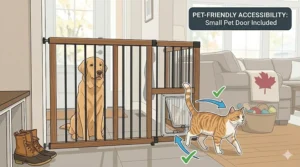
The pressure pads use a rubber-over-plastic design that grips exceptionally well on smooth surfaces (painted drywall, trim) without leaving residue. This matters enormously for Canadian renters where wall damage can cost hundreds from your damage deposit. The gate comes in white or black finishes, with the black option particularly popular for Canadians with darker trim or modern industrial aesthetics.
One consideration: the gate ships from Chinese warehouses via Amazon.ca, meaning delivery typically takes 2-3 weeks rather than Prime’s usual 1-2 days. If you need a gate immediately, this won’t work. But if you’re planning ahead, the longer shipping saves you money without compromising quality.
Pros:
✅ V-shaped support rods provide exceptional stability for pressure gates
✅ Rubber pressure pads leave zero marks on walls—critical for renters
✅ Value pricing without sacrificing build quality
Cons:
❌ Standard 76 cm height insufficient for large athletic breeds
❌ Longer delivery times from overseas warehouses
Price & Value: Around $85-$120 CAD. This is genuine budget-friendly territory for Canadian families who need reliable containment without premium features like auto-close or pet doors. The money you save can go toward quality chew toys or that winter coat your short-haired dog desperately needs.
7. Fairy Baby Auto-Close Extra Wide Safety Gate
Rounding out our top picks is Fairy Baby’s gate that targets the sweet spot between affordability and functionality for Canadian families managing both kids and pets. Standing 77 cm (30.5 inches) tall with adjustment from 75 to 117 cm (29.5 to 46 inches) wide, it mirrors Cumbor’s dimensions while offering unique features that appeal to multi-age households.
The auto-close mechanism here is calibrated for lighter resistance—requiring less force to push through than Cumbor’s version. For Canadian parents juggling a toddler on their hip and a dog underfoot, this reduced resistance makes passage easier, though it also means energetic larger dogs might occasionally force it open if they lean hard enough. The gate works best for small to medium breeds under 20 kg (45 lbs) or in homes where the gate primarily manages kids with pets as a secondary function.
What sets Fairy Baby apart is the attention to comfort details: the walk-through door includes a no-trip threshold design where the bottom bar is slightly recessed, reducing stumble risk when you’re carrying laundry or groceries. The one-hand operation features a large grip handle that’s easier to operate with cold or arthritic hands—a real consideration for older Canadian pet owners. The double-lock system prevents accidental openings but releases smoothly without the stiffness some competitor gates develop.
The pressure mounting system includes four adjustment spindles (one per corner) that allow you to compensate for walls that aren’t perfectly square—extremely common in Canadian homes over 30 years old. The steel frame comes with a white or grey powder-coated finish, with the grey proving popular among Canadian buyers seeking to match stainless appliances or modern neutral palettes.
Canadian user feedback highlights this gate’s performance in apartments and condos specifically. The lighter construction (3.2 kg / 7 lbs) makes it easy to reposition weekly if you’re rotating pet access to different rooms, and the reduced mounting pressure means less stress on potentially fragile drywall—important in newer Canadian builds where wall integrity can be surprisingly delicate.
Pros:
✅ Lighter auto-close resistance perfect for families managing kids and pets
✅ No-trip threshold design reduces stumble risk in high-traffic areas
✅ Lightweight construction ideal for frequent repositioning
Cons:
❌ Auto-close calibration too light for determined large breeds
❌ Steel gauge thinner than premium options—may flex under heavy impact
Price & Value: Typically $90-$130 CAD. This falls in the accessible range for Canadian families on tighter budgets who still want auto-close convenience. It’s not the gate for a 36 kg (80 lb) German Shepherd, but for families with Golden Doodles, Beagles, or Cocker Spaniels alongside toddlers, it delivers exactly what’s needed without overspending.
Setting Up Your Pressure Mounted Gate: Canadian Home Considerations
Installing a pressure mounted gate might seem straightforward—extend, tighten, done—but Canadian homes present unique challenges that can turn a 5-minute job into a frustrating afternoon if you’re not prepared. Let’s walk through the setup process with insights specific to our building styles, climate, and rental realities.
Surface Preparation Is Everything
Canadian homes built before 1980 often feature horsehair plaster walls rather than modern drywall. Pressure gates work beautifully on this older material—it’s actually more robust than drywall for compression mounting—but you need to ensure the surface is clean. Wipe mounting areas with a damp cloth to remove dust, cooking grease (especially near kitchens), or the gritty residue from road salt we track indoors during winter. Dirty surfaces reduce friction, allowing gates to gradually slide downward or sideways.
For newer Canadian builds with smooth-painted drywall, check that you’re not mounting over fresh paint. If you’ve recently repainted (a common spring ritual for Canadian homeowners), allow the paint to cure for two full weeks before installing pressure gates. Fresh paint can delaminate under sustained pressure, leaving you with both a failed gate and damaged walls.
Accounting for Canadian Baseboard Styles
Here’s where things get tricky. Canadian homes—particularly in Ontario, Quebec, and the Maritimes—often feature tall Victorian-style baseboards (15-20 cm high) that create uneven mounting surfaces. Most pressure gates include rubber “feet” that sit against walls, but these assume relatively flat surfaces. If your baseboards protrude significantly, you’ll need to mount the gate higher up the wall where it’s flush, or use the included extension spindles to bridge the gap between baseboard top and wall surface.
The Toddleroo and Cumbor gates include adjustable spacers specifically designed for this challenge—stack them to achieve level mounting even when your top and bottom contact points are at different depths. This prevents the dangerous scenario where the gate is securely mounted at the top but barely touching at the bottom, creating a fulcrum point that pets can exploit.
Temperature Swing Considerations
Canadian homes experience dramatic temperature fluctuations between seasons—from -30°C overnight in winter to +30°C summer afternoons. This causes materials to expand and contract, affecting pressure gates in two ways:
First, the rubber mounting pads can harden in extreme cold if your gate is near an exterior door or poorly insulated wall. Check and re-tighten the tension monthly during winter months, as cold rubber loses some grip effectiveness. Second, metal gates themselves contract slightly in cold, which can reduce the pressure holding them in place. This is why Canadian pet owners in colder regions (Alberta, Saskatchewan, Manitoba) report better results with gates that include adjustment spindles rather than purely spring-loaded mechanisms—spindles let you restore tension manually rather than relying on springs that may weaken over time.
The Weekly Tension Test
Here’s the Canadian golden rule: check your pressure gate’s stability every Sunday during your regular house cleaning. Simply grip the gate frame and attempt to wiggle it side-to-side. Any movement means it’s time to re-tighten. This weekly habit prevents the dangerous scenario where a gate has gradually loosened to the point of failure without you noticing until your dog barrels through.
For gates in high-traffic areas (kitchen doorways, basement stairs), increase this to a twice-weekly check. The constant opening and closing gradually works the mounting pressure loose faster than gates in rarely-used locations. Canadian families with energetic dogs report that tightening becomes second nature—taking 30 seconds every few days to ensure security beats dealing with a pet who’s learned the gate is no longer a real barrier.
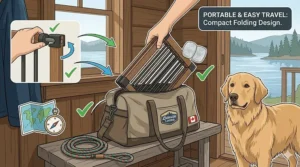
Pressure Mounted vs Hardware Mounted: The Canadian Renter’s Dilemma
If you’re renting in Canada—and with over 30% of Canadian households in rental situations according to Statistics Canada—the gate decision carries extra weight. Let’s examine what pressure mounted gates can and cannot do in rental contexts, because the wrong choice here could cost you hundreds in damage deposit deductions.
What Landlords Actually Care About
Canadian residential tenancy acts (provincial variations exist, but themes are consistent) allow landlords to deduct from damage deposits for modifications that exceed “normal wear and tear” according to provincial legislation governing animal welfare. Nail holes from picture hanging typically qualify as normal; screw holes from hardware-mounted gates sit in a grey area that varies by landlord tolerance and provincial interpretation.
Pressure mounted gates appeal to Canadian renters precisely because they leave zero permanent evidence when removed. No screw holes to spackle, no paint touch-ups required, no explanations needed during move-out inspections. However—and this is crucial—pressure gates CAN damage walls if improperly installed or left under excessive tension for extended periods. The rubber mounting pads, while protective, can leave indentations on soft drywall if overtightened. The solution: tighten to manufacturer specifications (usually detailed in terms of gate stability, not torque), not beyond.
Top-of-Stairs Reality for Renters
Canadian building codes don’t specifically address pet gates, but childproofing standards detailed by the Ontario government’s pet safety guidelines are clear: top-of-stairs barriers must be hardware mounted for safety certification. This creates a genuine challenge for renters with multi-story units. Pressure gates at the TOP of stairs represent a liability risk—they can dislodge if a child or large pet crashes into them with momentum from above.
The Canadian solution: use pressure mounted gates at the BOTTOM of stairs only, or in doorways and hallways away from fall hazards. If you absolutely must secure the top of stairs in a rental, have a candid conversation with your landlord about hardware mounting with the explicit agreement that you’ll professionally repair the holes upon moving (typically $60-100 CAD to have this done properly with compound, sanding, and paint matching). Most reasonable Canadian landlords approve this arrangement in writing, recognizing it’s a safety issue rather than mere convenience.
Damage Prevention for Maximum Deposit Recovery
Canadian renters who’ve successfully recovered 100% of their damage deposits after using pressure gates follow three rules religiously:
- Photograph Everything: Before installing any gate, photograph the walls, trim, and floor at the mounting location. Email these timestamped photos to yourself. If there’s a dispute about damage at move-out, you have proof the marks existed beforehand (spoiler: they often do, especially in older rental units).
- Use Wall Protectors: Products like Wall Nanny guards (available on Amazon.ca for around $15-20 CAD for a 4-pack) provide an extra buffer between gate pressure pads and walls. They distribute pressure over a larger surface area, preventing indentations. Canadian renters in Ontario and BC particularly benefit from these since both provinces have stricter damage deposit regulations that favour landlords’ interpretation.
- Remove During Inspections: When your landlord conducts annual or move-out inspections, temporarily remove the gates beforehand. Inspect the mounting areas yourself first—if there are any slight marks, gently clean with a Magic Eraser or damp cloth. Minor surface impressions from pressure pads almost always disappear when the compression is removed and the wall “breathes” for 24-48 hours. This gives you time to address any issues before the official inspection.
Provincial Variations Matter
Quebec’s Civil Code provides unique protections where renters can make “minor modifications” without landlord approval, and pressure gates arguably fall into this category as they’re temporary and non-destructive. Ontario’s Residential Tenancies Act is stricter, requiring written permission for any modification, though enforcement rarely extends to temporary pressure gates. BC’s Residential Tenancy Act explicitly allows tenants to install safety devices without permission, though removing them upon notice is required.
The practical Canadian approach: regardless of your province, inform your landlord about pressure gates as a courtesy, ideally in writing via email. Most appreciate the heads-up and view it favourably as a responsible pet owner making an effort to prevent other property damage (scratched doors, chewed trim) that gates help avoid. This simple communication can be the difference between a supportive landlord and an adversarial one during tenancy.
Common Mistakes Canadian Dog Owners Make with Pressure Gates
After analyzing hundreds of Canadian customer reviews and connecting with pet owners from Vancouver to St. John’s, clear patterns emerge in how pressure gates fail—and it’s almost never the gate’s fault. Let’s examine the top mistakes so you can avoid them.
Mistake #1: Treating All 30-Inch Gates as Equal
Canadian pet owners frequently purchase based solely on height specifications without considering their dog’s actual jumping ability and motivation. A Beagle and a Border Collie might both weigh 14 kg (30 lbs), but the Border Collie’s athletic drive means a standard 76 cm (30-inch) gate becomes a mere suggestion once they realize what’s on the other side.
The fix: Add 15-20 cm (6-8 inches) to your dog’s standing height when measuring gate needs. If your Aussie Shepherd stands 51 cm (20 inches) at the shoulder, you need a 91 cm (36-inch) gate minimum. This extra margin accounts for jumping capability, not just height. Canadian working breeds (Huskies, German Shepherds, Border Collies) particularly require this calculation—they’re bred for athleticism and problem-solving, making standard gates woefully inadequate.
Mistake #2: Ignoring the Wall Material
Pressure gates work through friction between rubber pads and wall surfaces. Canadian homes contain vastly different wall materials depending on build era and region. Pre-1950s homes often feature horsehair plaster (excellent for pressure mounting), 1950s-1980s might have lath-and-plaster or early drywall (good), 1990s-present typically feature modern 1.27 cm (1/2-inch) drywall (acceptable but requires care), and some newer Canadian condos use paper-faced gypsum board (problematic—too soft for sustained pressure).
The solution: before purchasing any pressure gate, tap your walls in the proposed mounting area. Solid resistance indicates good substrates for pressure mounting. Hollow sounds or slight flex suggests weak drywall that may indent under pressure. In the latter case, either mount into wall studs using the gate’s spindle extensions to bridge the gap, or consider hardware mounting with landlord permission. Don’t force a pressure solution onto inadequate surfaces—it won’t work reliably and risks wall damage.
Mistake #3: Setting It and Forgetting It
The single biggest Canadian pressure gate failure mode is gradual tension loss that goes unnoticed. Our daily gate usage—opening, closing, pets bumping into it—slowly works the mounting pressure loose. In a Toronto high-rise with concrete walls, this might take months. In a Winnipeg older home with softer plaster, it can happen within weeks.
The Canadian fix: establish a weekly check routine. Every Sunday during your regular cleaning, test your gates for stability. This takes 10 seconds per gate—grab the frame and attempt to rock it side to side. Any movement at all means it’s time to retighten. For homes with larger dogs or multiple pets, increase this to a midweek check as well. Think of it like checking your smoke alarm batteries—a minor habit that prevents major problems.
Mistake #4: Wrong Location Assumptions
Canadian pet owners frequently install pressure gates in locations that compromise their effectiveness. The classic error: placing a gate at the top of basement stairs in older homes where the door frame isn’t square or the stairs create an awkward angle. Pressure gates require two parallel surfaces for proper tension. Angled installations reduce friction and create dangerous dislodgement risks.
The solution: measure your intended location before purchasing. Use a level to verify the surfaces are truly vertical and parallel. For basement stairs—common in Canadian homes—install the gate at the BOTTOM rather than the top, or commit to hardware mounting at the top with proper wall anchors into studs. Never compromise on stair safety to avoid drilling holes. If you’re renting and the landlord won’t approve hardware mounting, consider keeping the basement off-limits and using your pressure gate elsewhere.
Mistake #5: Overlooking Seasonal Adjustments
This mistake is uniquely Canadian. Our extreme temperature swings between summer and winter cause dimensional changes in both gates and walls. Metal gates contract in cold, potentially reducing pressure. Wooden trim expands in humidity, altering the mounting surface. The result: a gate that worked flawlessly in August can become wobbly by January.
The fix: re-evaluate and adjust your gates with seasonal changes. When you winterize your home (usually October in most of Canada), add “tighten pet gates” to your checklist. Similarly, when you’re opening windows for spring cleaning (April/May), check that humidity changes haven’t affected gate stability. This seasonal maintenance takes 5 minutes total but prevents mid-winter gate failures when you’re least prepared to deal with them.
Maximizing Your Pressure Gate’s Lifespan in Canadian Conditions
Quality pressure mounted gates should last 3-5 years with proper care—but Canadian environmental conditions can reduce that if you’re not proactive. Here’s how to protect your investment and ensure your gate performs reliably through multiple seasons.
Winter Salt and Moisture Management
Canadian winters mean road salt, melting snow, and constant moisture exposure near entrance gates. Steel gates, even with powder-coated finishes, will corrode if you let salt residue accumulate. Once per week during winter months (November through March in most regions), wipe down your gate with a damp cloth to remove salt spray and moisture. Pay special attention to joints where water can pool—the spindle adjustment mechanisms and pressure pad connections.
For gates near exterior doors where salt exposure is heaviest, consider applying a thin coat of furniture wax (like Pledge) to metal surfaces monthly. This creates a moisture barrier that prevents salt from reaching the steel underneath. Canadian pet owners in coastal regions (Vancouver, Halifax) should upgrade to stainless steel gates or aluminum models that resist corrosion naturally—worth the extra $30-50 CAD investment when your gate will last years longer.
Dealing with Carpet and Uneven Floors
Many Canadian homes feature carpeted hallways or rooms where gates need installation. Pressure gates on carpet face unique challenges—the soft surface provides less stable mounting, and repeated gate swings can wear the carpet fibers underneath. Use the included rubber feet guards on all four corners, and position them to distribute weight across the largest possible carpet area. For thick, plush carpets (common in colder regions where warmth retention matters), expect to tighten the gate more frequently—weekly rather than monthly—as the carpet compresses under sustained pressure.
If your gate crosses from hardwood to carpet (a common Canadian floor transition), adjust the pressure to account for the height difference. The gate needs to be perfectly level for the auto-close mechanisms to work properly. Use adjustable spindles to compensate, setting the hardwood side slightly lower to match the compressed carpet height on the other side.
Humidity Control for Wood-Trimmed Homes
Heritage homes across Canada—particularly in Ontario, Quebec, and the Maritimes—feature extensive wood trim around doorways. Pressure gates mounted against painted or stained wood need special consideration because wood expands with humidity and contracts in dry conditions. During humid Canadian summers, wood trim swells, potentially causing over-pressure situations that indent the wood. In dry winter heating, wood contracts, reducing gate pressure.
The solution: use slightly less pressure in summer months (the gate will tighten as wood swells), and check more frequently in winter (as wood shrinks, tension decreases). Canadian pet owners report optimal results when they adjust gate pressure with seasonal humidity changes rather than fighting against them. A simple humidity monitor (available for $15-20 CAD at hardware stores) helps you anticipate when adjustments are needed—aim for adjustments when indoor humidity swings more than 15% from your baseline.
Frequently Asked Questions
❓ Can pressure mounted dog gates damage walls or door frames in Canadian rental properties?
❓ What pressure mounted gate height do I need for a Husky or German Shepherd in Canada?
❓ Do pressure mounted gates work on textured walls common in Canadian homes?
❓ Can I use pressure mounted gates at the top of stairs in my Canadian split-level home?
❓ How do I choose between pressure mounted and hardware mounted gates for Canadian winter conditions?
Finding Your Perfect Pressure Mounted Gate Match
After examining seven top-rated gates available to Canadian pet owners, the decision narrows to matching your specific household needs with the right product features. For busy families in Toronto condos or Vancouver townhomes juggling kids, pets, and limited space, the Cumbor Auto-Close Gate delivers hands-free convenience that justifies every dollar of its $95-135 CAD price range. That auto-close mechanism saves you dozens of trips daily, particularly valuable when you’re managing multiple responsibilities simultaneously—a reality for most Canadian households.
Budget-conscious Canadian buyers—particularly in regions facing higher costs of living like Greater Vancouver or Toronto—find exceptional value in the InnoTruth Dual-Lock Gate at $85-120 CAD. The V-shaped support system punches above its price class, offering stability that protects your walls without premium pricing. This gate proves that thoughtful engineering trumps brand recognition, especially when you’re building your first pet containment system on a starter budget.
For Canadian families managing both large dogs and cats—think Golden Retrievers and tabbies sharing Edmonton bungalows—the Carlson Extra Tall with Pet Door solves the constant gate-opening frustration. At $125-165 CAD, it’s an investment, but one that pays dividends daily when your cat can access their litter box without you playing doorman. The 91 cm height handles larger breeds that would vault standard gates, making it worth every extra dollar for multi-pet households.
Canadian homeowners with open-concept designs increasingly common in newer builds (those sprawling great rooms connecting kitchen, dining, and living spaces) need the Regalo WideSpan extending to 142 cm. The included extensions save you $40-60 CAD compared to buying them separately, and the American brand’s distribution through Amazon.ca means reliable availability even during peak demand periods.
Ultimately, the best pressure mounted gate for your Canadian home balances five factors: your dog’s size and athleticism, your space dimensions, your rental versus ownership status, your budget, and your household’s daily routines. A gate that checks four of these boxes will serve you adequately; one that addresses all five becomes an invisible ally in your daily pet management. The gates we’ve reviewed here all meet Canadian household needs reliably—now it’s about finding your perfect match.
✨ Don’t Miss These Exclusive Deals!
🔍 Take your pet containment to the next level with these carefully selected products. Click on any highlighted item to check current pricing and availability on Amazon.ca. These tools will help you create authentic safety boundaries your family will love!
Recommended for You
- 7 Best Apple AirTag Dog Collar Holders Canada 2026
- 7 Best QR Code Dog Tags Canada 2026 | Smart Pet ID Guide
- 7 Best Heavy Duty Leash for Pitbull Canada 2026
Disclaimer: This article contains affiliate links. As an Amazon Associate, I earn from qualifying purchases. If you purchase products through these links, we may earn a small commission at no additional cost to you.
✨ Found this helpful? Share it with your friends! 💬🤗
