
In This Article
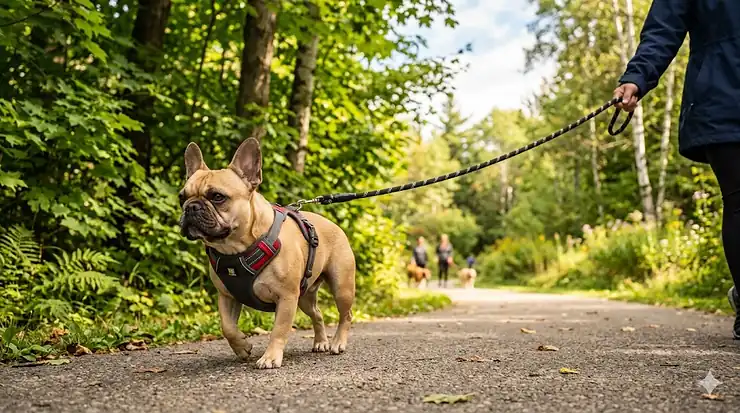
If you’ve ever watched your Frenchie struggle to catch their breath during a simple walk around the block in Toronto or Vancouver, you already know something most new owners don’t: the gear you choose can either help or harm their already compromised airways. French bulldogs suffer from brachycephalic obstructive airway syndrome (BOAS), a condition where their shortened skull compresses soft tissues into a space that’s simply too small. The result? Chronic respiratory distress that worsens with every collar tug, every excited pull, every moment of pressure on their delicate throat.
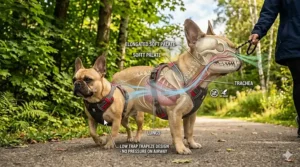
Here’s what the science tells us and what Canadian Frenchie owners need to understand. Brachycephalic breeds have compressed facial anatomy that causes increased airway resistance and breathing obstruction, with symptoms intensifying during exercise, excitement, or warm weather. When you clip a leash to a traditional collar, you’re applying direct pressure to an already struggling trachea. Research published in 2025 found that even stationary collar use increases intraocular pressure in brachycephalic dogs, while harnesses eliminate this risk entirely.
The right harness isn’t just about comfort—it’s about survival. A properly fitted, respiratory-friendly harness distributes pressure across the chest and shoulders, leaving the neck and throat completely free. This matters doubly in Canada, where temperature swings from -30°C prairie winters to humid 30°C Ontario summers already challenge your Frenchie’s limited cooling capacity. During those harsh February walks in Calgary or steamy July strolls through Montreal’s Plateau, the last thing your dog needs is restricted airflow from poorly designed equipment.
What you’ll find in this guide isn’t generic advice recycled from American blogs or vague product listings. I’ve researched actual products available on Amazon.ca, consulted Canadian veterinary resources, and analyzed which harness designs work specifically for French bulldogs struggling with breathing issues. You’ll discover why certain features matter more than marketing claims suggest, which budget options actually perform well in Canadian conditions, and how to match your dog’s specific build and respiratory severity to the right equipment. By the end, you’ll know exactly which harness will let your Frenchie enjoy walks without gasping, pulling without choking, and living without unnecessary respiratory distress.
Quick Comparison: Top Harnesses for Respiratory Health
| Harness Model | Best Feature | Price Range (CAD) | Ideal For |
|---|---|---|---|
| BULLHUG Adjustable | No-choke broad-chest design | $40-$55 | Severe BOAS, broad-chested Frenchies |
| rabbitgoo No-Pull | Breathable mesh, minimal contact | $28-$38 | Hot Canadian summers, active dogs |
| Voyager Step-In Air | Lightweight mesh, easy on/off | $20-$30 | Budget-conscious, daily walkers |
| Ruffwear Front Range | Dual attachment, padded panels | $50-$70 | Outdoor adventures, durability |
| iChoue Padded Vest | French bulldog-specific fit | $35-$48 | Stocky builds, escape artists |
| Best Pet Supplies Voyager | Soft fabric, adjustable straps | $25-$35 | Puppies, growing dogs |
| Breathable Mesh Vest | Maximum airflow, ultra-light | $22-$32 | Hot weather, senior dogs |
💬 Just one click — help others make better buying decisions too! 😊
Top 7 Harnesses for French Bulldogs with Breathing Problems: Expert Analysis
1. BULLHUG Adjustable Dog Harness — Brachycephalic-Specific Design
The BULLHUG Adjustable Harness was purpose-built by a French bulldog owner who couldn’t find gear that fit her dog’s stocky body without choking him. What sets this apart from generic harnesses is the placement of the chest strap—it sits lower and wider than standard designs, distributing pressure across the muscular chest wall instead of riding up toward the throat. For a Frenchie with moderate to severe BOAS symptoms, this positioning means the difference between comfortable breathing and constant airway compression.
The dual adjustment system uses both Velcro sizing around the chest and a plastic buckle underneath for fine-tuning. In practice, this matters more than it sounds—Canadian Frenchies fluctuate in weight seasonally (that winter fluff is real), and the BULLHUG accommodates 5-8 cm of chest expansion without requiring a new harness. The reinforced metal D-ring sits directly over the shoulder blades, creating a natural pull point that doesn’t rotate or shift even when your dog lunges after a squirrel in High Park.
Canadian buyers particularly appreciate the top handle—when you need to lift your 11 kg (25 lb) Frenchie into your SUV after a muddy spring walk through Vancouver’s trails, that grab loop prevents awkward scooping that compresses their ribcage. The harness comes in patterns ranging from subdued black to eye-catching “French Fries” print, though function wins over fashion here.
Customer feedback from Canadian Amazon.ca reviewers notes the harness runs slightly large—if your Frenchie measures 48 cm around the chest, consider the small instead of medium. One Calgary owner mentioned her dog with stenotic nares (narrowed nostrils) showed noticeably quieter breathing on walks after switching from a collar to the BULLHUG. The only consistent complaint? The Velcro can collect prairie grass seeds and fur, requiring weekly cleaning.
✅ Pros:
- Zero throat pressure even during pulls
- Accommodates broad chest without restricting shoulders
- Top handle for lift assistance
❌ Cons:
- Runs large—size down from measurements
- Velcro requires maintenance in outdoor conditions
Price & Verdict: Around $40-$55 CAD depending on pattern availability. Worth every dollar if your Frenchie has diagnosed BOAS or collapses after short walks—this harness specifically addresses what collars and generic harnesses ignore.

2. rabbitgoo No-Pull Dog Harness — Maximum Breathability
The rabbitgoo No-Pull Harness uses a minimal-contact design that reduces the surface area touching your dog’s body by approximately 40% compared to traditional vest harnesses. For French bulldogs prone to overheating—which is essentially all of them—this matters tremendously during Canadian summers when humidity in Toronto or Ottawa can spike to 80%+ while temperatures hit 30°C. The breathable air mesh lining doesn’t trap heat against your dog’s chest, allowing better thermoregulation during walks.
What most buyers overlook in the product photos is the strategic placement of the chest strap—it wraps under the sternum but leaves the entire throat and lower neck exposed. When your Frenchie pulls (and they will, because Frenchies are stubborn), the pressure distributes horizontally across the chest muscles rather than vertically against the trachea. The front D-ring clip option provides no-pull training functionality, though I’ve found the back attachment works better for French bulldogs since front clips can cause them to crab-walk due to their short legs.
The four-point adjustment system (two neck straps, two chest straps) creates a customizable fit that accommodates the unique French bulldog silhouette—barrel chest, thick neck, narrow hindquarters. Canadian reviewers consistently mention ordering one size up from the manufacturer’s recommendation, particularly if your Frenchie has that classic “potato” build. The harness handles -15°C winter walks just fine, though you’ll want to layer a coat over it since the mesh doesn’t provide insulation.
Reflective strips run along both sides and across the back, a safety feature that matters more than marketing suggests. If you’re walking in Edmonton at 5 PM in December when it’s already dark, being visible to cars isn’t optional—it’s survival. One Vancouver Island owner noted her Frenchie’s breathing sounded less laboured during their regular 2 km beach walks after switching to the rabbitgoo, attributing it to both the no-choke design and better cooling from the mesh.
✅ Pros:
- Exceptional airflow prevents overheating
- Four-point adjustment for customized fit
- Reflective safety features for Canadian winters
❌ Cons:
- Sizing chart inaccurate—order larger than suggested
- Thin material may not withstand extreme pullers
Price & Verdict: Typically $28-$38 CAD on Amazon.ca. The best value proposition for mild to moderate breathing issues, especially if you live in a climate with significant temperature variation. The breathability alone justifies the purchase for summer months.
3. Voyager Step-In Air Harness — Budget-Friendly Simplicity
The Voyager Step-In Air proves you don’t need to spend $60 CAD to protect your Frenchie’s airways. This lightweight mesh harness weighs barely 100 grams, making it ideal for dogs who hate the sensation of heavy equipment restricting their movement. The step-in design means you place it on the ground, guide your dog’s front paws into the openings, then clip the single buckle—total time under 10 seconds, which matters when you’re dealing with an impatient Frenchie at 6 AM in frigid Saskatchewan winters.
The harness uses a simple over-the-back strap that completely avoids the neck and throat area. While it lacks the adjustability of pricier options, the elastic binding along the chest openings provides some give for French bulldogs who gain winter weight. Canadian buyers note it works well for daily neighbourhood walks but isn’t robust enough for hiking the Rockies or trail running—the lightweight construction that makes it comfortable also limits durability under extreme stress.
Where this harness excels is summer use. The open mesh construction allows maximum airflow, reducing the risk of heat stroke during those brief Canadian summers when temperatures spike. One Ontario owner mentioned using this exclusively from June through August, then switching to a padded option for colder months. The harness comes in multiple colour options and size ranges, though quality control appears inconsistent—some buyers report perfectly even stitching while others found loose threads requiring trimming.
The single-point attachment on the back works fine for non-pullers, but French bulldogs with strong prey drive may find it lacks the control of dual-attachment systems. If your Frenchie spots a cat during a walk through Montreal’s Mile End and decides immediate pursuit is necessary, this harness will hold but you’ll feel the full force of their 12 kg bulk transferred directly to your shoulder. It’s designed for controlled walking, not wrestling matches with wildlife.
✅ Pros:
- Under $30 CAD—most affordable respiratory-safe option
- Step-in design for quick fitting
- Extremely lightweight and breathable
❌ Cons:
- Limited adjustability may not fit all body types
- Durability concerns for heavy pullers
Price & Verdict: Around $20-$30 CAD. Perfect as a starter harness or secondary option for summer months. If your Frenchie has mild breathing issues and you need immediate relief from collar use without breaking your budget, this delivers.
4. Ruffwear Front Range Harness — Premium Outdoor Performance
The Ruffwear Front Range represents the high end of harness engineering, built for dogs whose owners take them on legitimate adventures beyond suburban sidewalks. While it wasn’t specifically designed for brachycephalic breeds, the chest panel construction eliminates throat pressure completely—and the premium materials mean it’ll outlast three or four budget harnesses over your Frenchie’s lifetime.
The padded chest and belly panels distribute pressure across a larger surface area, crucial when your dog pulls during walks. What separates Ruffwear from cheaper options is load dispersion—when your 11 kg Frenchie spots a dog across the street and lunges, the force spreads horizontally across reinforced webbing rather than concentrating at pressure points. The dual attachment system (aluminum V-ring on back, reinforced webbing loop on chest) gives you training options: use the front clip to redirect pulling behaviours, then switch to the back once they’ve learned leash manners.
Canadian outdoor enthusiasts praise this harness for winter durability. Unlike mesh options that ice up in -20°C prairie winds or fray after contact with road salt, the Ruffwear’s ripstop polyester shrugs off abuse. The reflective trim actually reflects—it’s not decorative printing but embedded material that lights up under headlights, essential for those 4:30 PM winter walks when Canadian sunset happens absurdly early. One Alberta reviewer mentioned using this exclusively for their Frenchie during winter hikes in Jasper, noting the harness handled snow, ice, and rough terrain without showing wear.
However—and this is important—Ruffwear’s sizing can be problematic for extremely stocky French bulldogs. The harness was optimized for shepherd-type builds, meaning the neck opening may feel snug on dogs with thick necks. Check the size chart carefully, and if your Frenchie measures on the border between sizes, go larger. Some buyers report the straps across the chest can sit too close to armpits on short-legged breeds, potentially causing chafing during longer walks.
✅ Pros:
- Exceptional build quality and durability
- Dual attachment for training flexibility
- Performs in extreme Canadian weather
❌ Cons:
- Premium pricing ($50-$70 CAD)
- Sizing not optimized for bulldog body types
Price & Verdict: Typically $50-$70 CAD on Amazon.ca. If you genuinely adventure with your Frenchie—camping in the Laurentians, hiking BC trails, winter walks in Churchill—this harness justifies the investment. For purely urban use, you’re paying for features you won’t fully utilize.
5. iChoue French Bulldog Harness — Breed-Specific Engineering
The iChoue Padded Vest Harness was designed by someone who actually owns French bulldogs, and it shows in the details most manufacturers miss. The chest opening is cut wider than standard harnesses to accommodate that barrel-chested build without riding up toward the throat. The leg holes sit farther apart, preventing the inner edge from rubbing against armpits—a common complaint with harnesses designed for longer-legged breeds.
What makes this genuinely useful for breathing issues is the vest-style construction that wraps around the ribcage without touching the neck at all. When your Frenchie inhales deeply (which they do constantly, trying to compensate for restricted airways), the harness moves with their chest expansion rather than constricting it. The inner lining uses soft padding that prevents chafing even during extended wear, important for Canadian dogs who might keep harnesses on during long car trips to cottage country.
The locked buckle system prevents accidental release—a safety feature that matters more for French bulldogs than you’d think. Their escape artist tendencies combined with their obliviousness to danger means an unfastened harness could lead to your dog bolting into Calgary traffic or wandering onto Toronto’s busy Bloor Street. The top handle provides grab-and-lift functionality, useful when you need to quickly extract your Frenchie from a situation (meeting an aggressive dog, approaching a busy intersection, etc.).
Canadian buyers appreciate that iChoue offers specific size charts for French bulldogs rather than generic “small/medium/large” categories. The brand understands that a 10 kg Frenchie has completely different proportions than a 10 kg terrier. However, the material isn’t as breathable as mesh options—summer use in humid climates like southern Ontario may cause overheating. One Quebec owner noted switching to a lighter harness for June-August after her Frenchie panted excessively during 25°C walks.
✅ Pros:
- Cut specifically for French bulldog proportions
- Vest design for maximum chest support
- Locked buckle prevents escapes
❌ Cons:
- Less breathable than mesh alternatives
- Higher price point than generic options
Price & Verdict: Around $35-$48 CAD depending on colour/pattern. The best choice if your Frenchie has the classic stocky build and you’ve struggled to find harnesses that fit properly. The breed-specific design addresses fitting issues that plague French bulldog owners using generic equipment.
6. Best Pet Supplies Voyager — Adjustable Growth Companion
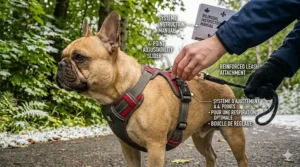
The Best Pet Supplies Voyager harness solves a specific problem: French bulldog puppies who will outgrow three harnesses before reaching adult size. The extensive adjustment range on both neck and chest straps means this harness can fit a 5 kg puppy and still accommodate them at 11 kg, saving Canadian owners hundreds of dollars in replacement costs.
The soft polyester construction won’t irritate puppy skin, a consideration when you’re introducing harness training early to prevent collar dependence. French bulldog puppies already have breathing challenges due to developing airways—putting them in a collar from 8 weeks old teaches them that breathing difficulty during walks is normal. Starting with this harness from puppyhood establishes healthy respiratory habits that last for life.
The step-in design works brilliantly for wiggly puppies who haven’t learned to hold still during gear changes. You’re already juggling treats, waste bags, and enthusiasm at 6 AM during a Manitoba winter—the last thing you need is a complicated buckle system while wearing mitts. The snap-in closure provides security with one-handed operation, essential when you’re holding a leash and trying to close your front door simultaneously.
Where this harness falls short is durability with adult dogs who pull heavily. The lightweight materials that make it puppy-friendly mean it’s not built for 12 kg of determined Frenchie yanking toward every interesting smell in Halifax’s Public Gardens. Several Canadian reviewers mentioned upgrading to heavier-duty options once their dogs reached 18 months and developed “opinions” about walk routes. The reflective strips are adequate but not as robust as premium options—visibility matters but so does longevity.
✅ Pros:
- Extreme adjustability for growing puppies
- Soft materials gentle on developing skin
- Step-in convenience for training
❌ Cons:
- Not durable enough for adult pullers
- Limited breathability in warm weather
Price & Verdict: Typically $25-$35 CAD. Ideal as a first harness for French bulldog puppies or a spare option for adult dogs who walk politely. If you’re bringing home an 8-week-old Frenchie from a Canadian breeder, this harness will serve you well for the critical first year.
7. Ultra-Breathable Mesh Vest — Summer Heat Management
The Breathable Mesh Vest Harness addresses the Canadian climate challenge that French bulldog owners know too well: our summers may be short, but they can be brutally humid. When Ottawa hits 32°C with 85% humidity in July, or Vancouver’s rain forest climate creates sticky 28°C days, your Frenchie’s already-compromised cooling system faces serious challenges. This harness prioritizes airflow above all else.
The open-weave mesh construction covers only the essential support areas, leaving maximum skin exposed to air circulation. Unlike padded options that trap heat against your dog’s chest, this design allows natural evaporative cooling during panting. The material weight barely registers—at under 80 grams for a medium size, your Frenchie won’t feel like they’re wearing restrictive gear during hot weather when every breath already requires extra effort.
The harness uses a minimal-contact philosophy: wide straps that distribute pressure without covering large surface areas. For senior French bulldogs with arthritis or joint pain compounding their breathing issues, this lightweight design reduces the physical burden of wearing equipment during necessary outdoor bathroom breaks. One Toronto owner of a 9-year-old Frenchie with severe BOAS mentioned this harness made the difference between 5-minute shuffle-walks and manageable 15-minute outings during summer.
However, this harness sacrifices durability for breathability. The thin mesh construction won’t withstand Canadian winter conditions—freezing rain will ice it up, road salt will degrade the fabric faster than heavier materials, and the open weave provides zero insulation against November winds. Consider this a seasonal option, not a year-round solution. The lack of padding also means it’s not ideal for training heavy pullers, though for senior dogs or those with mobility issues, pulling isn’t usually a concern.
✅ Pros:
- Maximum cooling airflow for hot weather
- Ultra-lightweight reduces physical strain
- Ideal for senior dogs with mobility issues
❌ Cons:
- Seasonal use only—not for Canadian winters
- Thin material lacks durability
Price & Verdict: Around $22-$32 CAD. A specialized tool for managing your Frenchie’s breathing during Canadian summer months. Keep a winter harness on hand for cold weather, but for those sticky July and August days, this harness could prevent heat stroke.
How to Measure Your French Bulldog for a Perfect Fit
Getting harness measurements right matters more for French bulldogs than typical breeds because their unique proportions—barrel chest, thick neck, short back—mean generic sizing almost never works. A harness that’s too loose will slip off when your dog backs up (a favourite Frenchie escape tactic), while one that’s too tight compresses their chest and restricts already-limited breathing capacity.
The Three Critical Measurements
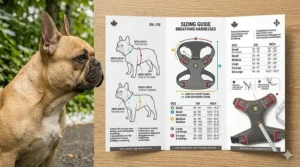
Start with chest girth, measured at the widest point of your dog’s ribcage, typically just behind the front legs. Use a soft fabric measuring tape, not a rigid one, and make sure it’s snug but not tight—you should be able to slide two fingers underneath. For most adult French bulldogs, this measurement falls between 45-60 cm (18-24 inches), though stocky males can exceed this. Measure three times and use the largest number; a harness that’s slightly too big beats one that’s too small.
Next, measure neck circumference at the base where the neck meets the shoulders, not up high near the skull. This is where the harness will sit, so accuracy here prevents the gear from sliding forward toward the throat during walks. French bulldogs typically measure 30-42 cm (12-16.5 inches) around the neck, with females on the lower end and males higher. Don’t measure over a collar—remove all equipment first.
Finally, measure back length from the base of the neck (where you measured circumference) to the base of the tail where it connects to the spine. This determines harness size for vest-style options and ensures straps won’t extend beyond your dog’s body. French bulldogs usually measure 25-35 cm (10-14 inches) here. Their compact build means less back length than you’d expect for their weight.
Accounting for Canadian Seasonal Weight Fluctuation
Here’s something American guides won’t tell you: Canadian French bulldogs fluctuate in weight seasonally more than dogs in milder climates. Winter months mean less outdoor activity—nobody’s walking 2 km at -25°C—and that “Christmas pudding” physique from holiday treats. Spring arrives with vigorous park play and weight loss. Buy harnesses in fall when your Frenchie is leaner, and most adjustable designs will accommodate their 1-2 kg winter gain.
If your dog measures between sizes on the manufacturer’s chart, size up for French bulldogs. Their chest depth (front-to-back dimension) is greater than similarly sized dogs, meaning a harness that “should” fit based on circumference may still ride uncomfortably tight across the sternum. Canadian buyers consistently report this issue across brands—the breed-specific harnesses account for it, but generic options require sizing compensation.
The Four-Point Adjustment Test
Once your new harness arrives, before cutting tags or walking outside, test the adjustment range. Put it on your Frenchie and check four points: Can you fit two fingers (and only two fingers) under the neck strap? Does the chest strap sit behind the front legs, not tucking into armpits? Is the back strap horizontal across the shoulder blades, not angled? Can your dog sit, stand, and lie down without the harness shifting position?
If the harness passes those tests while adjusted to its middle range (not maxed tight or completely loose), you’ve got the right size. This middle-range sweet spot matters because it allows for both tightening if your dog loses weight and loosening if they gain without requiring a new harness. For growing puppies, adjust it looser initially so you maximize the time before they outgrow it.
Real-World Application: Matching Frenchies to Harnesses
The harness that works for a 2-year-old active Frenchie in Victoria, BC, won’t necessarily suit a 10-year-old sedentary dog in rural Saskatchewan. Let me walk through three common Canadian French bulldog profiles and which harnesses from our top seven actually serve their needs.
The Urban Active Frenchie (Toronto/Montreal/Vancouver)
Meet the typical city French bulldog: daily 20-minute neighbourhood walks, occasional visits to off-leash parks, regular exposure to traffic and crowds. This dog needs a harness that provides control (for navigating busy sidewalks), visibility (for early morning/late evening urban walks), and year-round durability (because Canadian cities mean salt, slush, and grime for six months annually).
Best match: rabbitgoo No-Pull Harness. The four-point adjustment handles the seasonal weight fluctuations that come with urban lifestyles (less winter walking, more summer activity). The reflective strips provide crucial visibility during Toronto’s 4:30 PM December sunsets or Vancouver’s perpetual drizzle that reduces sight lines. The breathable mesh prevents overheating during those surprise 28°C May heat waves before summer officially starts. Most importantly, the front-clip option gives you training control when your Frenchie inevitably gets distracted by a dropped Tim Hortons donut on Yonge Street. Price point around $30-35 CAD fits urban budgets, and it’s available for next-day Prime shipping when your old harness breaks unexpectedly.
The Severe BOAS Case (Any Location)
This is the Frenchie who snores loudly even when awake, struggles during short walks, and may have already had soft palate surgery. Every piece of equipment must prioritize respiratory function above all else. Collar use isn’t just inadvisable—it’s genuinely dangerous. These dogs need maximum chest support with zero throat involvement.
Best match: BULLHUG Adjustable Harness. This was literally designed by a French bulldog owner for dogs with severe breathing issues. The ultra-wide chest strap distributes pressure across the muscular chest wall, completely avoiding the throat and trachea. The lower positioning prevents the harness from riding up toward the neck during pulls or when your dog lifts their head to sniff. The top handle is critical here—dogs with severe BOAS fatigue quickly, and sometimes you need to help them into cars, over obstacles, or out of situations without bending down and scooping (which compresses their ribcage). Yes, it’s $45-55 CAD, but for a dog whose quality of life depends on respiratory support, this is the clearest return on investment. Canadian veterinary bills for BOAS-related emergencies start at $300 and escalate fast—spending $50 on preventive equipment is the definition of a bargain.
The Senior/Limited Mobility Frenchie (Any Climate)
The 8-10 year old dog with arthritis, reduced stamina, and breathing that’s worse than it used to be. These dogs still need outdoor bathroom breaks and mental stimulation, but extended walks aren’t feasible. Their harness must be easy to put on (because they hate standing still), lightweight (because every gram matters when you’re tired), and breathable (because limited exercise means worse heat tolerance).
Best match: Voyager Step-In Air for warm months, Breathable Mesh Vest for summer peaks. The step-in design means you’re not wrestling an arthritic dog through overhead openings—lay it down, guide their paws in, click the buckle, done in 10 seconds. The ultra-light construction (under 100 grams) means they barely notice they’re wearing it, reducing resistance to gear-up time. For Canadian seniors living alone with senior Frenchies, this ease of use isn’t a luxury—it’s the difference between managing daily walks independently versus requiring help. At $20-30 CAD, it’s affordable on fixed incomes, and if it only lasts two years before replacement, that’s fine for a 10-year-old dog. The lack of durability that makes it poor for active pullers becomes irrelevant when your dog shuffles slowly around the block.
Understanding Collar vs. Harness Impact on Brachycephalic Breathing
Every French bulldog owner has heard “just use a harness” from their vet, their groomer, and that helpful person at the dog park. But understanding why this matters—the actual physiological mechanism—helps you make better equipment choices and explains those decisions to well-meaning family members who think you’re being “extra” about dog gear.
The Anatomical Reality
French bulldogs have shortened skulls where soft tissues—tongue, soft palate, nasal structures—remain normal-sized but are compressed into an abnormally small space. This causes stenotic nares (narrowed nostrils), elongated soft palate that partially blocks the trachea, and everted laryngeal saccules that further obstruct airflow. Essentially, your Frenchie is breathing through a straw when they need a garden hose.
Now add a collar. When your dog pulls forward on a leash attached to a collar, that pressure compresses the trachea from the outside while the anatomical abnormalities compress it from the inside. The combination can collapse the airway partially or completely. Studies using pressure sensors found that collar pressure during pulling exceeds levels known to cause tissue damage in humans—and French bulldogs pull frequently because their impaired vision (due to facial folds) and breathing difficulties make them anxious about their surroundings.
What Happens During a Walk
Let’s follow a typical scenario: You’re walking your Frenchie down a Winnipeg street in August at 26°C. Your dog is already mouth-breathing because their stenotic nares don’t allow enough airflow through the nose. They spot a squirrel and lunge, creating sudden collar pressure that partially closes their trachea. Their brain registers oxygen deprivation and triggers panic breathing—rapid, shallow breaths that make the soft palate vibrate and swell. This swelling further narrows the airway, creating a feedback loop. Within 60 seconds, your dog is gasping, possibly going cyanotic (blue-tinged gums from oxygen deprivation), and you’re panicking about whether this is an emergency requiring a vet visit.
Now replay that scenario with a properly fitted harness. Same lunge toward the squirrel, but pressure distributes across the chest wall instead of concentrating at the throat. The trachea remains open. Your dog pulls but keeps breathing normally. No panic cascade, no swelling, no emergency. This isn’t theoretical—research published in 2025 found that wearing a collar in a stationary position increased intraocular pressure in brachycephalic dogs, while exercise in a collar elevated pressure in all dogs tested. Harnesses showed no pressure increase in either condition.
The Canadian Winter Complication
Canadian climates add another variable: cold air irritates already-sensitive airways in brachycephalic dogs. When your Frenchie inhales -20°C Edmonton air, their shortened nasal passages can’t warm and humidify it adequately before it reaches the throat and lungs. This causes bronchial irritation, coughing, and increased mucus production. A collar that restricts throat movement makes this coughing less effective, allowing mucus to accumulate and further narrow airways.
A harness doesn’t solve the cold air problem (that requires limiting exposure duration), but it removes the additional complication of external airway compression. Your dog can cough productively to clear their throat without collar pressure interfering with the expulsive reflex. For Canadian owners, this explains why winter walks seem harder on Frenchies—it’s not just the cold, it’s the interaction between cold-induced airway irritation and equipment-induced restriction.
The Long-Term Progression
Here’s the part that should terrify collar users: brachycephalic airway syndrome is progressive. Chronic airway obstruction leads to secondary complications like enlarged tonsils, thickened soft palate tissue, and eventually laryngeal collapse. Every walk where your dog pulls against a collar accelerates this progression. The swelling and inflammation from repeated collar pressure isn’t temporary—it creates permanent tissue changes that worsen breathing capacity over time.
Switching to a harness doesn’t reverse existing damage, but it prevents additional injury. A 2-year-old Frenchie with mild BOAS who switches from collar to harness today might maintain mild symptoms for years. That same dog continuing with collar use could progress to severe BOAS requiring surgery by age 4-5. The equipment choice isn’t cosmetic—it’s directly impacting your dog’s respiratory trajectory.
Common Mistakes When Buying Harnesses for French Bulldogs
Mistake #1: Trusting Manufacturer Size Charts Without Verification
French bulldog owners across Canada make the same error: ordering based on weight or the manufacturer’s size recommendation without actually measuring their dog. A “small” harness from one brand fits completely differently than “small” from another because there’s no industry standard for brachycephalic proportions. I’ve seen harnesses labeled “for French bulldogs” that clearly weren’t tested on actual Frenchies—the chest opening is too narrow, the leg holes too far forward, the back strap too long.
The fix requires 5 minutes with a fabric measuring tape. Measure chest circumference at the widest point, neck circumference at the base, and back length. Then—and this is crucial—compare those measurements to the actual dimensions listed in the harness specifications, not the generic “small/medium/large” labels. If the manufacturer doesn’t provide specific measurements, that’s a red flag suggesting they haven’t optimized for brachycephalic builds. Canadian buyers should particularly watch for this with imported brands where “small” might be calibrated for Asian breed standards or European regulations that differ from North American sizing conventions.
Mistake #2: Prioritizing Fashion Over Respiratory Function
The Canadian pet industry markets heavily toward aesthetics—matching harnesses to owners’ outfits, seasonal patterns, trendy colors. For most breeds, this is harmless. For French bulldogs with breathing issues, it can be dangerous. That adorable denim harness with the cute bandana attachment? It has heavy stitching around the chest that reduces flexibility. The leather harness that looks sophisticated? Leather doesn’t breathe, trapping heat against your dog’s chest during 28°C Ontario summers when they’re already struggling to thermoregulate.
Prioritize features in this order for respiratory health: (1) no throat contact, (2) chest pressure distribution, (3) breathable materials, (4) adjustability, (5) durability, and somewhere down around (15) aesthetic appeal. The pink camo pattern is nice, but if the harness construction compromises airflow or rides up toward your dog’s throat, it’s working against their health. One Montreal owner told me she bought a “designer” harness for her Frenchie because it matched her own winter coat—then spent $800 on emergency vet bills when her dog collapsed during a walk because the non-breathable vinyl coating caused overheating despite it being only 15°C outside.
Mistake #3: Assuming “No-Pull” Means “Breathing-Safe”
Marketing teams love the phrase “no-pull harness” because it promises to solve the universal dog owner frustration of being dragged down the street. But “no-pull” describes training functionality (usually via a front chest clip that redirects pulling), not respiratory safety. I’ve evaluated supposed “no-pull” harnesses that still had narrow chest straps that concentrated pressure, non-adjustable neck openings that rode up toward the throat, and materials that restricted chest expansion during breathing.
A harness can be both no-pull and breathing-safe, but one doesn’t guarantee the other. Check specifically for: wide chest strap (at least 3-4 cm for adult Frenchies), placement well behind the front legs, and materials that move with chest expansion during breathing. The front-clip redirection feature is bonus functionality for training—the fundamental requirement is that pressure distribution protects airways regardless of whether your dog pulls or walks politely.
Mistake #4: Ignoring Canadian Climate Realities
American harness reviews dominate online because the U.S. market is larger, but those reviews rarely account for -30°C prairie winters or 35°C humid Ontario summers. A mesh harness that works beautifully in San Diego’s consistent 22°C climate becomes useless when it ices up during a February walk through Calgary, or when it needs to fit over a winter coat during Manitoba’s brutal cold snaps.
Canadian French bulldog owners need seasonal harness strategies. Budget for at least two harnesses: a breathable mesh option for summer (June-August) and a more substantial padded design for winter that can accommodate layering. One Saskatchewan owner learned this the hard way when her lightweight summer harness literally froze solid during a -35°C walk and became too rigid to unbuckle until she brought her dog inside and thawed it under warm water. The harness itself was well-designed for breathing—it just wasn’t designed for Canadian extremes.
Mistake #5: Keeping Harnesses On 24/7
Some owners, having finally found a harness that fits their difficult-to-fit French bulldog, leave it on constantly to avoid the struggle of putting it on and taking it off. This creates several problems: pressure sores from constant contact points, matted fur underneath straps, skin irritation in the folds where straps sit, and reduced air circulation around the chest that can cause hot spots even in cool weather.
Harnesses are walking equipment, not collars. Put it on before walks, remove it after. If you’re concerned about identification during the day, use a flat collar with tags when your dog is unsupervised, then switch to the harness for controlled activities. For Canadian dogs who wear winter coats, this also prevents the coat-plus-harness layering that can overheat your dog even in -10°C temperatures—their compromised cooling system means they generate more internal heat than normal dogs, and excessive layering during activity can trigger heat stress even in winter.
FAQ: Your French Bulldog Harness Questions Answered
❓ Can I use a harness on a French bulldog puppy with breathing problems?
❓ How tight should a harness be on a French bulldog with BOAS?
❓ Are front-clip or back-clip harnesses better for French bulldogs with breathing issues?
❓ Can harnesses prevent my French bulldog from needing BOAS surgery?
❓ Do I need different harnesses for summer versus winter in Canada?
Final Verdict: Making the Right Choice for Your Frenchie’s Breathing
The harness decision for a French bulldog with breathing issues isn’t about finding the “best” option in some universal sense—it’s about matching your specific dog’s respiratory severity, body type, activity level, and Canadian climate challenges to equipment that addresses their individual needs. A competitive-priced mesh harness that works brilliantly for a mildly affected urban Frenchie in Vancouver’s temperate climate fails spectacularly for a severely affected rural dog enduring Saskatchewan winters.
Start by honestly assessing your dog’s BOAS severity. If they snore loudly even when awake, struggle during short walks, or have been diagnosed with stenotic nares or elongated soft palate, the BULLHUG Adjustable offers the most targeted respiratory support for $45-55 CAD. This is medical equipment masquerading as pet gear—the broad chest strap and zero-throat-contact design specifically address brachycephalic anatomy in ways generic harnesses don’t. For moderate cases where breathing is noisy but your dog still enjoys 20-minute walks, the rabbitgoo No-Pull at $28-38 CAD provides excellent airflow and adjustability for Canadian seasonal changes.
Budget constraints are real, particularly for Canadian pet owners facing high veterinary costs. The Voyager Step-In Air at $20-30 CAD proves you don’t need premium pricing for basic respiratory protection—it eliminates collar pressure and uses breathable materials. Consider this a starter option or summer-specific choice, then upgrade to more durable equipment when finances allow. For puppies or growing dogs, the Best Pet Supplies Voyager at $25-35 CAD offers exceptional adjustment range that delays the need for size upgrades.
Climate specificity matters in Canada more than American guides acknowledge. If you live anywhere that sees genuine winter—Alberta’s -40°C wind chills, Manitoba’s endless January, even Southern Ontario’s slushy mess—plan for seasonal equipment. A lightweight mesh harness that saves your dog from summer heat stroke becomes dangerous when it freezes solid at -25°C. Similarly, a padded winter harness that handles Calgary chinooks causes overheating during humid Toronto summers. The upfront investment in two harnesses ($45-50 CAD total for budget options) prevents the back-end cost of emergency vet visits for respiratory distress or heat stroke.
Take your time with measurements. The five minutes spent with a fabric tape measuring your dog’s chest, neck, and back length prevents the frustration of multiple returns and the risk of using ill-fitting equipment “temporarily” that becomes permanent. Canadian shipping for returns eats into any savings from choosing budget options incorrectly. Order from Amazon.ca Prime when possible—next-day delivery means you can try, return if needed, and try again quickly rather than waiting weeks for international shipments.
Remember that harnesses are walking equipment, not 24/7 wear. Put them on before activities, remove them after, and use a flat collar for identification when your dog is unsupervised at home. This prevents pressure sores, maintains skin health, and extends harness lifespan by reducing wear. For French bulldogs prone to skin fold infections, the air circulation during harness-off time helps keep those chest and armpit areas dry.
Finally, understand that equipment alone doesn’t solve BOAS—it’s one component of comprehensive respiratory management that includes weight control (every extra kilogram makes breathing harder), environmental cooling (particularly during Canadian summers), activity monitoring (knowing when to stop before your dog shows distress), and veterinary partnership (regular check-ups to track progression). The right harness makes walks safer and breathing easier, but it works alongside these other strategies, not instead of them.
Your French bulldog’s breathing challenges are real, progressive, and demand attention. The harness you choose is either contributing to the problem (if you’re still using a collar) or part of the solution (if you select respiratory-appropriate equipment). Given that you’ll use this gear daily for 8-12 years of your dog’s life, spending time now to choose well pays dividends in quality of life, veterinary cost avoidance, and the simple joy of watching your Frenchie enjoy walks without gasping for air.
Recommended for You
- 7 Best Escape Proof Harness for Greyhound Canada 2026
- EasyWalk vs Freedom Harness Which is Better: 7 Best Options Canada 2026
- 7 Best No Pull Dog Harness Canada 2026
Disclaimer: This article contains affiliate links. As an Amazon Associate, I earn from qualifying purchases. If you purchase products through these links, we may earn a small commission at no additional cost to you.
✨ Found this helpful? Share it with your friends! 💬🤗
